ADAS Calibration in Plain English: What It Is and Why It Matters
Advanced driver assistance systems (ADAS) support braking, steering and driver awareness. Common features include AEB, lane keep assist, adaptive cruise control, traffic sign recognition, blind spot monitoring and 360° cameras. Calibration is the precise alignment of each camera, radar and lidar so the vehicle “sees” the road exactly to manufacturer specification.
You’ll typically need calibration after a windscreen replacement, camera removal/refit, suspension or steering work, wheel alignment, software updates, or when fault codes appear. If sensors are out of spec, you risk longer stopping distances, false warnings and potential MOT issues.
Advanced Autoglazing Ltd’s ATA-accredited technicians use OEM data, audited equipment and documented quality checks. For more detail, see what ADAS is and how we calibrate it and whether you need recalibration after windscreen replacement.
Mobile vs Workshop at a Glance: The Safety‑First Rule
Rule of thumb:
- If the vehicle needs static or target-based calibration, it must be done in a controlled workshop.
- If the model supports dynamic-only procedures and conditions are right, mobile calibration can be safe.
We decide using OEM procedures, a pre-scan, the sensor set-up, and road and weather checks. Same-day or next-day slots are often available. Times vary by car and system; see how long ADAS calibration takes. We cover Essex and surrounding areas; check our areas we cover. Ready to book? Get a fast response via get a quote.
Choose the Workshop When Precision Demands Control
Some sensors require a perfectly controlled bay to meet tight tolerances—especially forward radar, multi-camera 360° systems, night vision, lidar and combined sensor suites that rely on exact geometry and targets at precise distances and heights.
- Level, calibrated floor and controlled lighting
- Laser-measured target placement with zero interference
- Best practice after windscreen replacement, camera bracket refits, ride-height changes, wheel alignment and accident damage
Advanced Autoglazing Ltd brings 30+ years’ experience, calibrated bays and printed reports for your records. Learn more about our ADAS camera calibration.
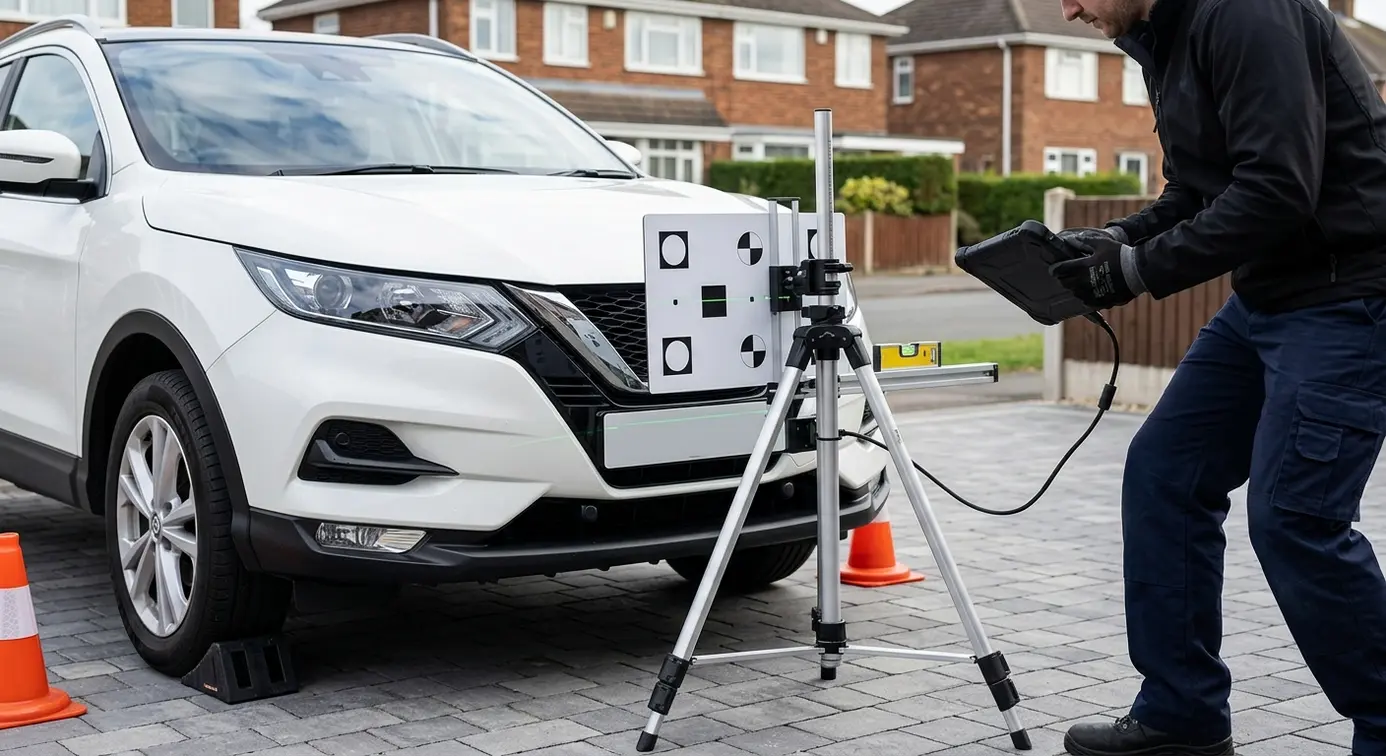
This image was generated with AI and may not always represent the product or service exactly.
When Mobile Calibration Is Safe and Convenient
Dynamic mobile calibration suits many models that support on‑road learning, including a wide range of Ford, Mazda, Honda and Kia vehicles. We always confirm the method with OEM data and a pre-scan before starting.
- On-the-day requirements: clear weather, correct tyre pressures, normal ride height and a safe route with consistent road markings
- Our technician plans the route, completes the dynamic run, then verifies with a post-scan and road test
- If minor work may affect sensors, we can check calibration status without a full strip‑down
Conditions That Make Mobile Unsafe on the Day
We’ll switch to a workshop calibration or reschedule if mobile accuracy can’t be guaranteed:
- Weather/roads: heavy rain, fog, low sun glare, snow, unmarked roads, roadworks or stop–start traffic
- Vehicle readiness: incorrect tyre pressures, heavy payloads or roof loads, low battery voltage
- Technical red flags: active fault codes, loose camera mounts, or windscreen adhesive still curing
We use Loctite adhesives and follow OEM cure times. If the bond isn’t stable, we’ll delay to protect safety and accuracy. Please allow for the full process and any weather holds.
Commercial, Van and Prestige Vehicles: Extra Considerations
Vans and commercial vehicles often benefit from a workshop due to higher sensor positions, long wheelbases and target height requirements. A controlled bay makes precise alignment faster and more reliable.
- Fleets: on-site triage, then centre calibration if needed, with same- or next-day scheduling where possible
- Prestige and classic cars: Pilkington glass for optical clarity, protected trim, and documented procedures for sensitive systems
You leave with proof of accuracy and peace of mind.
After a Windscreen Replacement: From Glass to Calibration
Accuracy starts with the glass:
- Pilkington windscreens fitted for consistent optical clarity
- Camera brackets transferred or replaced to the correct angle and torque
- Loctite bonding to OEM cure times before calibration
We schedule calibration at the right point—sometimes after safe drive‑away—to ensure a stable, accurate result. If insurance is involved, we handle approvals and direct billing, and provide your calibration report for records and future claims. Read more about insurance windscreen replacements.
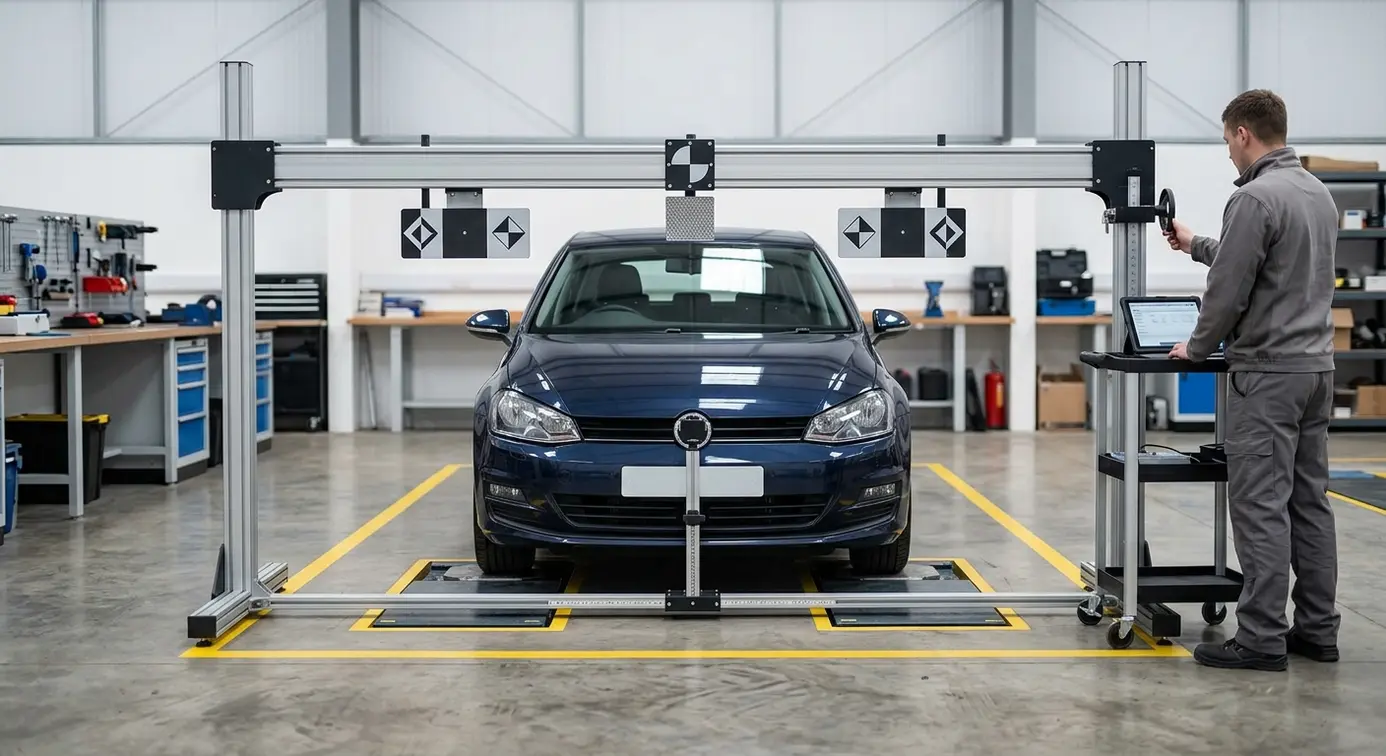
This image was generated with AI and may not always represent the product or service exactly.
What Your Appointment Looks Like: Mobile vs Workshop
Mobile visit
- Pre-scan, tyre/load checks and route planning
- Dynamic calibration drive
- Post-scan, road test and a calibration report for your records
Workshop appointment
- Check-in, level bay set-up and laser-placed targets
- Static/target-based calibration and verification road test
- Printed report suitable for insurers
Advanced Autoglazing Ltd technicians are ATA-accredited and work with audited equipment. Many bookings are same or next day.
Why DIY or Skipping Calibration Is Risky
- Impaired braking/steering support and false alerts
- Possible MOT and insurance issues
- Repeat work costs more than doing it right first time
Professional targets, a level bay and OEM data deliver safe, repeatable results. Avoid misalignment and wasted time—book a proper check with Advanced Autoglazing Ltd.
Decision Checklist and How to Book
Use this quick guide to pick the safest option:
- Static targets or complex sensor suite? Choose our workshop.
- Dynamic-only supported and conditions right? Mobile can be safe.
- After glass, alignment or suspension work? Workshop is usually best.
- Unsure? We’ll advise after a pre-scan and OEM check.
We offer fast turnaround, ATA-accredited technicians and a calibration report for your insurer. Have your reg, sensor list, any fault messages and details of recent work ready. Need help with claims? We’re happy to assist. To secure your slot quickly, request a call-back or book online via our site.
FAQs
How do you decide between mobile and workshop?
We follow OEM procedures, run a pre-scan and review weather, roads and sensor types. If targets or controlled conditions are required, it’s a workshop job.
Can you calibrate if the windscreen adhesive is still curing?
Not always. We use Loctite adhesives and follow OEM cure times. If the bond isn’t stable, we’ll calibrate once it is safe.
What preparation should I do before a mobile visit?
Set tyre pressures to spec, remove heavy loads and roof boxes, ensure a charged battery and clear screens. We’ll handle the rest.
How long will calibration take?
It varies by vehicle and system. A straightforward dynamic run is often under an hour; complex static set-ups can take longer.
Will my insurer accept your calibration report?
Yes. We provide a detailed report suitable for insurers and can support approval and billing where required.
What if weather or traffic stops a mobile calibration?
We’ll switch to a workshop slot or reschedule. Safety and calibration integrity always come first.
Do you use OEM-quality glass for camera systems?
Yes. We fit Pilkington windscreens for optical clarity and transfer camera brackets precisely to protect calibration accuracy.


