HUD Windscreens Explained: How The Display Reaches Your Eyes
A head‑up display (HUD) projects key driving data onto the windscreen so you can keep your eyes on the road. The windscreen acts as an optical combiner, reflecting a focused image from a projector below the dashboard into your line of sight so the display appears to float ahead of the car.
Standard laminated glass can split or blur this image, causing doubling, shimmer or colour shifts that are especially tiring at night. Vehicles factory‑fitted with a HUD need a specific HUD‑marked laminated windscreen engineered for this task. When a HUD car needs a windscreen replacement, we match the exact HUD specification. Unsure if a repair or full change is best? See our guide to windscreen repair vs replacement.
Why The Correct Glass Matters For HUD Clarity
HUD‑compatible windscreens control light precisely so you see one crisp, stable image at a comfortable virtual distance. The laminate aligns two internal reflections; if the glass or interlayer is wrong, you’ll notice ghosting — a faint second image offset from the main display — which is distracting and can slow reaction times.
Sub‑standard laminates can also dim the HUD, shift colours or reflect the dashboard. These effects increase eye strain on long or night drives. HUD‑marked windscreens prevent these issues. Even small chips in the HUD zone can distort the view, so act early. Read more in windscreen damage: the top causes.
Inside A HUD Windscreen: Laminates And Optical PVB
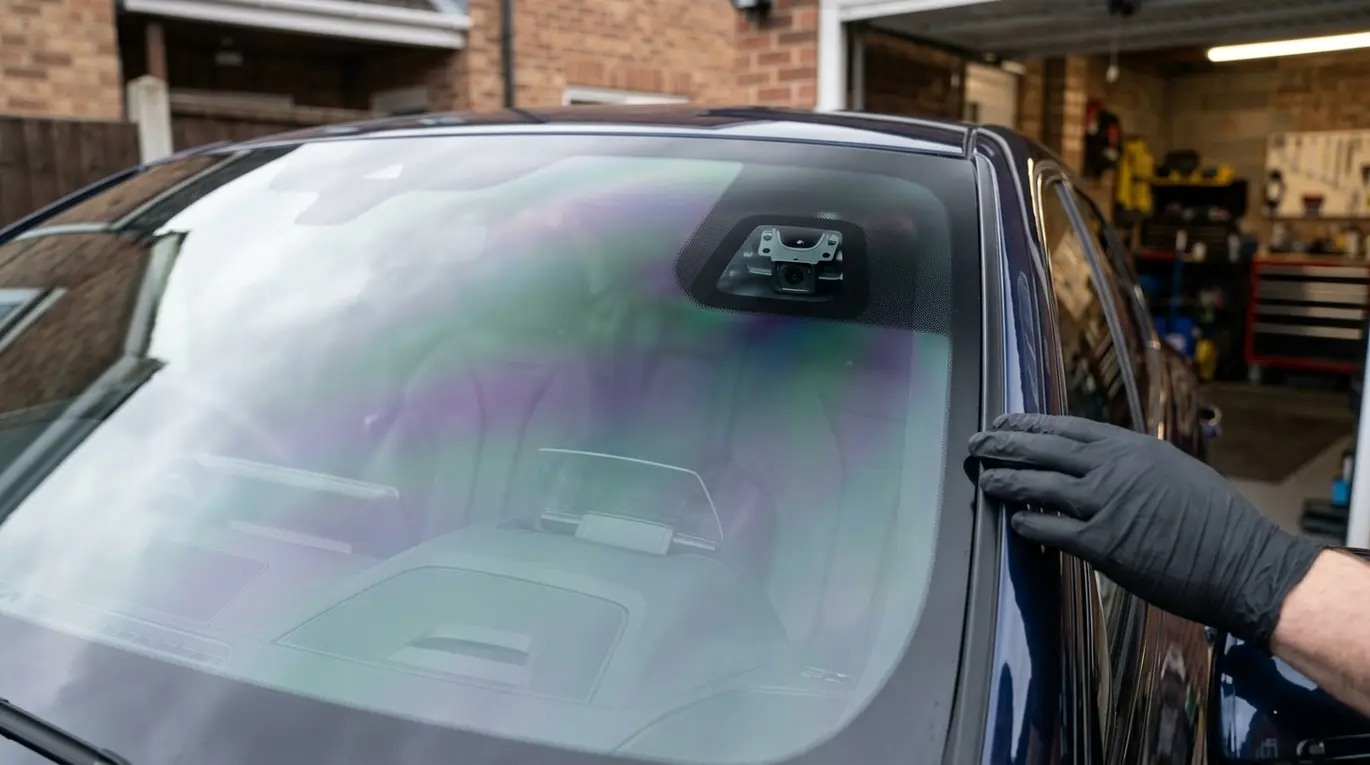
A HUD windscreen is a laminate: two glass plies bonded by a special PVB interlayer. The key is a wedge‑shaped PVB that corrects the double reflections between glass surfaces, lining the image up so your eyes see just one sharp display positioned a few metres ahead.
Some screens add polarising and anti‑reflective treatments to cut glare and boost contrast. OEM specifications tightly control wedge angle, thickness, clarity and refractive index — tiny deviations can cause visible ghosting or tint. That’s why we fit OEM‑spec parts and check optics before handover. Note: on some cars, very dark or strongly polarised sunglasses can make a HUD appear dimmer.
This image was generated with AI and may not always represent the product or service exactly.
Anti‑Ghosting Requirements: What Causes Doubling And How To Prevent It
Ghosting happens when two internal reflections aren’t perfectly aligned. Preventing it relies on precise manufacturing and careful installation.
- Glass and laminate tolerances: exact parallelism of glass plies, correct wedge geometry and a stable PVB refractive index.
- Coatings and clarity: consistent optical coatings to maintain brightness and colour accuracy.
- Fitment accuracy: correct adhesive bead height and positioning to avoid twist or stress that can alter optics.
Installation matters as much as the glass. Poor bonding can introduce stress, twist or minor misalignment, all of which affect optics. At Advanced Autoglazing Ltd we use Loctite structural adhesives and controlled fitment methods to maintain optical integrity and cabin quietness. Our ATA‑accredited technicians follow strict checks. Learn more on our about us page.
Pilkington OEM‑Spec HUD Glass: Built For Clarity And Durability
We specify Pilkington OEM‑spec HUD windscreens for consistent optical quality. The wedge PVB is held to tight tolerances and coatings are durable, delivering the correct HUD marking, cleanly defined images and reliable clarity in all light conditions.
Modern cars rely on clear camera zones for ADAS. Pilkington screens keep these areas crystal‑clear to support sensor performance. Acoustic and solar‑control options can be combined with HUD when engineered correctly, so the display stays bright. With 30+ years’ experience, we select the right part by VIN to match your exact features.
ADAS Accuracy Depends On The Right Windscreen And Calibration
ADAS cameras look through the windscreen. If the glass specification is wrong, it can change focal length, add distortion or reduce contrast — putting safety features at risk. After any HUD windscreen change, calibration is mandatory.
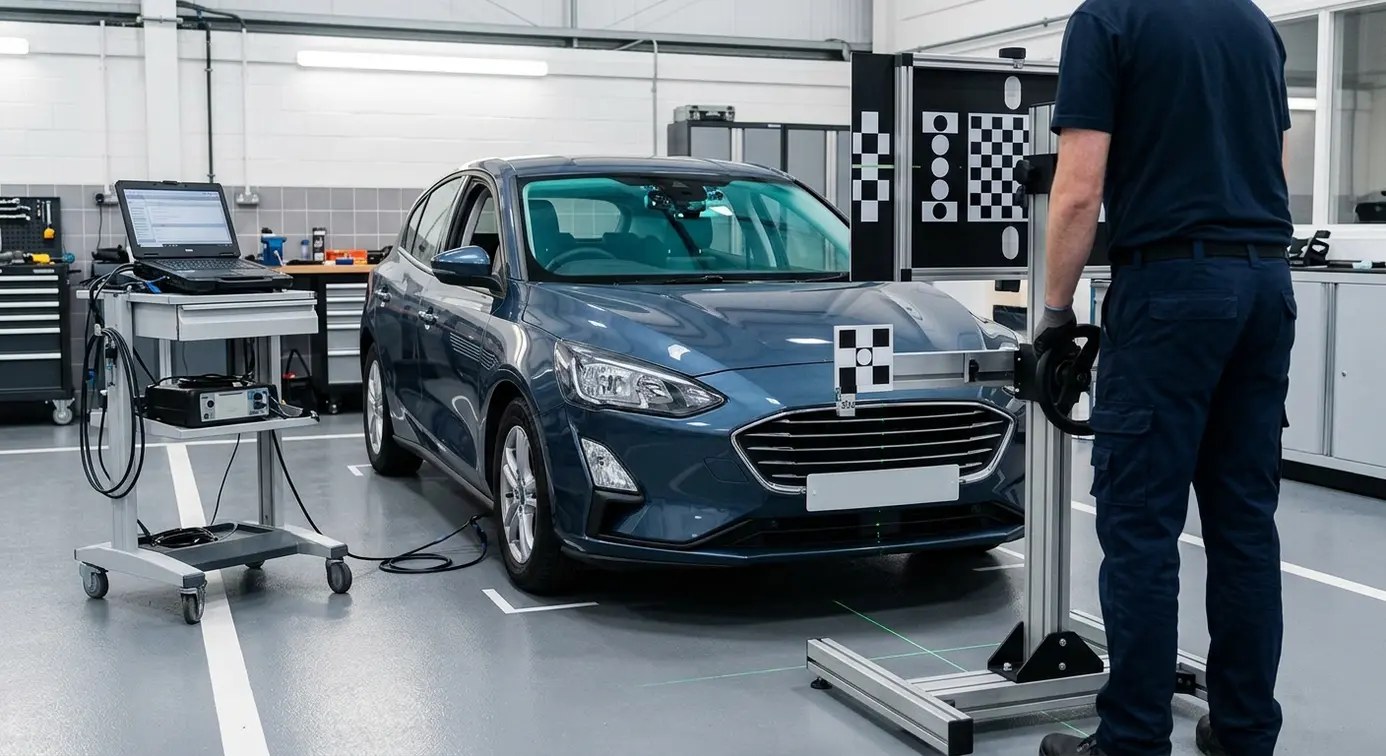
Advanced Autoglazing Ltd completes static and dynamic calibration in‑house using manufacturer procedures. We verify results with system checks and a road test to keep you safe and protect insurance compliance. For details, see our ADAS camera calibration service.
Common HUD Windscreen Issues We See (And How We Fix Them)
- Wrong‑spec glass: non‑HUD screens supplied by mistake cause ghosting or a dim display. Remedy: fit the correct HUD‑marked windscreen and verify optics at handover.
- Aftermarket tint films: films in the HUD area reduce brightness and can shift colour. Remedy: safe removal and advice on legal tint levels. See our window tinting guidance.
- DIY chip kits: residues can leave haze or rings that disrupt the HUD. Remedy: professional repair or replacement in critical zones to restore clarity.
This image was generated with AI and may not always represent the product or service exactly.
HUD Chip Repair Vs Replacement: Making The Right Call
Small chips outside the HUD projection path may be repairable. In the HUD zone, or where the laminate is affected, replacement is often the safer choice. We assess size, position and optical impact to recommend the best route.
If cracks are spreading, replacing the screen protects vision and safety systems. We’re insurance‑approved and can help with direct billing. We’ll explain the options, likely excess and timescales before any work begins.
Our HUD Windscreen Fitting Process: Precision From Start To Finish
- Confirm your exact specification by VIN (HUD type, rain/light sensors, ADAS cameras and brackets).
- Protect the interior, remove the old screen cleanly and prepare bonding surfaces.
- Apply a precise Loctite bead to the specified height and set the new screen to OE datum.
- Allow the correct cure time before moving the vehicle.
- Complete ADAS calibration as required (static and/or dynamic).
- Carry out final checks: leak test and optical inspections in daylight and low light to confirm HUD sharpness.
Same‑day or next‑day appointments are often available, with mobile fitting in covered areas.
Why Drivers Choose Us For HUD Windscreens
Advanced Autoglazing Ltd combines ATA‑accredited technicians, 30+ years of specialist glazing experience, Pilkington OEM‑spec glass and Loctite adhesives. We give clear advice, transparent pricing and a safety‑first handover for a sharp HUD image and a quiet, watertight cabin.
We work efficiently without cutting corners. You’ll get updates, photos if needed and friendly guidance on care and calibration. For pricing or a fast appointment, get a quote today.
FAQs
How Can I Tell If My Car Needs A HUD‑Marked Windscreen?
Look for a HUD option in your vehicle settings or a projector housing on the dash. Many HUD screens have a small HUD symbol on the glass. If unsure, we can confirm by VIN.
Will A Non‑HUD Screen Damage The System?
It won’t usually harm the projector, but it will distort the image. Expect ghosting, dim output or colour shift. Always fit the correct HUD‑spec glass.
How Long Does A HUD Windscreen Replacement Take?
Typically around half a day, including bonding cure time and ADAS calibration where required. We’ll confirm timings when booking and keep you updated.
Is Calibration Always Needed After Replacement?
Yes, if your vehicle has ADAS. Cameras view through the glass and must be recalibrated so safety systems work correctly.
Can You Replace A HUD Screen At My Home Or Workplace?
In many cases, yes. We offer mobile fitting in covered areas and only proceed where conditions allow safe bonding and accurate calibration.


