
Why a Windscreen Damage Policy Cuts Fleet Downtime
Unplanned glass damage stops vehicles, causes missed delivery slots and last‑minute driver swaps, and raises safety risk. A clear windscreen policy speeds decisions, reduces roadside handovers and lifts first‑visit fix rates—protecting service levels and your drivers.
UK MOT visibility rules and duty of care sit at the core. For a refresher, see your MOT and your windscreen. Most damage starts small; learn more in the top causes of windscreen damage. With 30+ years in trade, ATA-accredited technicians and same‑day/next‑day mobile response, Advanced Autoglazing Ltd gives fleets a dependable way to keep vehicles working.
Fleet Windscreen Policy Template: Essentials at a Glance
Use this fast, practical outline for vans and HGVs:
- Scope: All windscreens, side and rear glass across the fleet. Applies on-road, at depots and at third‑party sites.
- Roles: Driver reports; fleet/ops authorises; preferred glazing partner completes repair or replacement.
- SLAs: Triage within 1 hour; on‑site same/next day; ADAS calibration arranged where required.
- Preferred supplier: Advanced Autoglazing Ltd mobile units and depot support. Check areas we cover.
- 24/7 incident line (sample): glass@fleet.co.uk | 01234 567890.
- Report fields: Vehicle reg, driver, location, time/date, mileage, load status, damage size/location, photos, ADAS present, dash warnings.
Windscreen Repair vs Replacement Thresholds for Fleets
Use MOT‑aligned thresholds to speed authorisations. As a rule, chips up to 10 mm in the driver’s Zone A and up to 40 mm elsewhere are often repairable. Larger damage, line‑of‑sight distortion or any crack typically needs replacement. Final decisions rest with the technician after inspection.
Edge cracks, multiple impacts, delamination or moisture ingress point to replacement. Vehicles with cameras, rain/light sensors, heaters or HUDs may follow a different path due to calibration and parts complexity. Read more on windscreen repair vs replacement and book prompt chip repair to prevent avoidable replacements.
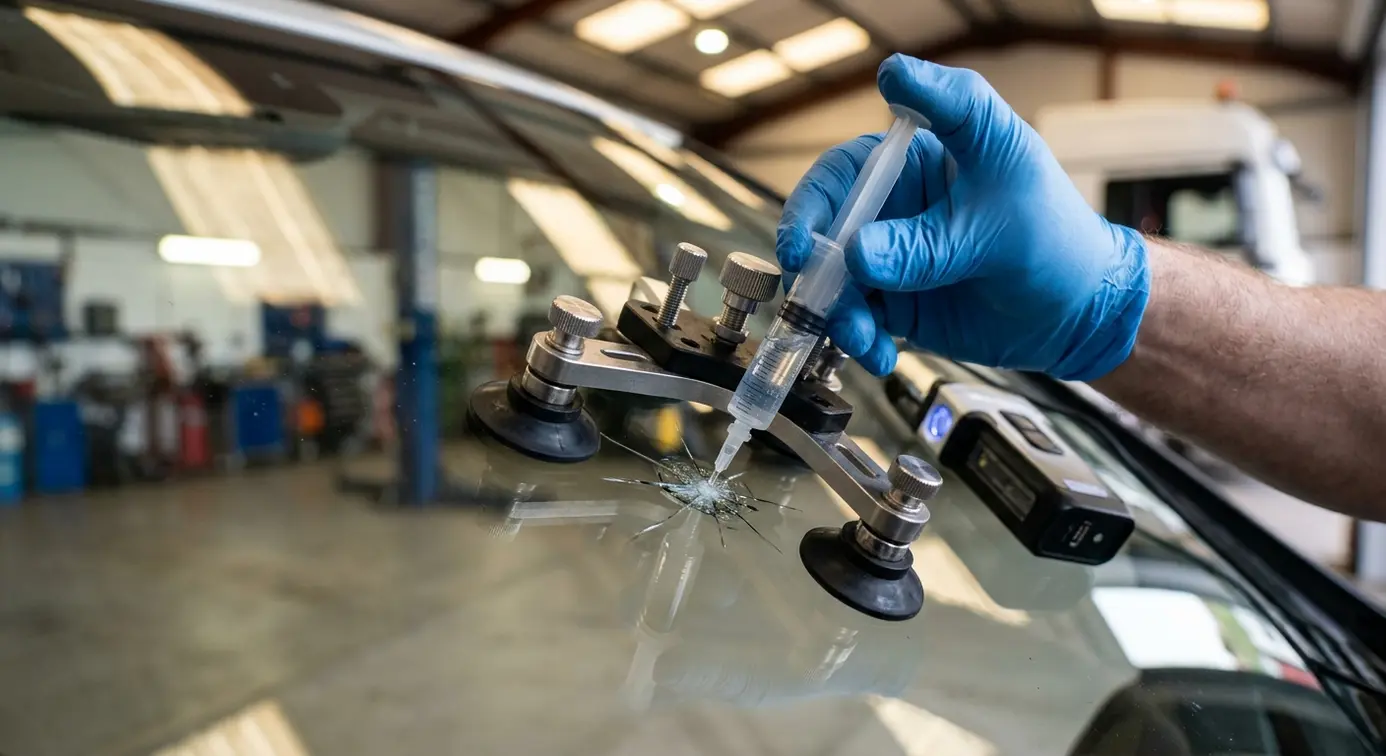
This image was generated with AI and may not always represent the product or service exactly.
Driver Reporting: The First 15 Minutes
Make reporting simple and repeatable. Pull over safely. Photograph the damage inside and out. Note the location (Zone A/edge/out of view), size and whether cracks are spreading. Record any ADAS or rain sensor warnings. Submit via the fleet app or incident email. If possible, place clear tape over a fresh chip to keep out moisture until assessed.
- Mini form: Reg, mileage, driver, time/date, route, load (yes/no), weather, damage type/size, Zone A (yes/no), ADAS fitted (yes/no), photos.
- Protect the area: Keep the glass clean and dry. Avoid pressure washers, harsh potholes and slamming doors until assessed.
Chip Triage and On‑Site Repair Workflow
Dispatch tags each case: Repair Now / Monitor / Replace. Repair Now: book a mobile resin repair at a depot turn‑around or planned route stop. Monitor: minor, out‑of‑view chips scheduled for the next maintenance window. Replace: pre‑order glass, trims and camera brackets, then book an on‑site fitting slot.
Most chip repairs take 30–45 minutes with immediate or near‑immediate drive‑away. Replacements take longer due to parts, adhesive cure and any calibration. Accurate VIN and variant details (heated/acoustic glass, sensor types) lift first‑visit fix rates and cut idle time. Avoid DIY kits; poor resin or trapped moisture often forces a later replacement.
ADAS‑Aware Decisions and Calibration Steps for Windscreens
ADAS camera calibration is required after most windscreen replacements and after any sensor bracket disturbance. Chip repairs rarely need it. Your policy should specify the calibration method, location and evidence saved.
Static calibration needs a level, well‑lit space with targets; dynamic uses a controlled road route; some models require a hybrid approach. Times vary by make and model. File calibration certificates to the vehicle record for audit and insurance. Advanced Autoglazing Ltd provides on‑site and workshop ADAS camera calibration with ATA‑accredited technicians.
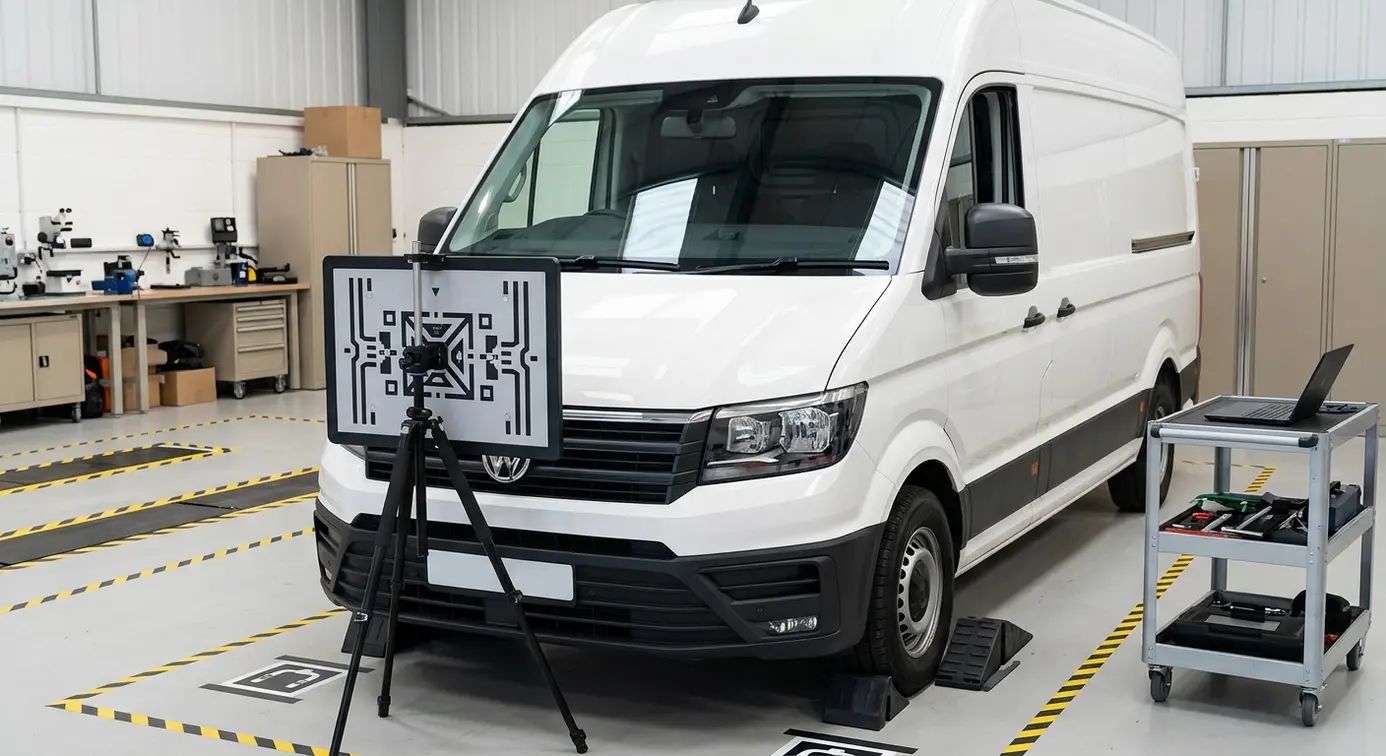
This image was generated with AI and may not always represent the product or service exactly.
Quality Standards: Glass, Adhesives and Safe Drive‑Away
Specify OEM‑spec or OE‑equivalent glass (e.g., Pilkington) with correct trims, brackets and sensors. Mandate approved automotive polyurethane adhesives with documented cure times, temperature and humidity checks. This protects structural integrity and airbag performance.
Advanced Autoglazing Ltd uses high‑grade materials and ATA‑accredited technicians with 30+ years’ experience. Include in your paperwork: pre‑fit checks, torque values (where applicable), cure verification and the safe drive‑away time (SDAT). Drivers leave with clear aftercare instructions and a work record for your files.
Insurance and Cost Control for Fleets
Set a simple rule: pay direct for small chip repairs below the excess; claim for larger jobs. This reduces admin, protects no‑claims discounts and keeps vehicles working. Delegate fast authorisation to minimise delays.
Use a brief claim checklist: incident report, photos, policy number, excess, ADAS status and vehicle VIN. Add an internal authorisation limit and consolidated monthly billing with your glazing partner to cut paperwork. Early chip repairs reduce replacements and lower total cost across the fleet.
On‑Site Scheduling to Reduce Idle Time
Block regular depot slots for chip repairs and pre‑book replacements for vehicle return times. Use route‑based interventions that align with driver breaks. Share weekly schedules so technicians can meet vehicles at predictable points.
Pre‑pick glass by VIN, confirm sensor variants and stock high‑usage screens. Allow for weather cover and a clean, level work area. Track KPIs: first‑visit fix rate, average downtime per incident and on‑time attendance. These numbers highlight where policy tweaks save hours across the fleet.
Implementation Checklist and Policy Template
30‑day rollout: appoint a policy owner, upload the report form, brief drivers (toolbox talk), pilot with one depot, review, then scale. Keep a live asset list: VINs, screen variants, ADAS inventory and supplier contacts.
- Driver pack: photo guide, Zone A diagram, hotline details, do/don’t list.
- Ops tools: triage matrix, authorisation rules, SLA dashboard.
- Supplier: same/next‑day capacity, calibration access, documentation process.
Want a policy template tailored to your routes and depots? Advanced Autoglazing Ltd can help. Same‑day/next‑day mobile service available. Get a quote to start your rollout.
FAQs
What counts as Zone A on a van or HGV windscreen?
Zone A is the central area in front of the driver, aligned with the steering wheel, where visibility is most critical (around 290 mm wide). Damage here faces stricter MOT limits and usually triggers faster action.
How quickly can you attend our depot?
Most fleets receive same‑day or next‑day attendance subject to location and parts. Emergency triage happens within one hour to plan repair, replacement and any calibration.
Do chip repairs affect the MOT?
Professional repairs that restore clarity and strength usually satisfy MOT visibility standards. Poor DIY fixes can leave distortion, so always use an accredited technician.
When is ADAS calibration needed?
Almost every windscreen replacement with a camera or sensor needs calibration. Chip repairs usually do not, unless a sensor bracket is disturbed.
What should drivers capture in a damage report?
Record photos inside/outside, damage size and location, time/date, vehicle reg, mileage, load status and any ADAS warnings. This speeds triage and first‑visit fixes.


