
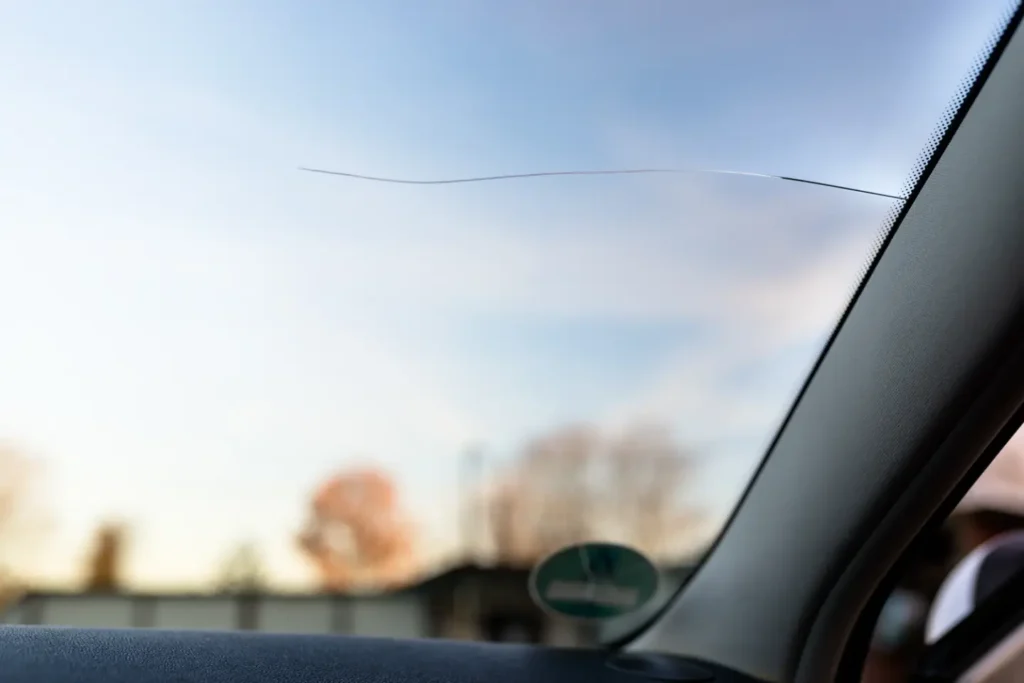
That tiny chip in your windscreen? It’s going to spread. Maybe tomorrow, maybe next month, but it will spread. And when it does, you’re looking at a full windscreen replacement instead of a quick repair.
But it’s important to know that most windscreen damage is preventable. Here’s what actually causes the problems and what you can do about it.
Here are the 5 Common Causes of Windscreen Damage
1. Road Debris
The standard advice is “keep two seconds behind the car ahead.” That’s fine for braking distance. For avoiding stones, it’s useless.
Here’s why: When the car in front hits a stone at 60mph, their tyre launches it backward at roughly a 30-degree angle. At two seconds following distance, you’re driving right into where that stone lands. You’ve basically positioned yourself in the strike zone.
What actually works:
Change lanes when you see trucks carrying loose materials, cars with muddy wheels, or fresh roadworks. Don’t just slow down. Move over. The debris spreads across the whole lane.
If you can’t change lanes, increase your distance to four or five seconds.
Quick damage comparison:
| Where You’re Hit | Can It Be Repaired? | Insurance Coverage |
| Edge of windscreen | Usually needs replacing | Typically covered with excess |
| Center, smaller than £2 coin | Yes, often fully covered | Usually no excess |
| Driver’s line of sight | Depends on size and depth | Varies by policy |
| Multiple chips | Usually needs replacing | Check your policy |
Small chips in the center can be repaired. Chips at the edges compromise structural integrity and usually mean a full replacement. Location matters as much as size.
2. Temperature Swings
Your windscreen is actually three layers: glass, plastic, glass, which expand and contract at different rates. Small temperature changes happen gradually enough that everything adjusts, but rapid changes create stress. Any weak point gives way.
Winter mornings are the worst. You’re late, the car’s frozen, and you think pouring hot water on the ice is a quick fix, until you’re hitting frozen glass with 90-degree water. The thermal shock creates cracks faster than you can say “running late.”
What stops this:
Start your defroster on the lowest heat settings and increase it gradually over a few minutes. After running air conditioning in summer, don’t park directly in the blazing sun, give your windscreen two minutes to adjust. Also, make sure to keep a proper ice scraper and de-icer spray in your car.
Read: Repair and Replacement Pricing Guide
3. Your Wiper Blades
You probably can’t see it in daylight but drive at night with oncoming headlights and suddenly your windscreen looks like someone took sandpaper to it. That’s your wiper blades doing damage every time you use them.
Once the rubber edge wears down, the metal or hard plastic underneath contacts your glass, and every swipe creates microscopic scratches. Road dust contains silica particles that are harder than glass. When worn wipers drag this dust across your windscreen, you’re essentially running something harder than your glass across your glass.
The fix is simple:
Replace your wiper blades every six months, not when they start squeaking and definitely not just when they leave streaks. Set a reminder on your phone for April and October. Just do it.
Also, clean your blades monthly with a damp cloth. Wipe away the grime that builds up on the rubber edge and use proper windscreen washer fluid, not water with washing up liquid. Quality fluid contains lubricants that reduce friction between your wipers and glass. The cheap stuff or DIY solutions create more friction and more damage.
Wiper blade warning signs:
| Problem | What It Means | What You Should Do |
| Squeaking noise | Rubber is hardening | Replace immediately |
| Streaking | Edge is worn unevenly | Replace immediately |
| Juddering | Blade not making proper contact | Replace immediately |
| Looks fine but 6+ months old | Rubber degraded even if not obvious | Replace anyway |
4. Weather
Hailstorms are obvious but most weather damage comes from things you don’t see coming.
Storms send branches, roof tiles, and garden furniture flying into parked cars. High winds pick up debris. Even heavy rain at motorway speeds can find weak points in already compromised glass and make them worse.
The windscreens we see at Advanced Autoglazing after major storms? Half are damaged by falling branches from trees people parked under thinking they’d provide shelter.
Practical prevention:
Check the weather forecast obsessively during autumn and winter. When severe weather is coming, park away from trees. Small branches traveling at storm speeds crack glass easily.
No garage or covered parking? Find a multi-story car park or covered shopping center on severe weather days. One evening of inconvenient parking beats a week without your car.
If you see dark clouds building and you’re about to park outside for hours, consider moving your car to covered parking. Ten minutes of effort now versus days of hassle later.
During summer, park in shade when possible. Prolonged UV exposure degrades the laminate layer over time. Your windscreen won’t crack immediately, but it becomes more vulnerable to everything else.
5. Small Impacts You Don’t Think Count as Accidents
A shopping trolley rolls into your car. A football hits your windscreen. You close the bonnet a bit too firmly. None of these seem like real accidents. None of them leave obvious damage. But they all create stress points.
Modern windscreens aren’t just glass you see through, they’re structural. In newer cars, the windscreen takes up to 45% of the load in certain crashes. When people ignore minor impacts, they’re not just risking a cracked screen, they’re also weakening their car’s crash protection.
The interesting thing about windscreen stress is that damage often shows up days or weeks after the actual impact. Someone reverses into a bollard, barely touches it, thinks nothing of it. Three weeks later their windscreen cracks for “no reason” and fails its MOT.
There’s no such thing as spontaneous windscreen failure. There’s always a cause. Usually it happens earlier than you think.
What you should actually do:
After any impact, even minor ones, get your windscreen checked.
Park away from football pitches, playgrounds, and construction sites. Walking an extra fifty meters beats replacing your windscreen.
When you close your bonnet or boot, don’t slam it. Lower it most of the way and let it drop the last few inches. The same goes for car doors. Slamming doors with windows slightly open creates a pressure wave inside the car that stresses your windscreen.
How long can you drive with a chip in the windscreen?
Technically, you can drive indefinitely if the chip isn’t in your line of sight and smaller than a £2 coin. Legally, you’re fine as long as it doesn’t obstruct your view. Practically? You’re gambling. A chip can spread any time due to temperature changes, road vibrations, or hitting another pothole. Once it spreads into your line of sight or reaches the edge, you’ve gone from a quick repair to a full replacement. Get it sorted within a few days, not a few weeks.
Will insurance cover your windscreen repairs?
Most comprehensive policies cover repairs without touching your no-claims bonus and often without any excess, which means you could get it fixed for nothing. Replacements usually involve paying your excess, but even that’s better than paying for the whole thing out of pocket.
The catch is some policies have windscreen cover you need to activate separately, so it’s worth checking your documents or just calling your insurer to confirm. When people come to us unsure about their cover, we help them work through their policy details because it’s usually better than they think.
Can every chip be repaired or do some need replacing?
Location decides everything here. Edge chips compromise the structural integrity of your whole windscreen, so they need replacing regardless of size. Multiple chips scattered across the glass also mean replacement because fixing them individually weakens the overall structure.
Deep chips in your direct line of sight might be repairable, but if the resin would create distortion in your vision, replacement is the safer option. Anything bigger than a £2 coin generally needs replacing, but the only way to know for certain is to get it inspected and we’ll tell you honestly what you’re dealing with.
Read: Can a Cracked Windscreen Pass an MOT?
How long does a windscreen repair actually take?
Repairs take about 30 minutes, so you can wait while we fix it and then drive away. Replacements take two to three hours and you’ll need to leave your car with us, which is why most people drop it off in the morning and pick it up after lunch.
After a repair, skip the car wash for a few hours and crack your windows slightly so the resin cures properly. After a replacement, wait at least an hour before driving and avoid slamming doors for 24 hours while the adhesive sets fully, which I know sounds fussy but it makes a real difference to how well the seal holds.
Will you be able to see where the chip was repaired?
You’ll see something, but not much. The resin is incredibly clear but not completely invisible, so from most angles and lighting conditions you won’t notice it at all. Direct sunlight or headlights at certain angles might show a slight mark, but it’s still far less obvious than the original chip and it stops the damage spreading.
In fifteen years, nobody’s complained their repair is too visible, but plenty of people have complained when they waited too long and ended up replacing the whole windscreen instead, which is exactly what we’re trying to help you avoid.
Can a chip spread while driving?
Yes, and it happens more often than you’d think. Potholes, speed bumps, and motorway vibrations all put stress on damaged glass, but temperature changes are the real danger.
You park in the sun and the glass heats up, then you get in and blast the air con, and that temperature swing can turn a small chip into a long crack in seconds. Sometimes people watch it happen in real time, which is why dealing with chips immediately isn’t paranoia but just cheaper than gambling and losing.
Spotted a chip or crack?
Don’t wait for it to spread. Get in touch with Advanced Autoglazing for a free quote. We’ll tell you honestly whether it needs repairing or if it’s fine to leave. Most repairs are quick, hassle-free, and fully covered by insurance.


