ADAS Calibration: What It Is And Why It Matters
What Your Car’s ADAS Relies On
Advanced driver assistance systems (ADAS) use cameras, radar, lidar and ultrasonic sensors to detect lane lines, vehicles, signs and obstacles for features such as AEB, ACC and lane-keeping. If any sensor is even slightly out of position, guidance and braking timing can change. Calibration restores the precise alignment the vehicle expects after parts are moved or replaced. Read more on what ADAS is and how calibration works.
When Calibration Is Needed
- After a windscreen replacement or camera/radar removal
- After front-end damage, suspension or wheel alignment work
- After software updates or when dashboard warnings appear
Our Credentials At A Glance
Advanced Autoglazing Ltd brings 30+ years’ experience and ATA-accredited technicians. We fit high-grade Pilkington glass and use Loctite adhesives for strength and safety. Same-day or next-day slots are often available. Meet the team in About us.
Static Vs Dynamic Calibration: The Short Answer
Static Calibration (Workshop-Based)
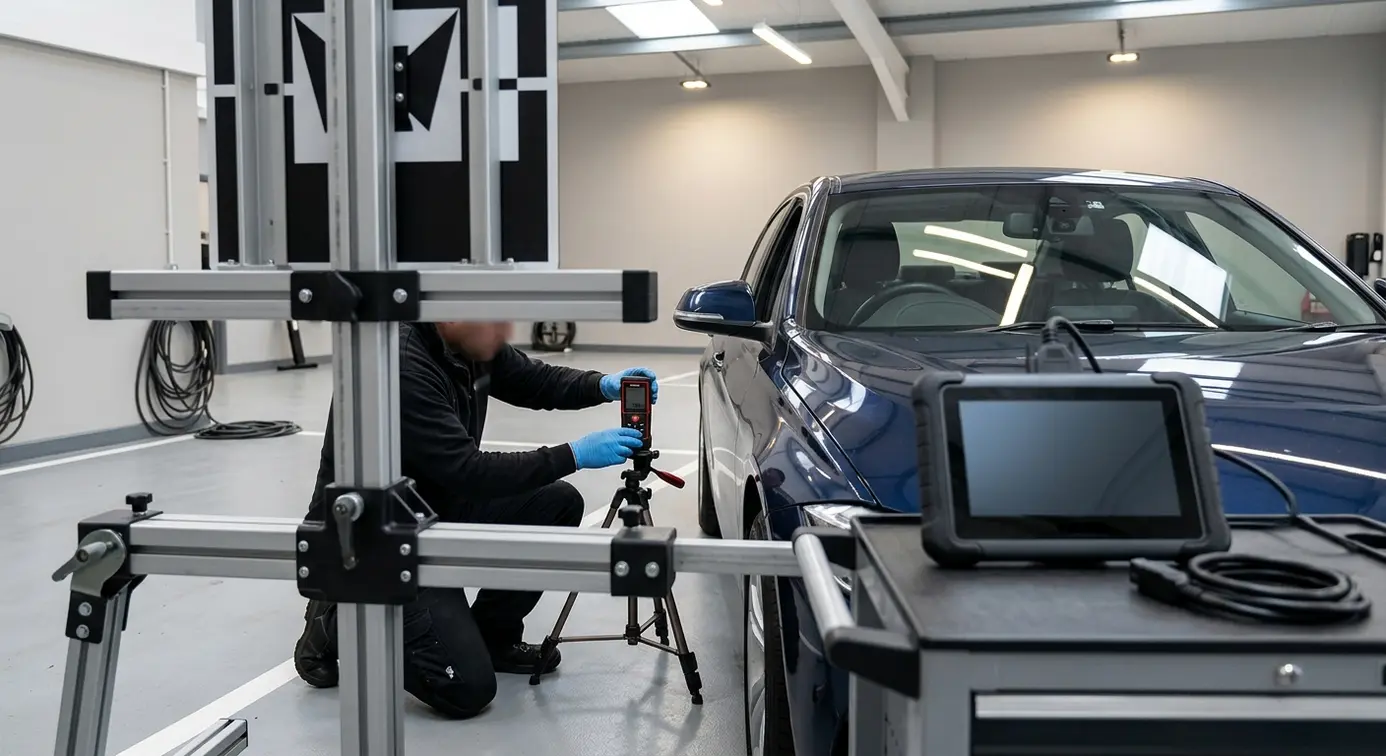
Performed in a controlled bay using OEM-spec targets and radar reflectors set to millimetre accuracy and aligned with laser tools. This is used when the manufacturer specifies fixed references or where lighting and geometry must be tightly controlled.
Dynamic Calibration (Road-Based)
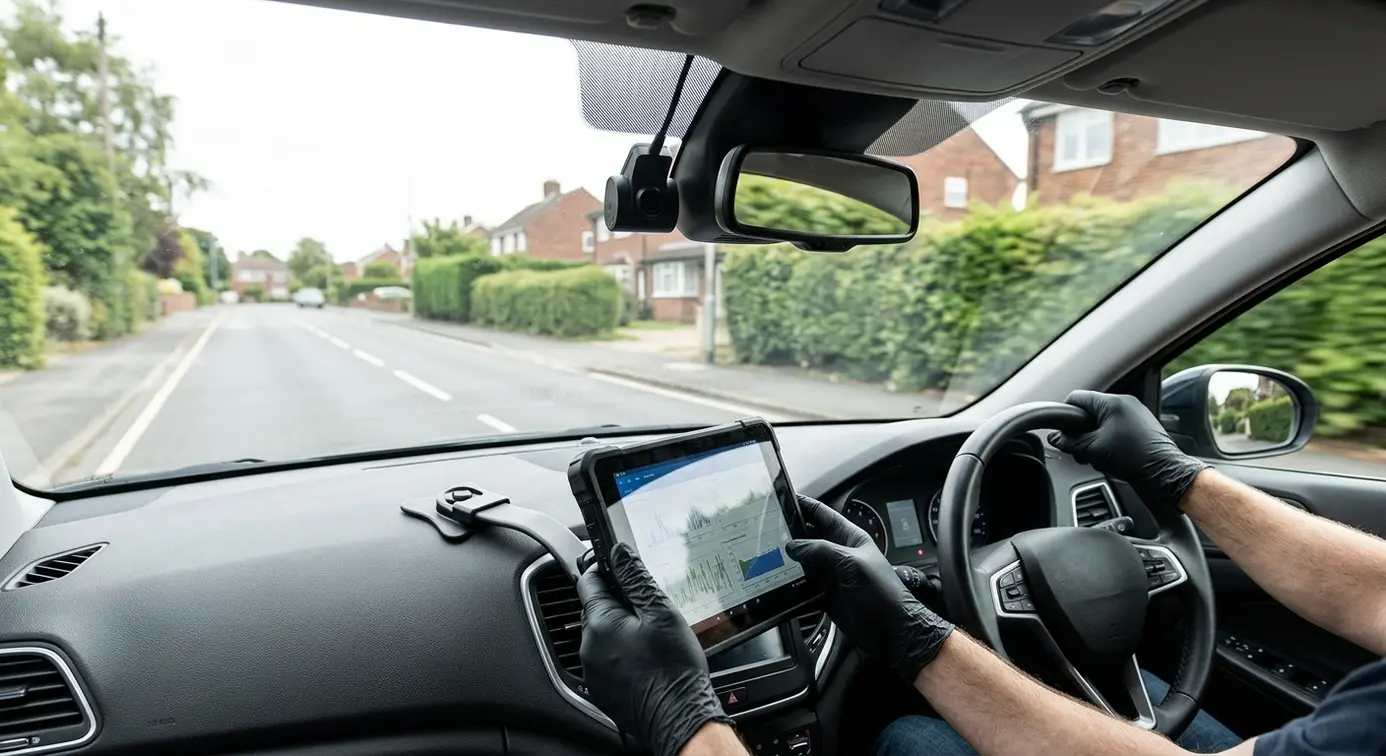
Completed on-road while a diagnostic tool guides the process. The system learns reference points at set speeds and distances, so a clear route and suitable conditions are essential. See how long ADAS calibration takes and what happens if ADAS is not calibrated.
Pros, Limits And Safety Checks
- Static: laboratory-grade control for precise camera/radar alignment.
- Dynamic: proves performance in real traffic and at speed.
- Many modern cars need both to satisfy OEM requirements.
We always finish with a road test and system health check.
How We Choose The Right Method For Your Make And Model
Following OEM Methods And Software
We follow the exact factory procedure for your vehicle’s year, trim and sensor suite. Our tools access current OEM data and calibration routines. The method is defined by the manufacturer, not guesswork.
Typical Manufacturer Examples
Some VW/Audi camera systems prefer static. Some Toyota and Honda camera-only systems often specify dynamic. Many Mercedes and BMW models require both camera and radar calibrations. Check the car makes we cover, including BMW.
Decision Factors We Confirm At Booking
- VIN and model year
- Which sensors are fitted (front camera, radar, both)
- Any warning lights or stored fault codes
- Recent repairs (windscreen, suspension, body or alignment)
- Wheel alignment and ride height status
This image was generated with AI and may not always represent the product or service exactly.
Static Calibration: What Happens In Our Workshop
Set-Up: Level Floor, Laser Alignment And Targets
We set tyre pressures and confirm ride height, then position the vehicle on a perfectly level surface. OEM-spec targets and radar reflectors are placed to millimetre tolerances using laser alignment rigs, following the service manual step by step.
Programming And Fine-Tuning
Using approved diagnostic software, we initialise and fine‑tune the camera, radar or lidar. Screen quality matters here. We fit Pilkington glass for optical clarity and correct bracket geometry, bonded with Loctite adhesives for a safe, stable cure.
Documentation And Handover
We run validation checks and a road test where required. You receive a calibration certificate for your records. Learn more about our ADAS camera calibration.
Dynamic Calibration: What To Expect On The Road
Safe Route Planning And Road Conditions
We plan a route with clear lane markings and steady traffic flow. Good daylight and dry roads help the system read lines and vehicles consistently.
Live Data, Speeds And System Learning
The diagnostic tool shows live status while we hold the OEM‑specified speeds and distances. Each stage confirms when complete. Weather or poor lane markings can extend or pause the process.
Post-Drive Validation
Back at base, we run a final health check and confirm no related fault codes. If conditions prevent completion, we rebook for the earliest suitable window.
When Calibration Is Required (And When It Isn’t)
After Windscreen Work And Camera/Radar Removal
Calibration is required after a windscreen replacement, or if a camera or radar has been removed or disturbed. Even slight movement can shift the aim point.
After Suspension, Alignment Or Collision Repairs
Changes to ride height, wheel alignment or front-end structure alter sightlines. Calibration re‑establishes correct references so AEB, lane-keeping and ACC perform as designed.
Warning Lights, Fault Codes And MOT
ADAS warnings or related fault codes mean the system is not at full function. A small chip repair alone usually does not need calibration unless a sensor was disturbed. Malfunctioning ADAS may affect road safety and could raise MOT concerns.
Why OEM Targets, Laser Accuracy And A Road Test Matter
Tiny Misalignments, Big Safety Consequences
A fraction of a degree in camera angle can move a lane boundary or change AEB timing. Precision tools and OEM targets prevent drift and guesswork.
Verified Performance, Not Guesswork
We invest in laser alignment rigs and follow OEM procedures, then validate on the road. Your systems are proven in real traffic, not just in theory.
Records For Insurance And Peace Of Mind
You get a calibration certificate and job record. This supports service history and insurer needs, and confirms your vehicle leaves us safe and compliant.
This image was generated with AI and may not always represent the product or service exactly.
Real Scenarios We See Every Week
BMW Windscreen Replacement With Front Camera
We fit Pilkington glass, allow the Loctite adhesive to cure, then complete a static camera calibration in-bay. A road test confirms stable lane-keeping and sign recognition.
Ford Transit Radar And Camera After A Knock
After light front-end damage, we align the radar to the target frame in the workshop, then complete a dynamic camera calibration. Final checks confirm ACC and AEB readiness.
Honda/Toyota Camera-Only Dynamic Example
We carry out a dynamic calibration on a clear route at OEM‑specified speeds. If heavy rain reduces line visibility, we reschedule quickly to keep you moving.
Time, Cost And Easy Booking
Typical Durations And Fast Turnaround
Static calibrations typically take 60–120 minutes. Dynamic procedures are usually 30–60 minutes, depending on route and traffic. Combined work takes longer, especially after a screen replacement to allow safe adhesive cure.
Transparent Pricing And Insurance Support
We provide clear quotes and honest advice. Where applicable, we can bill insurers directly to keep things simple. Ask for a written estimate before we start.
Mobile Vs Workshop Availability
Many cameras and radars need our controlled workshop for accuracy. Where the OEM allows, we can complete parts of the job mobile. Call Advanced Autoglazing Ltd to book or request a quick quote online.
Straight Answers: ADAS Calibration FAQs
Do I Need OEM-Equivalent Glass?
Yes. We fit high-grade Pilkington glass that meets OE specs for optical clarity and correct bracket fit. This supports reliable calibration and long-term accuracy.
Will Weather Stop A Dynamic Calibration?
It can. Heavy rain, poor visibility or faded lane markings may prevent completion. We rebook promptly for the next suitable window.
What If Calibration Fails First Time?
We diagnose causes such as ride height, wheel alignment or stored fault codes. We then address the issue, complete any required static procedure and retest.
More ADAS Calibration FAQs
Is It Safe To Drive Before My ADAS Is Calibrated?
If systems warn of a fault, drive with extra care and book promptly. Some features may be limited or unavailable until calibration is complete.
How Often Should ADAS Be Checked?
There is no routine interval. Check and calibrate whenever parts are moved or replaced, after relevant repairs, or if warnings appear.
Does Calibration Change My Driver Settings?
No. Calibration aligns sensors and updates reference data. It does not affect personal preferences like following distance or audio settings.
Can Modifications Affect Calibration?
Yes. Changes to ride height, wheels, bumpers or grilles can alter sensor aim. Tell us about any modifications when booking.
Will I Receive Proof Of Calibration?
Yes. Advanced Autoglazing Ltd provides a calibration certificate and job report for your records and insurer if needed.


