
ADAS in 2026: Why Calibration After Windscreen Work Matters
Advanced driver assistance systems (AEB, lane keeping, traffic sign recognition and more) rely on a front‑facing camera that looks through the windscreen. If the screen is replaced or the camera/bracket is disturbed by even a fraction of a degree, its view and angles change. That can affect warnings, braking distances and steering support. Calibration restores the camera to the manufacturer’s reference points.
The 2026 rule remains simple: follow the OE procedure and verify operation. At Advanced Autoglazing Ltd, ATA‑accredited technicians use OE data, Pilkington glass and Loctite adhesives to protect accuracy. Same‑day or next‑day slots are often available. For a plain explainer see what is ADAS and how is it calibrated, and if you are weighing up options, our windscreen repair vs replacement guide can help.
Static vs Dynamic ADAS Calibration: The Difference in Plain English
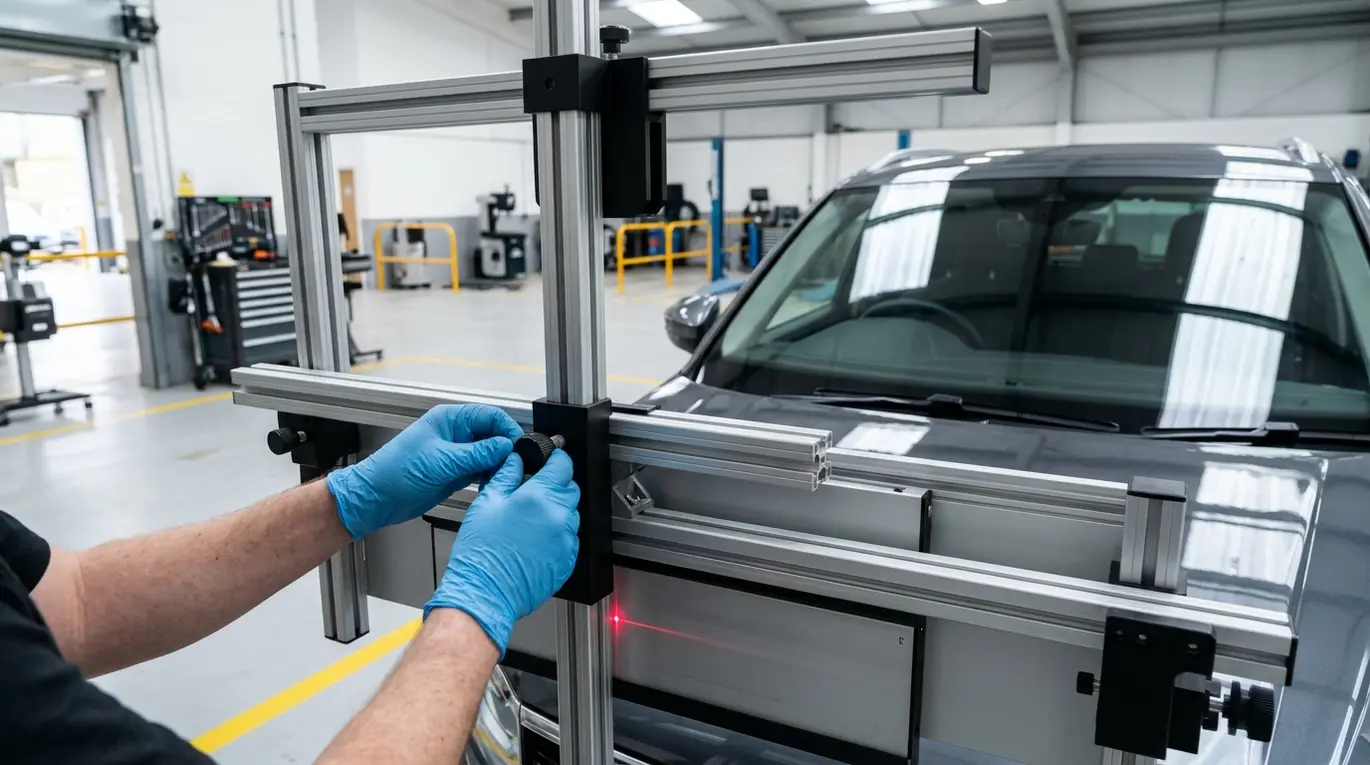
Static calibration (workshop bay)
- Completed indoors using calibrated targets, lasers and measurements.
- Equipment is aligned to the vehicle’s thrust line; software then sets the camera’s reference points.
- Stable, accurate and repeatable regardless of weather or traffic.
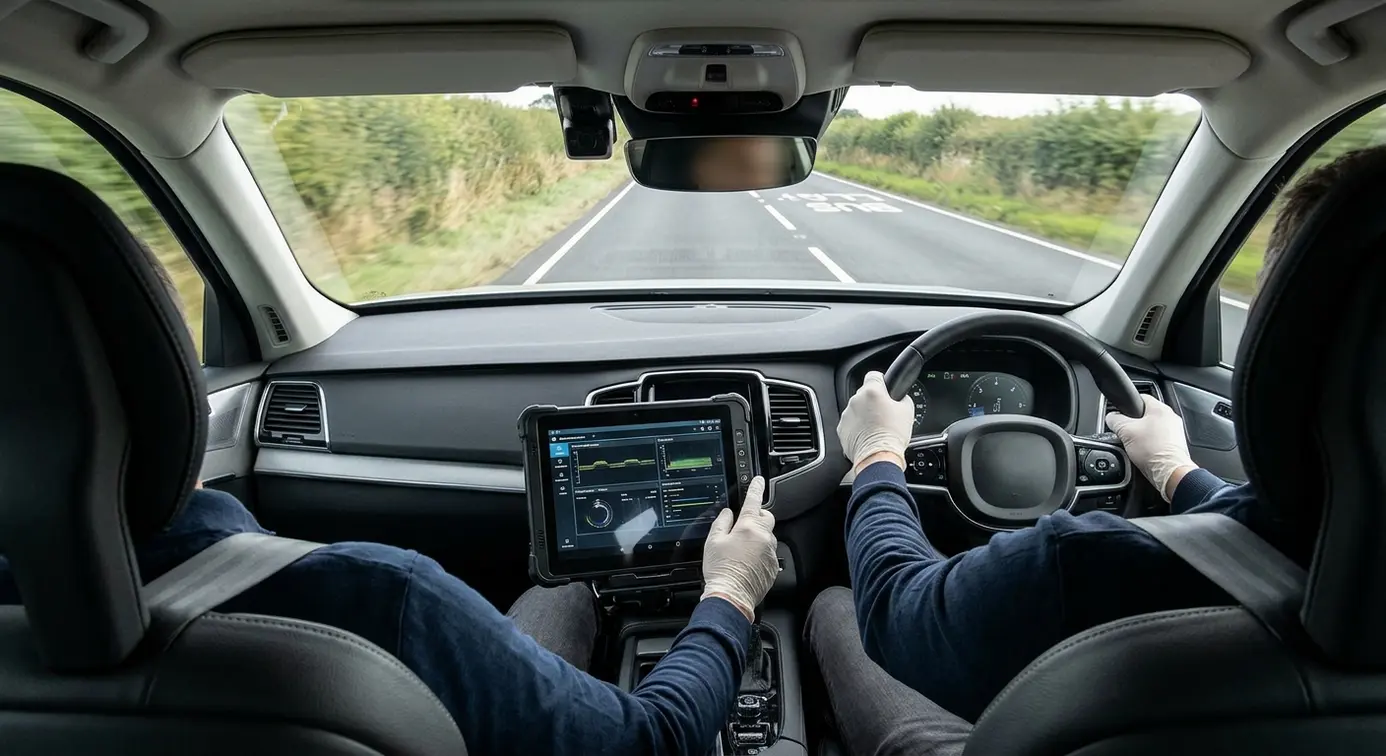
Dynamic calibration (on‑road drive)
- Completed on suitable roads at set speeds so the system can learn live references.
- Requires clear lane markings/signs and steady conditions.
- Some models specify static first, then a dynamic drive to finish.
We follow OE procedures and verify results. For timing, see how long does ADAS calibration take, and understand the risks in what happens if ADAS is not calibrated.
When Do You Need Static or Dynamic Calibration?
- Windscreen replacement (most vehicles) due to camera view/mounting changes.
- Camera removal/refit, bracket or trim replacement, or any movement of the camera unit.
- Chip repair that affects the camera’s view, or where diagnostics show ADAS faults.
- Suspension or steering work, wheel alignment or ride‑height changes.
- Accident damage, battery disconnects or software updates that trigger ADAS DTCs.
Many models specify a static calibration first and add a dynamic drive afterwards. If you have just had a new screen, read do I need to recalibrate my ADAS if I replace my windscreen for clear guidance.
This image was generated with AI and may not always represent the product or service exactly.
Before We Calibrate: Safety and Setup Checks
- Vehicle ID and spec confirmed; correct windscreen and camera type verified.
- Pilkington OE‑quality glass installed; Loctite adhesive cured to the maker’s time/temperature.
- Camera bracket, trims and seals correctly seated; lens area clean and unobstructed.
- Level bay, target distances/angles set, consistent lighting confirmed.
- Tyre pressures, ride height and fuel level set where specified.
- Full diagnostic scan; stored DTCs reviewed and software updates checked.
These checks reduce rework and deliver accurate results first time.
Static Calibration: Step‑by‑Step in Our Controlled Bay
- Position vehicle on a level surface; confirm thrust line, wheel centres or ride height if required.
- Place targets at exact distances/angles using calibrated lasers and measuring tools.
- Run guided software routines to align the camera and related parameters to OE tolerances.
- Verify success criteria, document results and issue a calibration certificate with before/after scans.
Time varies by make and model, and whether additional systems are included. We will give you a realistic window when you book.
Dynamic Calibration: Safe, Supervised On‑Road Validation
- Perform a controlled drive on suitable routes with clear markings at the required speeds.
- Technician monitors live data and records results, following strict safety policies.
- If weather/traffic is unsuitable, we pause and rebook to avoid poor‑quality data.
Your time matters, so we plan efficient routes while meeting OE requirements.
How We Verify Safe Operation After Calibration
- Function checks for AEB, lane assistance and sign recognition as the manufacturer specifies.
- Final diagnostic scan; ADAS‑related DTCs cleared; zero‑point and alignment verifications completed.
- Road test where required to confirm stable operation.
You receive a proof pack: calibration certificate, scan reports and photos where relevant. We will explain what was done and remind you ADAS is an aid, not a substitute for driver attention. Our team is on hand if questions arise later.
This image was generated with AI and may not always represent the product or service exactly.
Time, Cost and Booking: What to Expect in 2026
- Static calibration: typically 45–120 minutes.
- Dynamic drive cycles: add 30–60 minutes depending on route and conditions.
- If both are required, we plan the steps with you and keep you informed.
- Costs vary by make/model, equipment needed and method. We confirm pricing before we start.
For typical ranges, see our repair and replacement pricing guide. Same‑day and next‑day slots are often available.
Insurance and ADAS: Smooth Claims and Compliant Paperwork
- Most windscreen policies include ADAS calibration when specified by the manufacturer.
- We liaise with your insurer, arrange authorisations and manage direct billing where applicable.
- Keep your calibration certificate with service records; it supports future claims and MOT evidence.
Why Choose Advanced Autoglazing Ltd for ADAS Calibration
- 30+ years of glazing experience with ATA‑accredited technicians.
- Pilkington glass and Loctite adhesives used to documented cure times.
- Dedicated calibration bay, up‑to‑date equipment and OE‑based procedures.
- Clear communication, upfront scheduling and a calibration certificate on completion.
Quick Answers: Common 2026 ADAS Questions
- Do not rely on ADAS until calibration and verification are complete; warning lights or limited functions may appear.
- Follow adhesive cure guidance before driving; keep the camera area clean and unobstructed.
- Tints, stickers or contamination in the camera’s view can impair recognition—avoid placing anything there.
- After suspension, steering or body work—or if a warning appears—book a diagnostic check.
Next Steps: Book Your Calibration with Confidence
Have your registration, VIN and insurer details (if applicable) to hand. We will confirm whether your car needs static, dynamic or both, and schedule a slot that suits you. Same‑day and next‑day options are often available.
You will receive a calibration certificate and simple aftercare advice. To arrange your visit, see get a quote. If a new screen is required, we will coordinate glass and calibration in one visit wherever possible.
FAQs
Will my car’s ADAS work if I drive before calibration?
Basic driving is possible after adhesive cure, but do not rely on ADAS until we have calibrated and verified it. Warnings or limited function may appear.
How do I know if my vehicle needs both static and dynamic?
The manufacturer specifies this. We check OE data for your exact model and advise whether one or both procedures are required.
Do weather and light affect calibration?
Static calibration needs controlled lighting. Dynamic calibration needs clear markings and suitable weather. If conditions are poor, we rebook for accuracy.
Is recalibration needed after wheel alignment or suspension work?
Often yes. Changes to ride height or geometry can alter camera angles. A quick diagnostic check will confirm if calibration is required.
What documents do I receive after calibration?
You get a calibration certificate, diagnostic scan reports and any relevant photos. Keep them with your service records and insurance documents.
Can you calibrate if my windscreen has a chip near the camera?
It depends on visibility and OE guidance. If the chip affects the camera’s view or causes DTCs, we will advise repair or replacement before calibration.
How long after a windscreen replacement can you calibrate?
Once the adhesive has cured to specification, we can proceed. We will confirm safe drive‑away time and book calibration accordingly.


