ADAS Calibration At A Glance: Why It Matters
Advanced driver assistance systems (ADAS) support steering, braking and hazard detection. Common features include lane keep assist, adaptive cruise control, traffic sign recognition and autonomous emergency braking (AEB). These systems rely on cameras, radar and, on some models, LiDAR set to precise angles. If those sensors move even slightly, the system can misread the road. That is why accurate calibration is essential whenever work may affect a sensor or its mounting.
Calibration is typically required after:
- Windscreen replacement or camera removal/refit
- Suspension, ride‑height or wheel alignment changes
- Software updates or control unit replacement
- Collision damage or glass/body repairs near sensors
- ADAS warning lights, DTCs or performance concerns
Insurers often request proof that ADAS has been calibrated, and MOT testers may raise issues if faults are present. Read more on what ADAS is and how it’s calibrated, and when recalibration is needed after a windscreen replacement.
What Is Mobile ADAS Calibration?
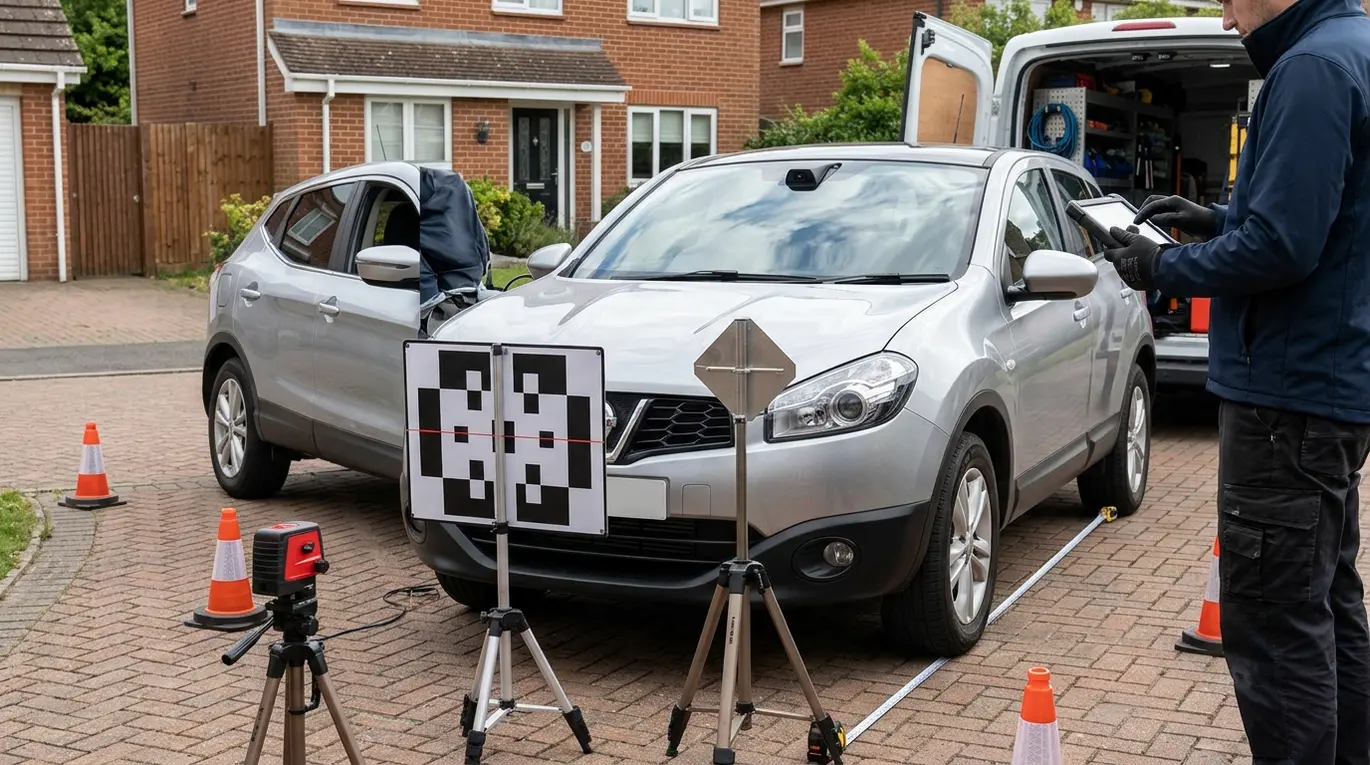
We bring the calibration bay to you. Our van carries OEM‑spec targets, laser measurement, up‑to‑date diagnostics and a stable power supply. Using manufacturer data, our ATA‑accredited technicians complete the procedure at your home, workplace or depot.
Site requirements for accurate mobile calibration:
- Flat, level ground with 3–6 metres clear space in front of the vehicle
- Good, consistent lighting with minimal glare
- Dry conditions or a covered area, protected from wind
- No clutter or reflective surfaces near the targets
When these are met, mobile calibration saves time and keeps fleets moving. Many static procedures take under two hours; see typical times in our timing guide.
What Is Workshop Fixed‑Rig Calibration?
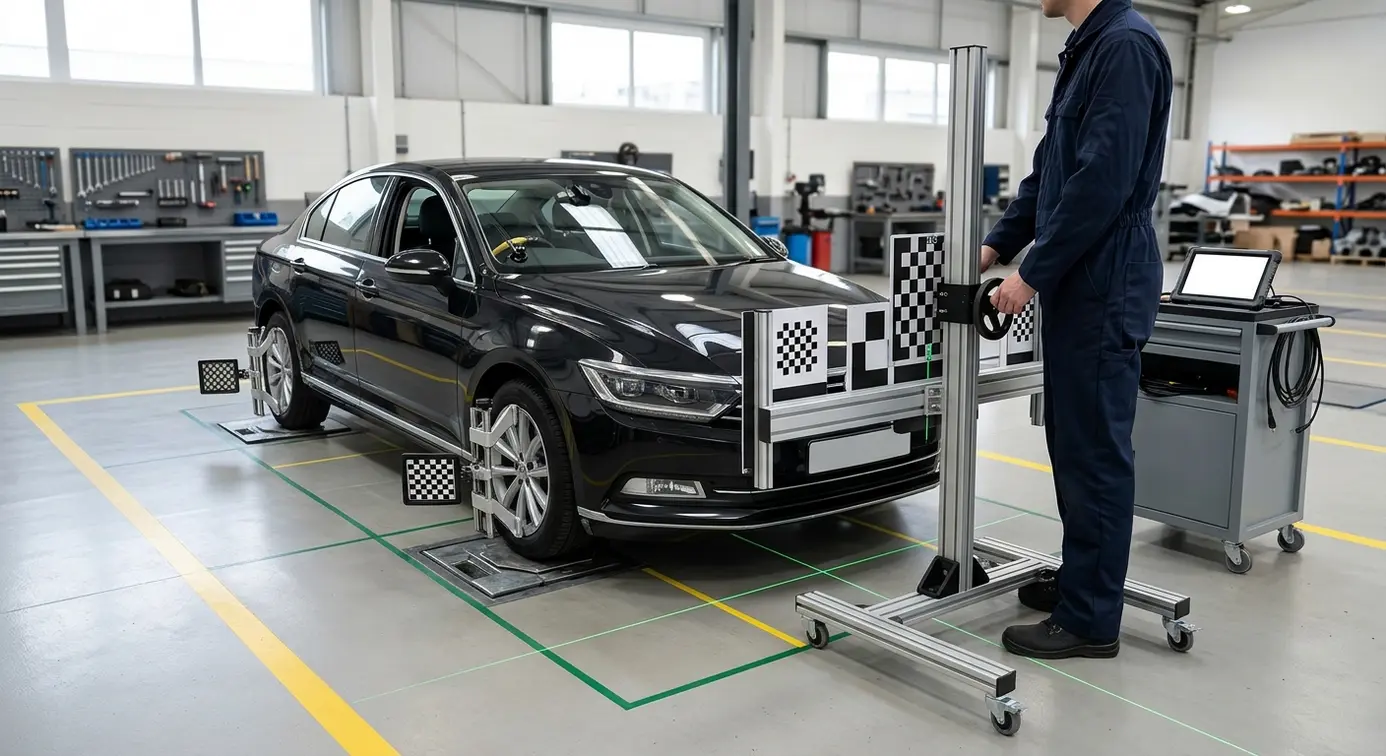
Our workshop provides a controlled calibration bay with level floors, fixed measurement rigs, laser alignment and stable lighting. We can verify wheel alignment and maintain uninterrupted spaces to strict OEM tolerances. This environment removes variables and supports complex procedures.
A fixed rig is recommended for:
- Vehicles with multiple sensors or combined radar/camera units
- Models with very tight OEM tolerances
- Cars requiring wheel alignment checks or ride‑height verification
- Situations where driveway or depot conditions are unsuitable
You receive maximum precision, full documentation and a calibration certificate for your service history.
This image was generated with AI and may not always represent the product or service exactly.
Safety And Accuracy: Mobile Vs Workshop Calibration
Both methods follow OEM procedures. The difference is environmental control. Accurate target placement depends on:
- Level surfaces and correct distances from the vehicle
- Consistent, non‑glare lighting
- Freedom from reflections, wind and obstructions
Where conditions are ideal, mobile calibration matches workshop accuracy. If they are not, we switch to the fixed rig. We complete pre‑ and post‑scan reports, perform static and dynamic checks where specified, and provide a calibration certificate. Learn about the risks of poor setup in what happens if ADAS is not calibrated.
Turnaround Times: What To Expect
Most static camera calibrations take 45–90 minutes. Vehicles with multiple sensors, required software updates, ride‑height checks or wheel alignment may take longer. We schedule mobile and workshop slots to minimise downtime.
What can affect timing:
- Traffic and weather for mobile visits
- Vehicle complexity and the number of sensors
- Diagnostic updates or control unit programming
- Road test time for dynamic steps
If you have a windscreen booked, arrange calibration at the same time to avoid extra visits and keep safety systems online.
Decision Guide: When Mobile Or Workshop Is Best
Choose mobile when:
- You have a flat, level driveway or depot space with 3–6m clear ahead
- Lighting is good and the area is dry and uncluttered
- The vehicle uses a single front camera or a straightforward sensor setup
- You need fast, convenient same‑ or next‑day service
Choose the workshop when:
- Space or weather is unsuitable, or there is glare or wind
- The car has combined camera/radar/LiDAR or strict OEM tolerances
- Ride‑height, suspension or wheel alignment has changed
- Persistent DTCs or complex faults are present
Edge cases: EVs may need charging and isolation checks; large vans need extra space; prestige or classic vehicles may need specialist handling. We will advise the safest route.
Costs, Insurance And Honest Value
Price varies by make and model, number of sensors, whether static and/or dynamic steps are required, and any extra checks such as alignment or software updates. We confirm costs up front and only carry out work that adds safety and value.
We can support insurance authorisations and reduce admin with direct billing where applicable. For indicative figures, see our repair and replacement pricing guide. To streamline claims, visit insurance billing for automotive glazing. Getting it right first time prevents rework and protects people.
This image was generated with AI and may not always represent the product or service exactly.
What To Expect On The Day
Pre‑appointment checklist:
- Clear the driveway/garage and ensure level ground
- Remove roof boxes, bike racks and dash accessories
- Set tyre pressures to the correct values
- Charge the vehicle (EVs) and bring all keys/key cards
- Have relevant service history available
- Clean the windscreen and front grille/bumper around sensors
On arrival we inspect the vehicle, run a diagnostic scan, set up and align targets, complete static and any required dynamic procedures, and validate with a final scan. You receive a calibration certificate and any advisories. If conditions change—rain, wind or glare—we may complete the work at our workshop for safety.
Our Credentials, Tooling And Materials
Advanced Autoglazing Ltd has over 30 years’ experience and ATA‑accredited technicians. We use OEM‑compatible targets, current calibration data and manufacturer‑approved diagnostic software.
If windscreen replacement is required, we fit quality glass from Pilkington and use Loctite structural adhesives. Correct bonding is vital for sensor stability and cabin safety. Expect precise work, full documentation and a customer‑first approach.
Ready To Book? Mobile Or Workshop—Your Choice
Share your vehicle details, location and any recent work (windscreen, suspension, alignment). We will confirm whether mobile or workshop is best and offer the first available slot, often same or next day.
Start your booking here: get a quote. Prefer to talk it through? Our team will give straight, practical advice and help you plan with confidence.
FAQs
Do I Ever Need Both Static And Dynamic Calibration?
Yes. Some vehicles require a target‑based static step followed by a road‑based dynamic step to fine‑tune parameters. We follow the OEM procedure for your model.
Will ADAS Calibration Affect My MOT?
Where ADAS is fitted, it must function correctly. Warning lights or inoperative systems can affect roadworthiness. Calibration helps keep everything working as designed.
What If A Warning Light Returns After Calibration?
We will re‑scan and diagnose related issues such as wheel alignment, ride height or software updates. If another fault is present, we will explain the next steps clearly.
Can You Calibrate At My Workplace Or Depot?
Yes—if site conditions meet the requirements: level ground, clear space, good lighting and a dry, stable environment. If not, we will book the workshop to ensure accuracy.
How Long Will I Be Without My Car?
Many jobs take 45–90 minutes. Complex, multi‑sensor vehicles or those needing updates or alignment checks can take longer. We will give a realistic timeslot before we start.
Is Calibration Needed After Every Windscreen Replacement?
In most modern vehicles, yes. Moving or replacing the camera or screen changes sensor angles. We calibrate immediately after fitting to restore safety systems.


