Mobile vs Workshop ADAS Calibration: Which Is Safest?
Advanced driver assistance systems (ADAS) use cameras, radar and sometimes lidar to support braking, lane keeping and driver alerts. Calibration aligns these sensors so they interpret the road exactly as designed.
You will usually need ADAS calibration after:
- A windscreen replacement or camera removal/refit
- Suspension, steering or ride-height changes
- Wheel alignment adjustments
- Collision or pothole damage
For a plain explanation, see what ADAS is and how it is calibrated.
Static calibration uses precision targets in a controlled setup. Dynamic calibration teaches the system during a specified on-road drive. Both require millimetre and degree-level accuracy, so surface level, lighting, space, weather, vehicle condition and equipment all matter. If you have had new glass fitted, read: do I need to recalibrate my ADAS after a windscreen replacement?
When Mobile Calibration Is Appropriate
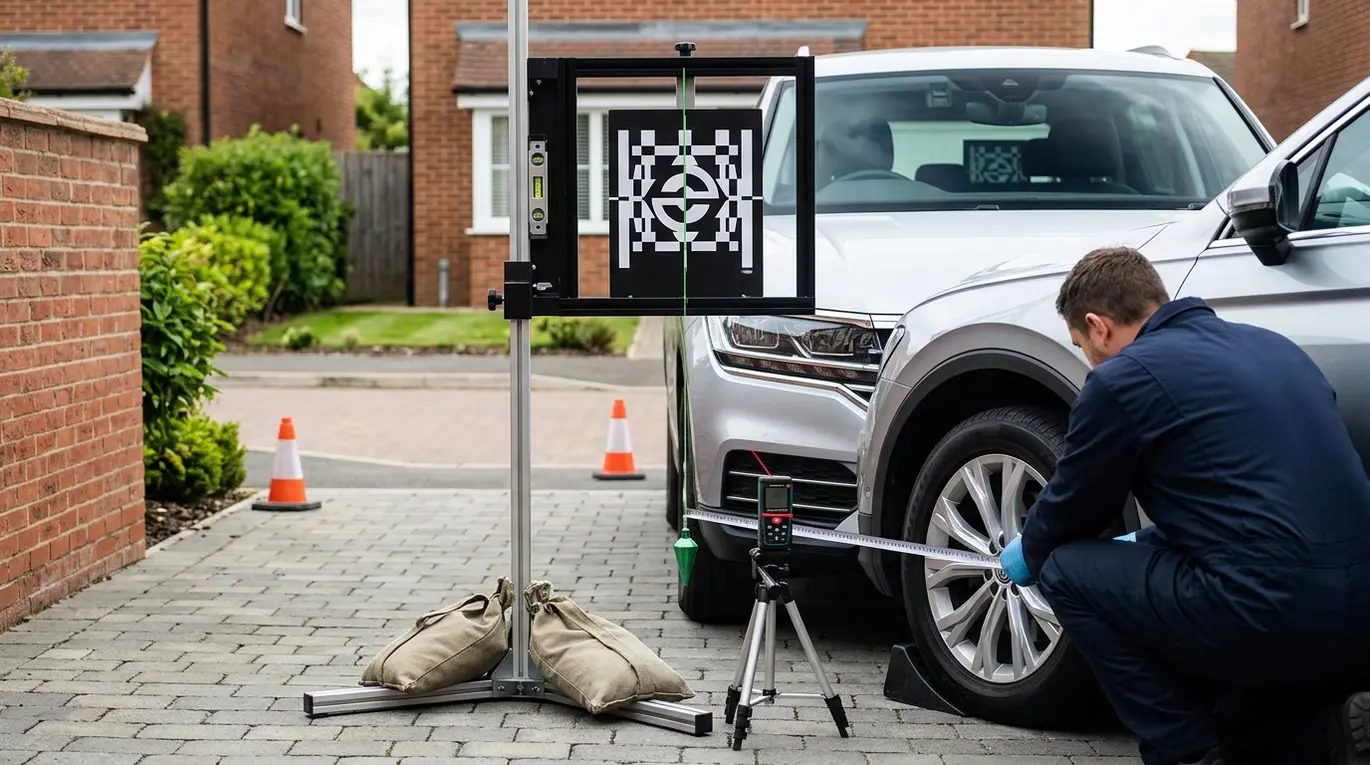
Mobile ADAS calibration is suitable for many mainstream vehicles with camera-only AEB and lane keeping, provided the site and method meet manufacturer requirements.
Typical on-site requirements:
- Hard, level ground with 3–6 metres clear in front and space to the sides
- Consistent, non-glare lighting and stable weather (no strong wind or rain)
- Correct tyre pressures, normal vehicle load and a steady battery supply (we provide support)
- Local roads that allow the specified speeds for any dynamic calibration
Where the OEM specifies dynamic calibration and traffic conditions allow steady driving, we complete it safely. Our ATA-accredited technicians run pre-checks to confirm viability before starting. Learn more in ADAS camera calibration and check our areas we cover.
When A Controlled Workshop Is Essential
Choose a workshop calibration when accuracy depends on a fully controlled environment, including a certified level floor, stable lighting and specialist tooling.
Workshop-only scenarios typically include:
- Multi-sensor suites: camera plus radar or lidar
- 360° cameras, night vision and head-up display alignment
- Adaptive cruise with stop-and-go or traffic jam assist
- Post-accident repairs, geometry concerns or suspension/steering work
- Specialist, rare or modified vehicles (lowered/raised)
We use calibrated rigs, radar reflectors, verified measurement and a controlled setup to position targets exactly. Skipping this invites hidden risk—see what happens if ADAS is not calibrated for the safety implications.
The Safety Risks Of Getting It Wrong
- AEB may trigger too late or too early, increasing stopping distance or causing nuisance braking
- Lane assist can drift or “hunt”, nudging the vehicle off-centre
- Blind-spot and cross-traffic alerts may miss hazards or give false warnings
- No warning light is guaranteed— a short road test is not proof of accuracy
Advanced Autoglazing Ltd follows OEM procedures, uses precision measurement, then verifies with diagnostics and a controlled road check. You receive a printed calibration report for your records.
This image was generated with AI and may not always represent the product or service exactly.
Our Process: Mobile Or Workshop—Always By The Book
- Confirm vehicle spec and VIN; check OEM method and technical bulletins
- Full diagnostic scan; note and resolve relevant faults
- Check ride height, tyre pressures, wheel alignment readings and vehicle load
- Inspect windscreen camera seating and bracket bond after any glass work
- Select mobile or workshop based on OEM method and site conditions
- Set up calibrated targets, verified measuring tools and battery support
- Perform static and/or dynamic calibration as specified, then verify and document
Every job includes quality checks, a calibration certificate and securely stored records for traceability.
Equipment, Accreditation, And Materials That Protect You
All work is carried out by ATA-accredited technicians using regularly calibrated rigs and OEM-equivalent software. Our team brings 30+ years of glazing and calibration experience.
Glass quality affects camera optics. We use high-grade Pilkington glass for optical clarity and correct curvature. Premium Loctite adhesives provide the right cure profile and stability, ensuring sensors sit exactly as designed after a windscreen replacement.
Timeframes and Booking: Fast, Safe and Convenient
- Camera-only systems (mobile, conditions permitting): about 45–90 minutes
- Multi-sensor systems (workshop): typically 1.5–3 hours
- Dynamic calibration: timing depends on traffic, speed and weather
Same-day or next-day appointments are often available. Share your registration or VIN when booking so we can confirm the method and allocate the right equipment and time.

This image was generated with AI and may not always represent the product or service exactly.
Insurance And Honest Value
We work directly with major insurers and handle the paperwork, keeping your claim simple. Where the manufacturer requires calibration after a windscreen replacement, it is often covered under your policy. See how we simplify claims with insurance billing for automotive glazing.
If your policy does not cover calibration, we provide clear, itemised pricing before work starts—no surprises. You will receive a detailed report when we are done.
Real-World Scenarios: Choosing Mobile Or Workshop
- Everyday hatchback: Camera-only system completed safely on a level driveway. Pre-checks, target setup, battery support and a same-day report.
- Premium SUV with radar: Front radar and 360° cameras require our level workshop with radar reflectors and multiple targets for precise static procedures.
- Commercial van fleets: Planned workshop batches deliver consistent results with minimal downtime and standardised setups.
Book With Confidence
Advanced Autoglazing Ltd combines 30+ years of glazing expertise with ATA-accredited technicians, Pilkington glass, Loctite adhesives and calibrated equipment. We choose the right method for your vehicle—mobile when safe, workshop when essential.
Tell us your registration or VIN and preferred location. We will confirm the correct method and offer a fast slot where possible, often same-day or next-day. Ready to get started? Get a quote today.
FAQs
Do I Need Calibration After A Chip Repair?
Usually not. If the camera was removed or the manufacturer specifies it after any screen work, we will calibrate. We will advise after a quick inspection.
Can I Drive Before Calibration Is Done?
Do not rely on ADAS until calibration is complete. Some cars show a warning; others do not. We will book you in quickly.
What If The Weather Changes During Mobile Work?
If wind, rain or glare affects accuracy, we pause and reschedule or move the job to our workshop. Safety first.
How Do I Know If I Need A Workshop Calibration?
Complex systems (camera plus radar or lidar), 360° cameras, or post-accident cars usually need a workshop. We confirm after pre-checks and OEM method review.
Will Calibration Affect My Warranty Or Insurance?
We follow OEM procedures and provide a report, which supports warranty and insurance requirements. We can also liaise directly with your insurer.
How Long Does Calibration Take?
Camera-only jobs are often 45–90 minutes. Multi-sensor systems usually take 1.5–3 hours in the workshop. We will confirm when booking.


