ADAS Calibration: What It Is And Why Precision Matters
Advanced Driver Assistance Systems (ADAS) use cameras, radar, lidar and ultrasonic sensors to support AEB, lane keeping, adaptive cruise control and traffic sign recognition. Calibration aligns each sensor to the vehicle’s geometry so the car “sees” the road exactly as intended.
There are two methods. Static calibration uses targets set in front of a stationary vehicle; dynamic calibration completes the process on the road following OEM steps. Some vehicles require both. Millimetres and degrees matter: a small pitch error moves where a camera thinks the horizon is, changing warning timing and braking distances. For example, a windscreen camera pitched slightly high can trigger AEB too early in slow traffic, or too late at speed. Learn more in our ADAS camera calibration guide and our overview what is ADAS, how is it calibrated.
When Mobile ADAS Calibration Is Safe
Mobile calibration is safe when the OEM permits it and the site meets strict conditions. It suits many hatchbacks and SUVs with standard forward cameras and radar, and vehicles that accept dynamic-only procedures. The benefit: quick response and minimal downtime at home or work.
The site must be flat, level and stable. Even slight slopes affect angles. We need clear, measured space ahead and around the car for targets (as specified by the OEM), free from metal obstructions and reflective surfaces. Lighting should be even with no harsh glare or deep shadows. Weather must be calm and dry, and we need reliable power for our equipment. In the right conditions, mobile results match workshop accuracy.
When A Workshop Calibration Is Essential
Some scenarios demand the control of our workshop. These include multi-camera 360° systems, night vision, lidar, or radar that needs metal-free zones. If OEM tolerances call for long target distances, or the vehicle needs four-wheel alignment checks, ride-height resets or software updates, we book the bay. We also recommend the workshop after suspension or tyre changes, if accessories obscure sensors, or when site space, level or lighting are poor.
Our calibration bay has a verified level floor, calibrated frames and OEM-specific targets. Lighting is uniform and consistent, with stable power. This environment lets us hit manufacturer tolerances every time.
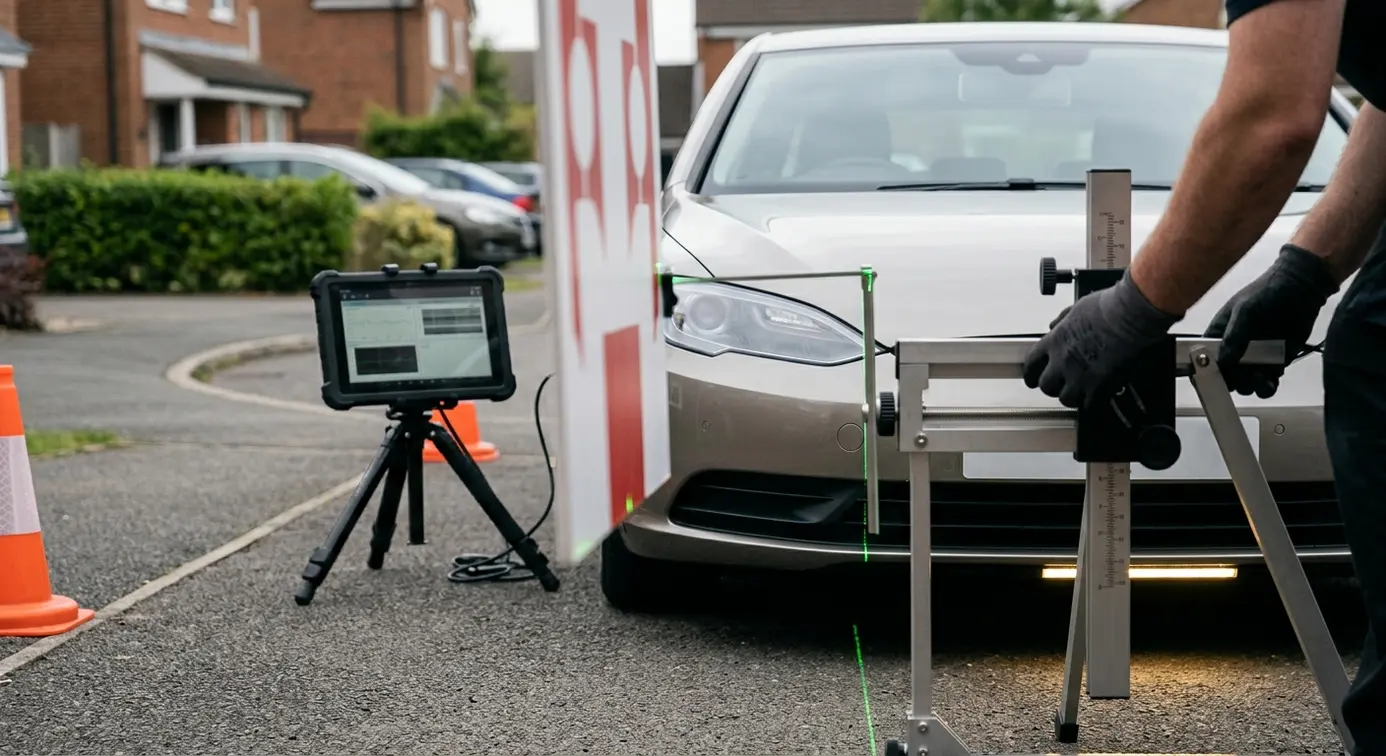
This image was generated with AI and may not always represent the product or service exactly.
Why Space, A Level Floor, Targets And Lighting Really Matter
Calibration is geometry. Distance, height and angle must match OEM specs. A small floor slope tilts the car and changes camera pitch. A few millimetres off target height or distance moves the focal point. That shifts the system’s horizon, altering AEB timing and lane guidance. We use calibrated frames, lasers, digital levels and OEM targets to remove guesswork.
Lighting matters as much as measurements. Bright spots, shadows or reflections can mislead a camera during calibration. Our ATA-accredited technicians validate distances, heights and angles before we begin, and we control lighting to ensure clean, reliable results. For typical timings, see how long does ADAS calibration take.
Risks Of Poor Setups And Miscalibration
Poor calibration risks late or early braking, lane wander, nuisance warnings and longer stopping distances. It can also lead to MOT advisories and insurance issues if post-repair evidence is missing. Read more in what happens if ADAS is not calibrated.
Common setup errors include wrong target height, off-centre alignment, uneven floors, incorrect tyre pressures or vehicle load, uncalibrated frames and poor lighting. We prevent these with structured pre-checks, live calibration data and, where required by the OEM, a dynamic road test. You receive a digital or printed calibration certificate for your records.
Mobile Vs Workshop: A Quick Checklist To Choose Today
- Site: level ground, measured clear space ahead and around the car, even lighting, calm dry weather.
- Vehicle: standard forward camera/radar = often mobile; 360°, night vision or lidar = usually workshop.
- Recent changes: suspension, tyres, ride height or added accessories? Prefer the workshop.
- Practicalities: mobile saves travel and downtime when conditions are right; the workshop guarantees a controlled environment for edge cases.
- Turnaround: same-day/next-day slots, with honest guidance on the safest option.
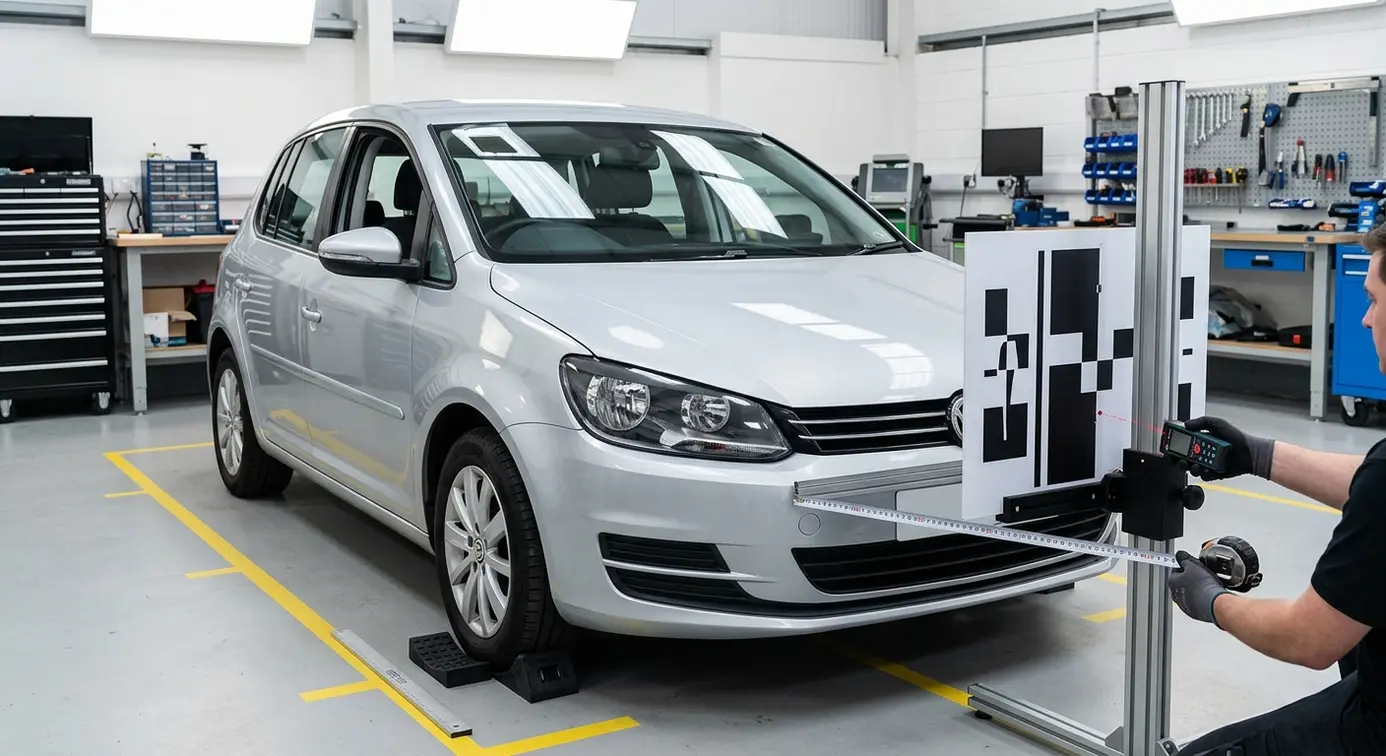
This image was generated with AI and may not always represent the product or service exactly.
After A Windscreen Replacement: Calibration You Can Trust
If your ADAS camera or sensors are mounted to or look through the windscreen, calibration is mandatory after replacement. At Advanced Autoglazing Ltd we fit high‑grade Pilkington glass and use Loctite adhesives. We follow correct cure times before any OEM‑specified dynamic road test. See our service page for windscreen replacement.
We schedule fast and help with insurer approvals. If you only have a chip, timely repair can avoid replacement and calibration costs. For clarity on requirements, read do I need to recalibrate my ADAS if I replace my windscreen.
Special Cases: Vans, Prestige/Classic Cars And Fleets
Vans and conversions often sit higher and carry racking or variable loads. Target positions may be elevated and ride height can change, so these vehicles are strong candidates for workshop calibration. Prestige and ADAS‑heavy models have tighter OEM tolerances, so we commonly recommend the bay.
Classic cars may not have ADAS, but glazing still needs careful, controlled fitting. For fleets, we plan mobile and workshop slots to minimise downtime, keep records tidy and issue calibration certificates for compliance.
What To Expect On The Day
We confirm an arrival window and show ID. The technician inspects the vehicle, checks tyre pressures and provides battery support if required, then ensures software is ready. We set the rig, validate level and distances, and run the static procedure. If the OEM requires, we complete a dynamic on‑road step.
You receive a clear handover, safety advice and your calibration certificate. Our ATA‑accredited team brings 30+ years of glazing experience, proven processes and a reliable, fast turnaround.
Book Now: Mobile Where Safe, Workshop When Best
Tell us your vehicle make, model and year, any recent suspension or tyre changes, and where the car can be parked. We will advise mobile or workshop based on safety and OEM requirements. Same‑day or next‑day bookings are often available, with straightforward pricing and a customer‑first approach.
Ready to arrange? Start here: get a quote. Our team at Advanced Autoglazing Ltd will guide you to the safest, most efficient option.
FAQs
How Do I Know If My Car Needs ADAS Calibration?
If a sensor was disturbed (windscreen change, crash repair, suspension or tyre changes) or a dashboard warning appears, calibration is likely required. We can confirm by checking your OEM procedure.
Can You Always Calibrate On My Drive?
Only if the ground is level, there is enough clear space and lighting is stable. If not, we will book our controlled workshop to meet OEM tolerances.
How Long Does Calibration Take?
Most static procedures take around an hour, plus any dynamic road test the OEM specifies. Times vary by make and system complexity.
What Proof Do I Get After Calibration?
You receive a calibration certificate (printed or emailed) with results and any live data or road test notes required by the manufacturer.
Will Accessories Like Roof Bars Affect Calibration?
Yes. Anything that blocks or reflects near a sensor can affect readings. We may remove them or calibrate in the workshop to avoid interference.
Is Calibration Covered By Insurance?
Often, when linked to a covered windscreen claim. We can coordinate with your insurer and provide the documentation they need.


