ADAS Calibration After Windscreen Work: Why It Matters
Modern driver‑assistance systems rely on precise camera, radar and lidar data to run AEB, lane keeping and traffic sign recognition. Even a slight change in windscreen angle or the removal/refit of a camera can shift alignment, so recalibration is essential after any windscreen replacement or camera disturbance.
Advanced Autoglazing Ltd follows OEM procedures and provides a printed calibration report for your records. For background, see our guides to what ADAS is and how it’s calibrated and when recalibration is needed after a windscreen replacement. Below we compare mobile and in‑centre calibration so your safety systems stay accurate.
What Is Mobile (On‑Site) ADAS Calibration?
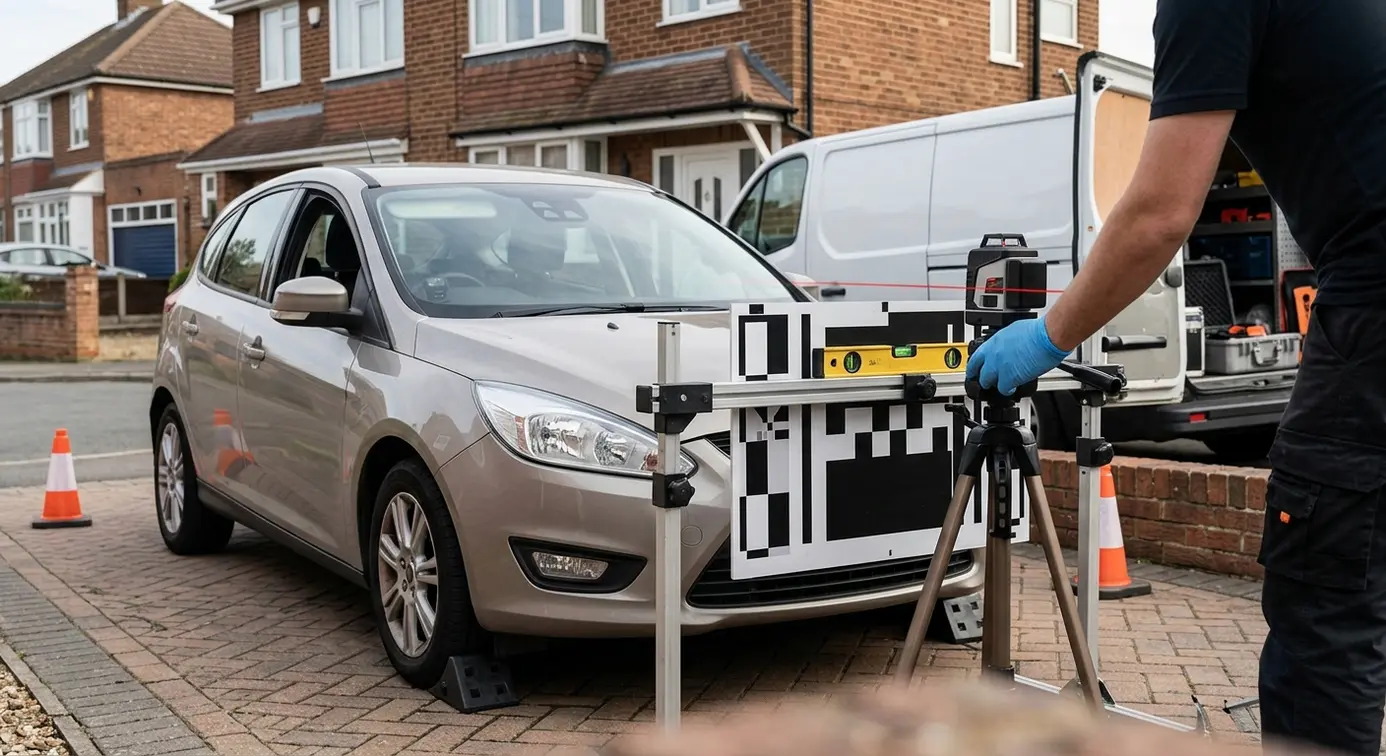
Mobile static calibration is carried out at your home or workplace using portable OEM targets and diagnostic tools. It suits simpler front‑camera setups when site conditions are right:
- Good, even daylight and minimal glare
- Dry, calm weather
- Flat, level hardstanding with enough space to place targets at exact OEM distances
- Uncluttered background with no nearby reflective or metallic structures
Limits include uneven or sloped ground, poor light or strong glare, rain or gusting wind, cluttered surroundings and nearby metalwork, all of which can affect accuracy. Our ATA‑accredited technician will assess the site first and, if conditions aren’t ideal, recommend our workshop. Check if we can come to you on our areas we cover page.
Why In‑Centre (Workshop) ADAS Calibration Increases Accuracy
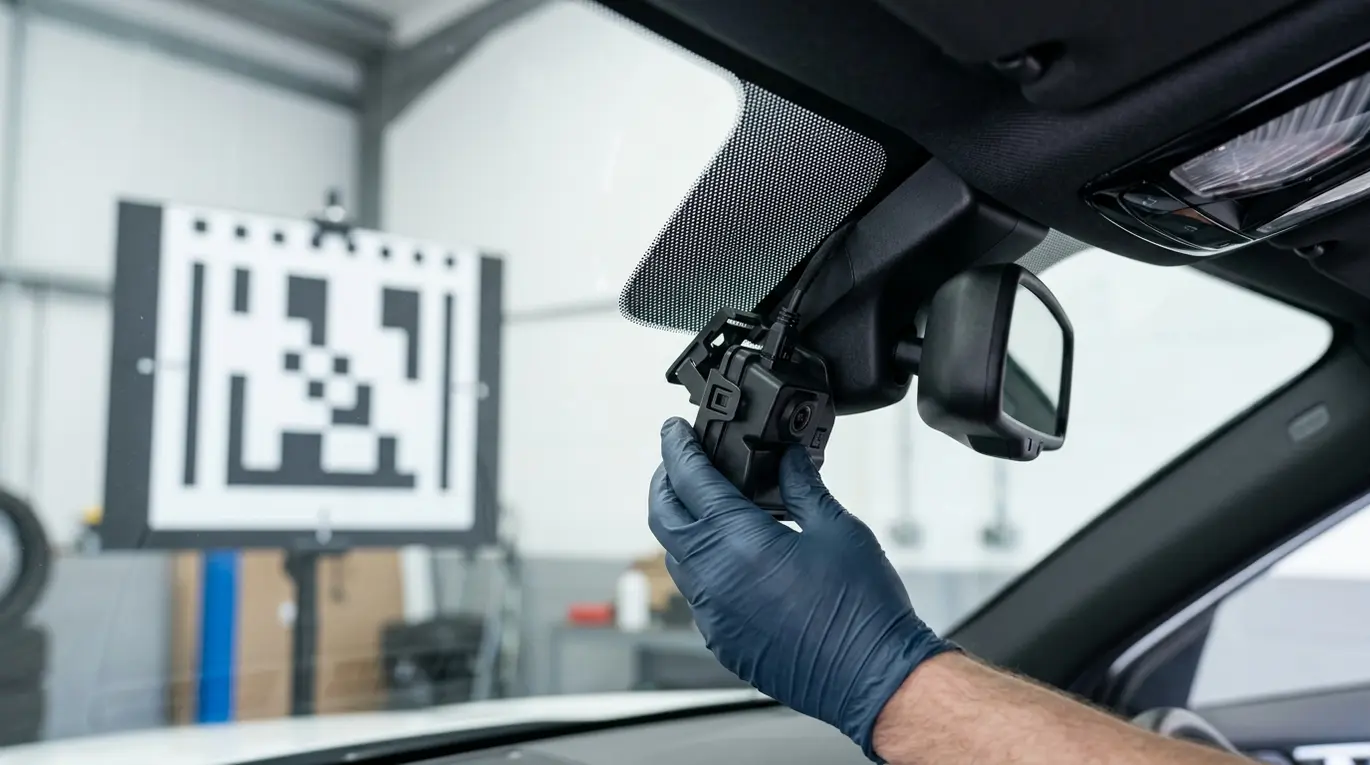
A dedicated calibration bay removes variables. Floors are laser‑level, lighting is even and glare‑controlled, and target distances are measured and fixed. We use OEM‑approved targets or digital panels with matched software so every setup is consistent and repeatable.
This environment is best for complex vehicles with multiple cameras, radar and lidar, and is often quicker when several modules need work after a windscreen replacement. Learn more about our in‑centre process: ADAS camera calibration.
This image was generated with AI and may not always represent the product or service exactly.
Why Lighting, Level Floors and OEM Targets Matter
Cameras need a sharp, high‑contrast target at the exact distance and angle. Even a small target or vehicle misplacement can translate into a large error on the road. Poor or patchy light makes it harder for the camera to lock on and can skew alignment.
Radar brings extra considerations: metal fences, shutters or shelving can create false echoes. For example, a lane camera set to a slightly wrong pitch may “see” a line closer than it is, prompting incorrect steering nudges. At Advanced Autoglazing Ltd we only use OEM targets and verified setups.
Static vs Dynamic ADAS Calibration Explained
Static calibration sets camera or radar positions in a controlled bay using targets. Dynamic calibration takes place on the road, following the OEM’s speed, route and weather criteria so the system learns live references. Some vehicles require both steps to complete alignment.
We follow OEM software prompts, provide battery support, and torque sensors and brackets to spec. You receive a completion report. Typical times vary by model; see how long ADAS calibration takes. Same‑ or next‑day slots are often available.
Mobile vs Workshop: Pros, Cons and Safety
- Accuracy and safety: The workshop gives the most controlled accuracy for complex, multi‑sensor setups. Mobile is safe and effective when the vehicle and conditions suit—typically a single front camera, level driveway and stable light.
- Time and convenience: Mobile saves you a trip. In‑centre can be quicker when several procedures are needed in one visit.
- Costs and insurance: Many insurers cover calibration linked to glass claims. We handle the paperwork via our insurance billing for automotive glazing and provide the documentation your insurer requires.
People, Parts and Process: Why Accreditation and Materials Count
With 30+ years’ experience, Advanced Autoglazing Ltd pairs ATA‑accredited technicians with high‑grade parts and procedures. We fit Pilkington glass for consistent optical clarity and bracket alignment, and use Loctite adhesives for predictable bond strength and cure times—helping keep cameras exactly where the OEM intended.
Our process includes careful torqueing, ADAS pre‑checks and final printed reports. We’re trusted with prestige and classic vehicles as well as daily drivers, applying the same methodical care to every car.
This image was generated with AI and may not always represent the product or service exactly.
Real Scenarios: Choosing Mobile or In‑Centre
Small hatchback, single front camera: good daylight and a flat driveway. We set up targets, calibrate, road‑test and issue a report—completed the same day.
Premium SUV with camera, radar and 360°: booked into our calibration bay for controlled lighting, multiple static steps and a final dynamic drive to confirm. One visit, full documentation.
Windy, rainy day or a sloped car park: our technician advises the in‑centre option to protect accuracy. We always choose the safest method for your vehicle and conditions.
What to Expect and How to Prepare
Before we arrive or you visit our bay, a little prep keeps things smooth:
- Clear the dashboard and windscreen area; remove dashcams if asked.
- Check tyre pressures and fuel are at sensible levels.
- Bring all keys and any insurance details.
- Leave driver aids switched on unless advised.
Mobile visit times vary by vehicle and weather; in‑centre timings are more predictable. We use Loctite adhesives and confirm a safe drive‑away time. After calibration you receive a printed report for your records or insurer. Same‑ or next‑day appointments are often available.
FAQs on ADAS Calibration and Windscreen Work
Insurance often covers calibration when linked to a glass claim, though an excess may apply. ADAS warning lights can affect MOT outcomes, so faults must be addressed. If calibration can’t complete first time, we diagnose, correct the cause and reattempt safely.
Chip repair doesn’t usually trigger calibration. A windscreen replacement or camera removal does. We’ll advise the correct path for your vehicle and document every step.
Book with Confidence
Trust Advanced Autoglazing Ltd for precise, safe ADAS calibration. Our ATA‑accredited team uses OEM targets, Pilkington glass and Loctite adhesives, with fast turnaround and clear reports. We offer both mobile and in‑centre services and recommend the safest option for your car.
Need advice or a quick price? Request a same‑ or next‑day slot now: get a quote.
FAQs
How do I know if my car needs calibration after glass work?
If a windscreen with a camera is replaced or the camera is removed/refitted, calibration is required. We confirm this during booking and at pre‑check.
Can you calibrate in the rain or strong wind?
Mobile calibration needs stable, dry conditions and level ground. If weather risks accuracy, we move the job to our workshop bay.
Will my insurance cover ADAS calibration?
Many insurers cover calibration when it’s part of a windscreen claim, subject to your excess. We provide invoices and reports for your policy.
How long will it take?
Simple systems can take around an hour. Complex, multi‑sensor cars may take longer, especially if both static and dynamic steps are needed.
Is aftermarket glass safe for ADAS?
We use Pilkington glass for consistent optics and camera bracket accuracy. This helps keep calibration stable and repeatable.
What if calibration fails first time?
We stop, diagnose the cause and fix it—such as tyre pressures, ride height or lighting issues—then repeat the procedure. Safety comes first.


