ADAS Calibration And Safety At A Glance
Advanced driver assistance systems (ADAS) rely on exact camera and sensor alignment. Even a new windscreen can change a camera’s angle by fractions of a degree, moving braking or steering reference points on the road. For a simple overview, see our guide to what ADAS is and how it’s calibrated and our service page for ADAS camera calibration.
- Calibration is required after a windscreen replacement, accident damage, suspension or wheel alignment work, relevant fault codes, camera or radar removal/refit, or certain software updates.
Common signs of miscalibration include:
- Late or early AEB (autonomous emergency braking)
- Lane‑keep assist drifting or pulling
- Adaptive cruise control braking or accelerating unexpectedly
- ADAS warning lights or messages after a new screen
These are safety systems, so accuracy matters. Read more on what happens if ADAS is not calibrated.
Mobile Vs Workshop Calibration: The Core Differences
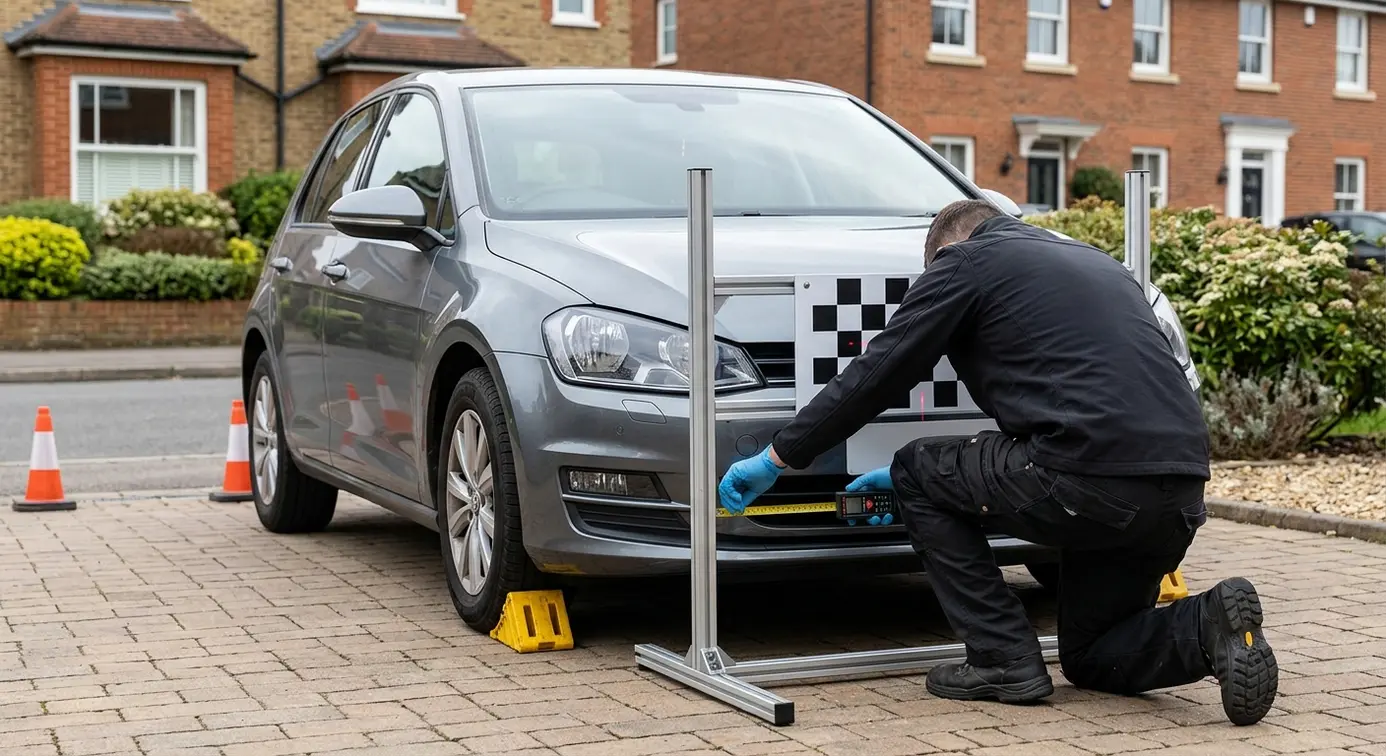
Mobile calibration means our technician comes to you. We can perform dynamic (on‑road) procedures or static checks with portable targets when the site meets strict OEM and equipment criteria. It’s convenient and safe when both vehicle and location are suitable.
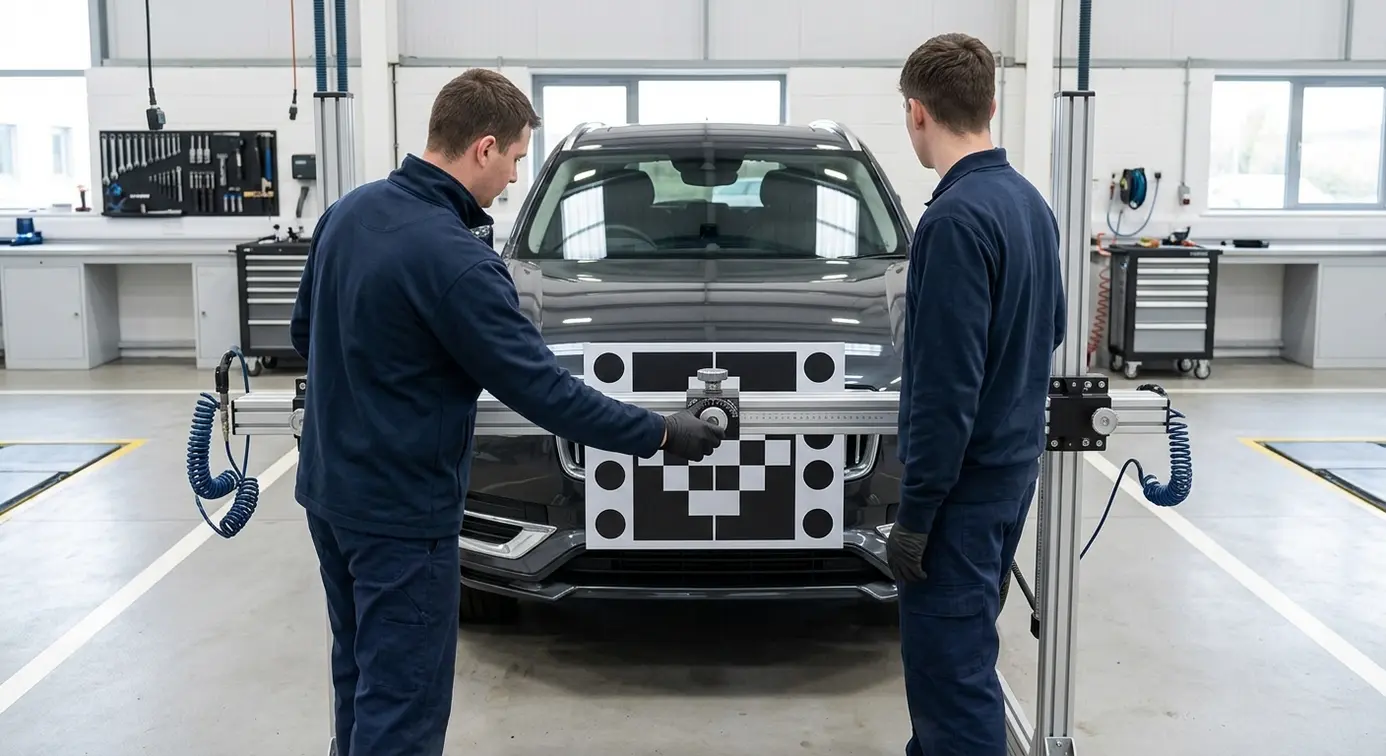
Workshop calibration is done in a controlled bay with dead‑level floors, measured distances and full‑size rigs. Many OEMs specify in‑bay static calibration for certain sensors and models. We follow manufacturer methods for safety, warranty and insurance validity. For timings, see how long ADAS calibration takes.
What Determines Accuracy: Environment, Equipment And Setup
Accuracy depends on environment, equipment and procedure. We need a level surface, stable lighting, exact target distances, and no reflective or metallic interference. Our calibrated rigs, lasers and OEM targets align the vehicle to tight tolerances—small errors change results.
Pre‑setup checks matter too. We use OE‑quality Pilkington glass so the camera bracket sits correctly, and Loctite adhesives to the right cure time. See our Windscreen replacement service for how we fit and prepare vehicles for calibration.
- Tyre pressures and ride height set to spec (including load where applicable)
- Fuel level as specified; boot emptied of heavy items
- Wheel alignment OK; battery fully charged; no unrelated fault codes
This image was generated with AI and may not always represent the product or service exactly.
When Mobile Calibration Is Appropriate (And Safe)
Mobile is ideal for vehicles approved for dynamic calibration, or for camera‑only systems where we can position portable targets on a flat, obstruction‑free area. We will confirm suitability at booking and on arrival.
- Level surface with clear space in front (typically 6–10 metres)
- Good, even lighting with no strong reflections or glare
- Minimal nearby metal structures that could affect radar
- For dynamic runs: clear road markings, steady traffic flow and the correct speed range
- Weather suitable; no ADAS warning lights present
If anything is marginal on the day, we’ll move the job to our workshop for accuracy and safety.
When Workshop Calibration Is The Safer Choice
Choose workshop calibration when:
- The system is complex (e.g. front radar plus camera, 360° surround view, night vision or lidar)
- OEM instructions specify static/in‑bay calibration first
- Both static and dynamic steps are required
- The site is uneven, space is limited, the weather is poor, or a pre‑scan shows fault codes
Our controlled bay removes variables and supports repeatable, certificate‑quality results. ATA‑accredited technicians follow the exact procedure your vehicle needs.
After A Windscreen Replacement: A Safe, Step‑By‑Step Workflow
- Fit OE‑quality Pilkington glass and bond with Loctite adhesives to the manufacturer’s cure specification.
- Pre‑scan to check for fault codes and confirm vehicle condition.
- Align targets and perform the required static and/or dynamic calibration.
- Post‑scan to confirm DTCs are cleared, complete a documented road test, and issue a calibration report.
Where safe drive‑away time allows, we offer same‑day or next‑day turnaround.
Time, Cost And Insurance: What To Expect
Simple camera‑only jobs can take 30–60 minutes. Multi‑sensor systems may take longer, especially if a dynamic step is needed. Duration depends on model, procedure and site suitability.
Costs vary by make, sensor suite, calibration type and whether a workshop bay is required. We can liaise with your insurer and arrange direct billing where available. Read about our process in insurance billing for automotive glazing.
This image was generated with AI and may not always represent the product or service exactly.
Vehicles We Support And Special Cases
We support commercial vans and fleets where downtime matters. We plan mobile or workshop visits to reduce disruption and provide clear reports for your records. For prestige or classic models, we follow marque‑specific methods and protect trim and finishes.
EVs and hybrids need the correct battery state and weight distribution before calibration. Our experience across makes and models means we set the vehicle up as the OEM expects, then prove results with a calibration certificate.
Your Decision Checklist: Mobile Or Workshop?
- Is your driveway or car park level, well‑lit and obstruction‑free for at least 6–10m in front?
- Does your model allow dynamic or mobile static calibration?
- Do the OEM instructions for your system require static/in‑bay calibration?
- Are weather, traffic and road markings suitable today?
- Any dashboard warnings or recent suspension/tyre changes?
- If unsure, choose the workshop. Safety first, always.
Our team will recommend the safest option at booking and on the day.
Why Choose Advanced Autoglazing Ltd
We bring 30+ years of glazing experience, ATA‑accredited technicians and calibrated equipment. We use Pilkington glass and Loctite adhesives because materials and methods determine accuracy. We follow the manufacturer process and document every step.
With fast same/next‑day availability where possible, we prioritise safety, value and clear communication. Whether mobile or workshop, you receive a calibration report you can trust.
Quick FAQs
Do I Need Calibration After A Chip Repair?
Usually no, unless the camera or its mounting is disturbed. If in doubt, we can pre‑scan and advise.
Can I Drive Before Calibration After A New Screen?
It’s not advised. Book calibration immediately so safety features are restored and warning lights are cleared.
What Happens If Calibration Fails?
We diagnose the cause (e.g. site conditions, wheel alignment, software), correct the issue and re‑test. You’ll receive a clear report.
Next Steps: Book With Confidence
Share your vehicle details and location. We’ll confirm if mobile calibration is suitable or arrange a workshop slot. Expect straight advice and quick scheduling.
For quotes and bookings, use Get a quote. We can liaise with your insurer and aim for same or next‑day appointments where safe.
FAQs
Is Mobile Calibration As Accurate As Workshop?
Yes—when the vehicle, method and site meet the same OEM criteria. If conditions aren’t ideal, we switch to our workshop to protect accuracy.
How Do I Know If My Site Is Suitable?
You need a flat, level area with clear space in front, good lighting and no strong reflections. We’ll check this with you at booking and on arrival.
Will Replacing The Glass Affect My Warranty?
We use OE‑quality Pilkington glass and follow manufacturer methods. Correct calibration helps protect warranties and insurance compliance.
What Documents Will I Receive After Calibration?
A calibration report, any pre/post‑scan summaries and technician notes. We explain the results before handover.
What If It’s Raining On The Day?
Rain and glare can affect accuracy. We may reschedule, use a covered bay, or move to our workshop for a safe, repeatable result.
Can You Support Fleets On‑Site?
Yes. We plan mobile or workshop sessions to minimise downtime and provide consolidated reports for fleet records.


