EV windscreens: why they’re different
EV windscreens do more than keep out the weather. They add body rigidity and provide a clear, stable view for advanced driver assistance systems (ADAS). Many EVs use glass with IR/solar coatings, acoustic interlayers, heated zones and larger camera pods. Getting the correct specification and a precise fit keeps safety features accurate and the cabin comfortable.
Advanced Autoglazing Ltd has 30+ years’ experience. Our ATA-accredited technicians fit Pilkington glass using Loctite OEM-grade adhesives for a strong, reliable bond. Same-day or next-day slots are often available. Learn more About us, or see our windscreen replacement service.
Thermal control: IR coatings and heating elements
Many EV screens use solar/IR-reflective coatings or interlayers to cut heat gain. This reduces glare, stabilises cabin temperature and eases the HVAC load, helping preserve range. Choosing the wrong variant can change heat balance and comfort, and may affect demisting performance.
Heating elements vary by model: from heated wiper parks to full-screen heaters and small demist pads around cameras. These speed up defogging and improve visibility. If demisting is slow or the air con works hard, we can check the glass spec and your HVAC. Book an air con recharge if needed.
Acoustic glass: keeping EV cabins quiet
With no engine noise to mask road sound, EVs benefit from acoustic laminated glass. A special PVB interlayer reduces wind and tyre roar so ADAS alerts are clearer and journeys calmer. Look for “Acoustic” or an ear symbol in the glass etching.
When replacing a screen, we match the OE acoustic specification. We source high-grade Pilkington glass that meets or exceeds factory performance, so you don’t gain unwanted cabin noise.
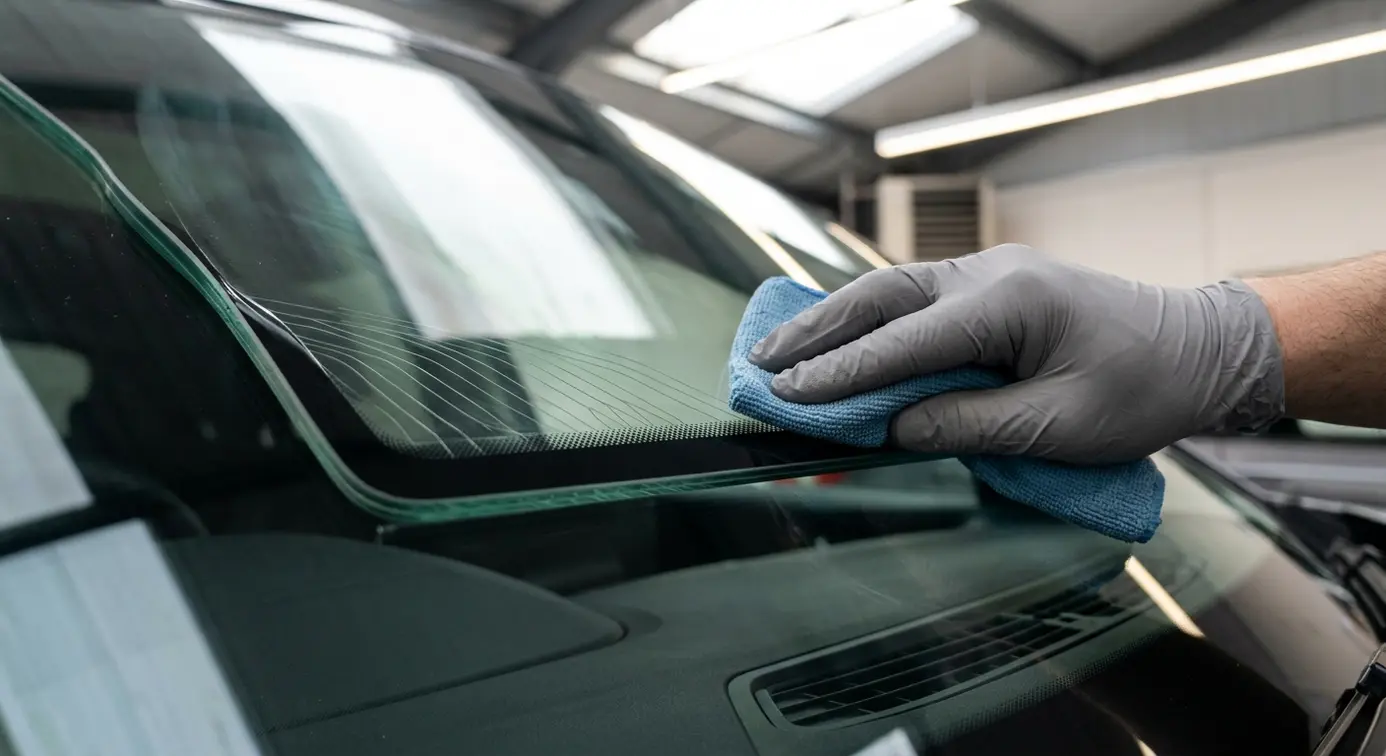
This image was generated with AI and may not always represent the product or service exactly.
Cameras and sensors: mounts, brackets and clear zones
Behind the mirror you’ll often find a forward ADAS camera, rain/light sensor and sometimes humidity or driver-monitoring units. The glass includes brackets, masked areas and clear (sometimes heated) zones for these devices.
Exact positioning is critical. Any tint, coating or contamination in the sensor’s view can trigger faults. We identify the correct variant by VIN, fit the screen to millimetre accuracy and prepare it for calibration. For an overview, read what is ADAS and how it’s calibrated.
Bonding and structure: OEM-grade adhesives
The windscreen contributes to body strength and helps guide airbag deployment. EVs are heavier, so a robust bond matters. We use Loctite OEM-grade urethanes with the correct primers and a controlled bead height for a uniform, watertight seal.
Safe drive-away time depends on adhesive, temperature and humidity. We’ll confirm the exact time on the day and advise simple care steps, such as:
- Avoid slamming doors and rough roads for 24 hours.
- Do not use a car wash for 24–48 hours.
- Leave retention tape in place until we advise removal.
Recalibration: making ADAS work as designed
Any disturbance to the camera or its bracket requires recalibration. We complete static target-based and, where required, dynamic road calibrations in a controlled workspace. Our ATA-accredited process restores features such as lane-keeping, traffic sign recognition, auto high beam and autonomous emergency braking (AEB).
Skipping calibration can lead to lane-keeping errors or unreliable AEB. We handle recalibration in-house for a fast turnaround. See our ADAS camera calibration service and find out how long ADAS calibration takes.
Repair or replace: what’s right for your EV?
Chip repairs depend on size, depth and location. Damage in the driver’s A-zone, near a camera pod, or across heated grids may be unsafe to repair. Coatings and acoustic layers can also limit what’s possible without causing distortion. As a guide, chips under roughly 10 mm in the A-zone and under 40 mm elsewhere may be repairable if not cracked or contaminated.
We assess honestly and advise the safest, best-value route. If repair isn’t suitable, we replace like-for-like to protect clarity, sensors and heating features.
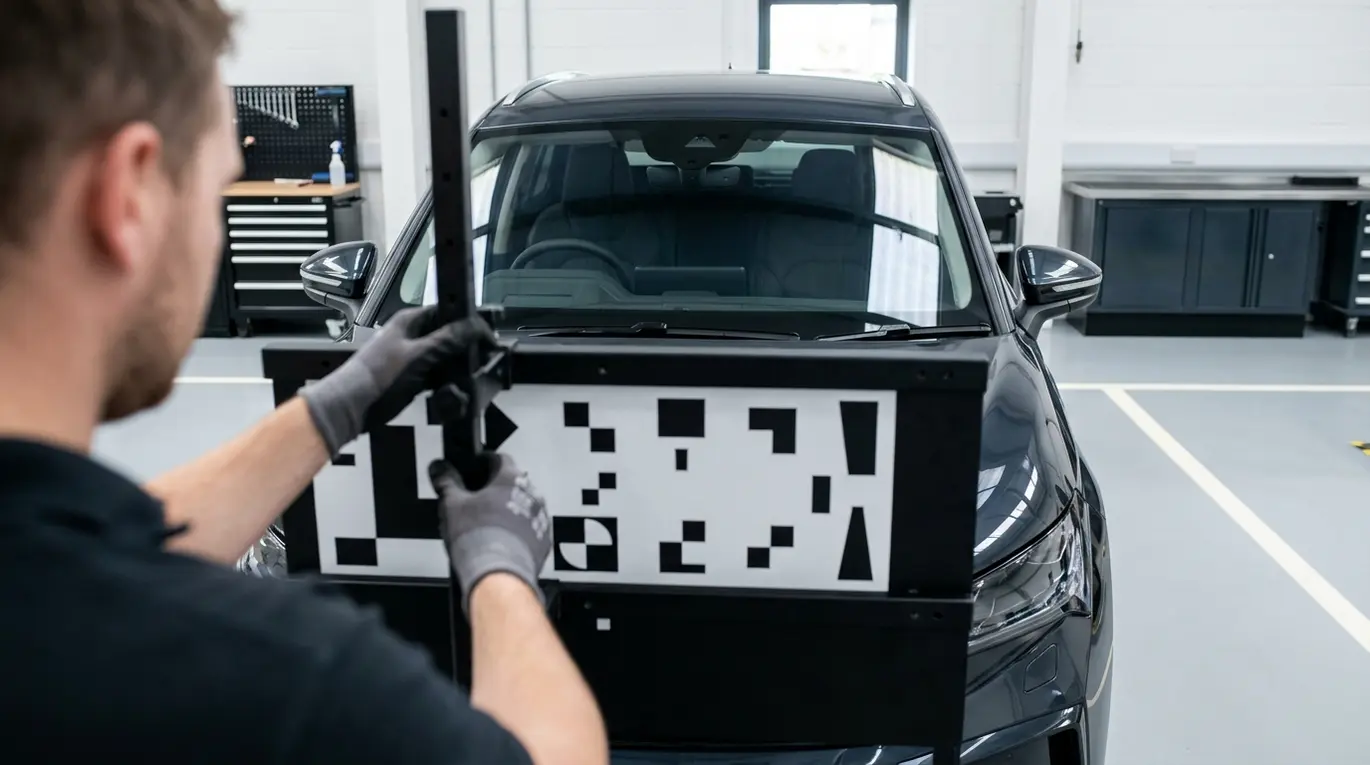
This image was generated with AI and may not always represent the product or service exactly.
Insurance, costs and OEM-grade EV glass
EV estimates cover the correct screen variant, required brackets/sensors and ADAS recalibration. We’ll manage insurer authorisation and, where possible, bill them directly to reduce hassle.
We fit Pilkington glass and use Loctite adhesives for dependable results. Pricing is clear and competitive. Ask for a fast quote and we’ll explain your options before any work starts.
What to expect on the day: our EV windscreen process
Here’s how a typical appointment runs:
- Confirm the exact glass by VIN and match sensors, brackets and coatings.
- Protect bodywork and interior; safely remove the old screen.
- Prepare bonding surfaces; apply a precise, continuous adhesive bead.
- Fit and align the new screen to OE tolerances.
- Advise on cure times and aftercare.
- Complete on-site ADAS calibration and a final road check.
Same-day or next-day slots are often available. Check our areas we cover.
Window tinting and EV sensors: what’s safe and legal
Never apply aftermarket film in sensor clear zones. UK law requires at least 75% light transmission through the windscreen and 70% through the front side windows. Darker films here can be illegal and unsafe.
Thermal films can help on rear glass, but front heat control is usually built into factory IR-reflective windscreens. If you’re considering tints, read window tinting: the law first.
Care tips to protect your EV windscreen
- Keep the area around the camera pod clean with a soft microfibre and gentle glass cleaner; avoid abrasives and harsh chemicals.
- Use winter-grade washer fluid; never pour hot water on icy glass.
- Replace worn wiper blades promptly to prevent scratches and smears.
- Mount dashcams away from sensor clear zones and heater grids.
- Act quickly on chips—especially near heaters or sensors—to stop cracks spreading. DIY kits can interfere with coatings and cause optical defects.
Safety, MOT and post-fit checks
Cracks or significant chips in the driver’s view can lead to an MOT failure. Any warning lights after glass work should be checked and recalibrated promptly to keep safety systems reliable.
If anything feels off—wipers judder, demisting slows or the camera warns—book an inspection. We’ll test, advise and fix issues quickly.
Book today: ATA-accredited EV glass experts
Advanced Autoglazing Ltd brings 30+ years of glazing expertise to your EV. We fit Pilkington glass, bond with Loctite, and calibrate ADAS in-house for a safe, swift turnaround.
Same-day or next-day help is often available. Clear advice, careful workmanship and honest value—ready when you are.
FAQs
How do I know which windscreen variant my EV needs?
We identify the exact screen by VIN and the sensor kit on your car. This ensures brackets, coatings, heaters and acoustic layers match your original specification.
Will my ADAS work immediately after a new screen?
Yes—once we complete calibration. We perform static and, where required, dynamic checks and confirm successful results before handover.
Can a small chip near the camera be repaired?
Sometimes, but only if it meets strict size, depth and location rules. If a repair risks distortion or sensor issues, we’ll recommend replacement for safety.
How long before I can drive after replacement?
Safe drive-away time varies with adhesive, temperature and humidity. We’ll give you a clear time on the day, typically within hours.
Do thermal or acoustic screens cost more?
They can, due to coatings, interlayers and sensor hardware. We’ll explain options and pricing up front and work with your insurer if applicable.
Will a non-OE screen affect my range or noise levels?
We use high-grade Pilkington glass chosen to meet or exceed OE performance. This protects thermal efficiency, clarity and cabin noise levels.
Can I add tint film to the front of my EV?
No. The windscreen must remain factory-clear, and front side windows must let in at least 70% light. Avoid films in any sensor view or clear zone.


