The Hidden Triggers: ADAS Calibration Isn’t Just About Windscreens
Modern ADAS uses a combination of windscreen-mounted cameras, bumper radar, ultrasonic parking sensors and, on some models, lidar. These support lane assist, AEB, adaptive cruise control, blind-spot alerts and parking aids. If a sensor’s angle or position changes, accuracy drops.
Repairs touching suspension, steering, bumpers or mirrors can move a sensor by millimetres. That’s enough to shift where your car “thinks” the lane is or how far the vehicle ahead sits. Many drivers only discover an issue after a warning light or a near-miss. If you’re unsure, read our quick explainer on what ADAS is and how it’s calibrated. At Advanced Autoglazing Ltd, we check and recalibrate to manufacturer data so systems work as intended.
Static Vs Dynamic Calibration: What Happens During Your Visit
Static calibration is completed in our controlled bay using target boards and precision equipment. Typical steps include:
- Confirming tyre pressures, ride height and vehicle load state.
- Verifying wheel alignment/steering angle baseline is correct.
- Positioning and levelling targets to manufacturer specifications.
- Zeroing the camera/radar field of view and saving the settings.
Dynamic calibration is a guided road drive. We follow a prescribed route at set speeds with clear road markings and stable weather to let the system learn live references.
Your make and model determine which method applies. Our ATA-accredited team follows manufacturer-approved steps, stores the results and provides proof. Learn more about our ADAS camera calibration service and what to expect on the day.
Wheel Alignment And Steering Geometry Changes That Demand Recalibration
Toe and camber influence where cameras and radar “look”. If the wheels aren’t pointing straight ahead, the sensors’ reference points shift. Effects include late or early warnings, lane-keep nudges at the wrong moment, or cruise control that brakes too hard.
Common triggers include four-wheel alignment, new track rod ends, steering racks, lower arms, or a subframe move. A pothole or kerb strike can do the same. Signs are a crooked steering wheel, pulling, uneven tyre wear or new vibrations. After any geometry work, have the steering angle sensor reset if required and book recalibration the same day to keep ADAS accurate.
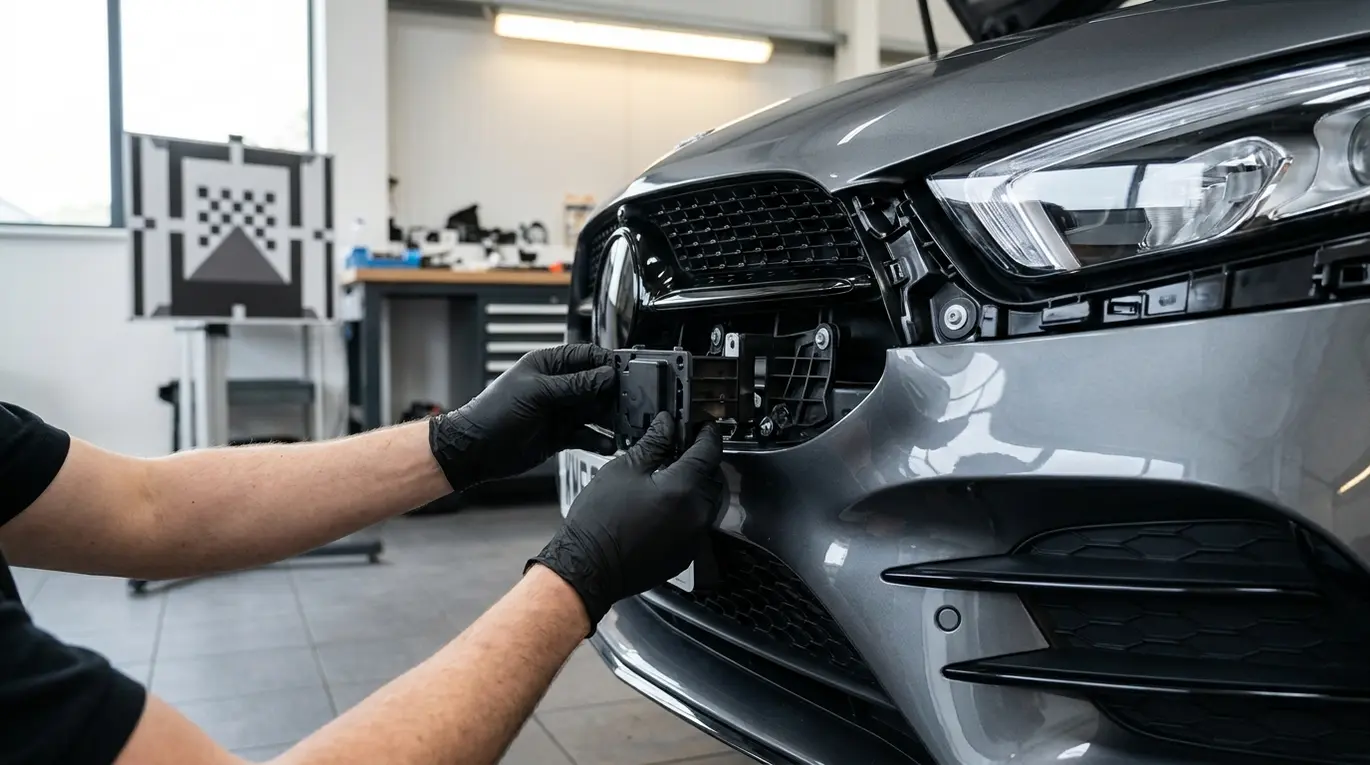
This image was generated with AI and may not always represent the product or service exactly.
Suspension And Ride Height Work: Small Changes, Big Sensor Effects
Springs, dampers and struts set ride height and pitch. Change those and you change every forward and rear sensor angle. A few millimetres lower at the front can lift a camera’s horizon and throw off lane detection or AEB distances.
Typical jobs include spring or shock replacement, air suspension adjustments, lift or lowering kits, and broken coil repairs at MOT. If ride height or geometry changes, recalibrate. For seasonal prep and checks, see our tips on getting your car spring ready.
Bumpers, Grilles And Mirrors: Body Repairs That Move Sensors
Many radar modules sit behind the bumper skin or front emblem. Removal, refitting or repainting can alter the bracket position by a fraction. New clips, thicker paint or a repaired grille can change how radar “sees” through the cover.
Mirror-mounted cameras are also sensitive. If the mirror, camera housing or its bracket is disturbed, calibration is usually required. After any front or rear bumper, grille or mirror work, book a check. Skipping it risks longer stopping distances and false alarms. Read what can happen if systems are left out of spec in what happens if ADAS is not calibrated.
Wheels, Tyres And Rolling Radius: When A Change Can Affect ADAS
Wheel speed and rolling radius feed ADAS calculations. Changing sizes, fitting a winter set, using a temporary spare, or running very uneven tyre wear can upset system logic—especially when combined with alignment or suspension work.
If you change wheel size, fit different profile tyres, or replace a wheel bearing or hub, ask us to check calibration status. Keep pressures correct and tyres matched by axle. This small step protects ADAS accuracy and keeps warnings consistent.
Electrical Faults, Software Updates And Battery Disconnects
Warning lights and stored fault codes often mean the system needs reinitialising. Dealers and bodyshops may update ECUs during services, recalls or repairs. A battery disconnect can also trigger a camera or radar relearn.
If the ADAS icon appears, software was updated, or modules were replaced, book a calibration check. We’ll scan for codes, complete the correct initialisation, and confirm live data and sensor aiming are back within spec.
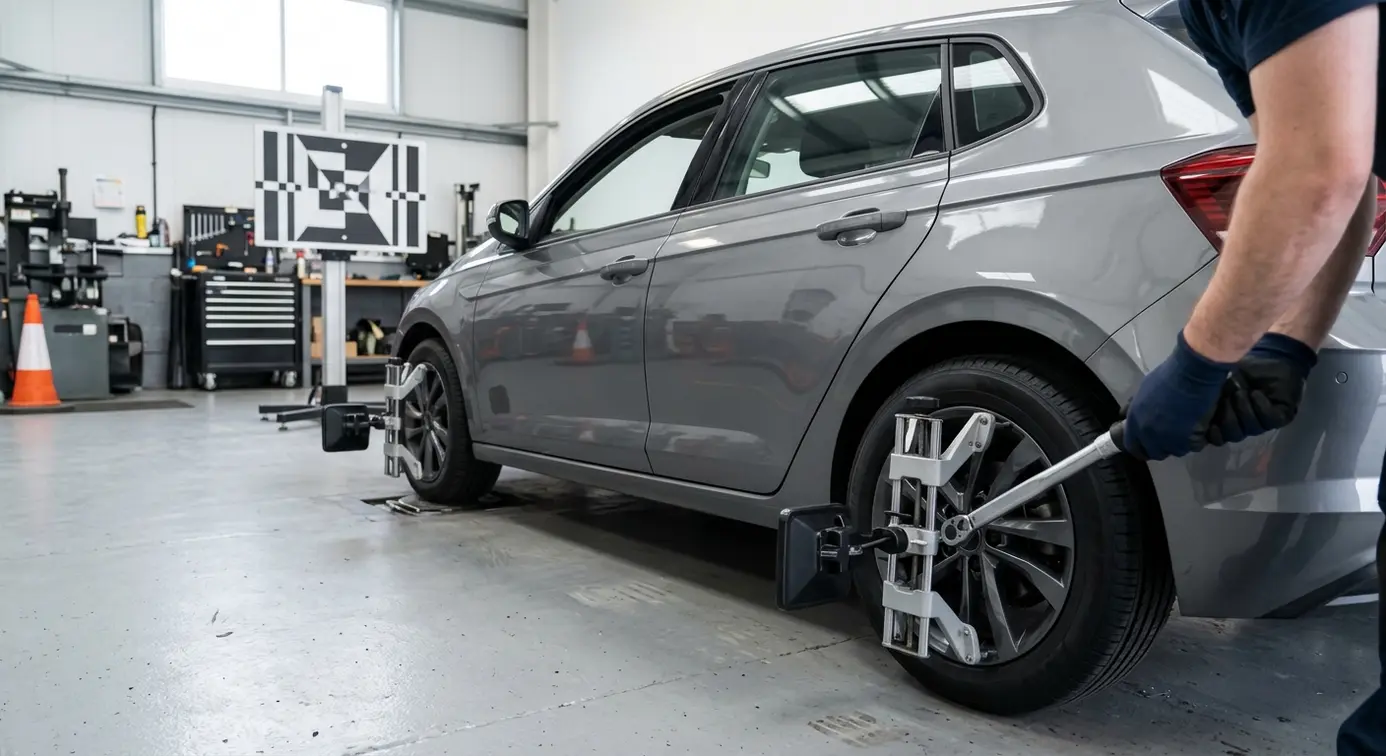
This image was generated with AI and may not always represent the product or service exactly.
Windscreens: When Repair Vs Replacement Means Recalibration
A small chip repair rarely needs recalibration unless the camera or bracket is disturbed. A windscreen replacement almost always does because the forward-facing camera must be realigned to the new glass. We fit the correct-spec Pilkington glass and use Loctite adhesives for a strong, stable bond that protects sensor accuracy.
Not sure what your job needs? Start with our guide: Do I need to recalibrate my ADAS if I replace my windscreen? If you’re replacing the glass, see our windscreen replacement service for what we include and typical timings.
Our ATA-Accredited Same Or Next-Day Process
With 30+ years’ experience, Advanced Autoglazing Ltd keeps things straightforward. We confirm your vehicle details, explain pricing, and help with insurance where applicable. In the workshop we run pre-checks, perform static and/or dynamic calibration, and road-test if required.
We use calibrated equipment, follow manufacturer data, and record the results. You leave with a printed calibration certificate. We offer mobile glazing for suitable jobs, but many ADAS calibrations are best completed in our controlled bay for accuracy and quick turnaround.
Quick Checklist: Do I Need ADAS Recalibration Now?
- After wheel alignment, track rod ends, steering rack, subframe or geometry work (with steering angle sensor reset where needed).
- After springs, shocks, struts, air suspension changes, lift/lowering kits, or MOT suspension repairs.
- After bumper, grille or mirror removal, refitting, repainting or replacement.
- After wheel size changes, a new winter set, hub or bearing replacement, severe tyre wear, or use of a temporary spare.
- After ECU updates, module replacements, battery disconnects, or if ADAS warning lights show.
- After a windscreen replacement, or any camera/bracket disturbance.
- After any collision, pothole strike or kerb hit.
Book a check before your MOT or a long motorway trip. It’s quick peace of mind. Ready to schedule? Get a quote and we’ll arrange same or next-day availability where possible.
FAQs
How Do I Know If My ADAS Is Out Of Calibration?
Look for dashboard warnings, odd lane-keep nudges, late AEB responses, wandering cruise control, or frequent false alerts. After recent repairs, it’s wise to check even if no light shows.
Can You Calibrate At My Home?
Some vehicles allow mobile calibration, but many need a controlled bay for accuracy and repeatable results. We’ll advise the best option when we confirm your vehicle details.
How Long Does ADAS Calibration Take?
Most static calibrations take around an hour once set up. If a dynamic drive is required, allow extra time for the prescribed route and road conditions.
Do I Need Wheel Alignment Before Calibration?
If alignment is out, calibration won’t hold. We can check alignment first or work with your garage to set geometry, reset the steering angle sensor, then calibrate with confidence.
Will My Insurance Cover Calibration?
Many policies include calibration when linked to a windscreen claim. We’ll help with the process and provide the documents your insurer needs.
What If I Skip Calibration After A Windscreen Change?
ADAS performance may be unreliable, which is a safety risk, and you could face MOT issues or fault codes later. We recommend calibrating straight away.


