ADAS Calibration Made Simple
Advanced driver assistance systems (ADAS) rely on precisely aligned cameras and sensors to keep features such as Autonomous Emergency Braking (AEB), lane assist and traffic sign recognition working safely. Calibration restores this alignment after any event that can shift cameras or radars out of position.
There are three calibration methods: static (targets in a controlled space), dynamic (a guided road drive) and dual (both). This guide explains which method suits your vehicle after windscreen work, pothole or kerb strikes, or suspension and steering repairs. Our ATA-accredited technicians follow OEM procedures throughout. For background, see what ADAS is and how it’s calibrated. Ready to book? Visit our ADAS camera calibration page.
When Your Car Needs Calibration
After windscreen work
- Windscreen replacement on vehicles with a camera/sensor by the mirror almost always requires calibration.
- Chip repairs near the camera area or A‑pillar trim removal may also necessitate a calibration check. Learn more in do I need to recalibrate my ADAS if I replace my windscreen.
After impacts or repairs
- Hard pothole or kerb strikes, an off‑centre steering wheel, or wheel alignment changes can alter sensor angles.
- Suspension or steering component changes, front‑end body repairs, and any camera/radar removal also trigger calibration.
- We offer fast turnaround and clear safety checks so you can drive with confidence.
Static ADAS Calibration Explained
Static calibration uses OEM-specified targets in a level, well-lit, controlled workshop. We measure to the vehicle’s thrust line and set target distances to the millimetre. Many manufacturers require this method after windscreen replacement or whenever a camera bracket has been disturbed.
Workshop conditions matter. Our bay has calibrated floors, controlled lighting and full diagnostics for consistent accuracy. When replacing a screen, we use Pilkington glass and Loctite adhesives for a precise fit and safe drive-away. If your vehicle needs a new screen before calibration, see our windscreen replacement service.
Dynamic ADAS Calibration Explained
Dynamic calibration is a controlled road drive using a diagnostic tool. The system learns live references for lane markings, speed and distance while we monitor parameters. It is often specified after minor work or on models that mandate a drive cycle.
Success depends on conditions: clear road markings, appropriate speeds and suitable weather/lighting. It can be done mobile when routes allow. In heavy rain, fog or on poorly marked roads, we may rebook or use workshop methods where permitted. For planning, see how long ADAS calibration takes.
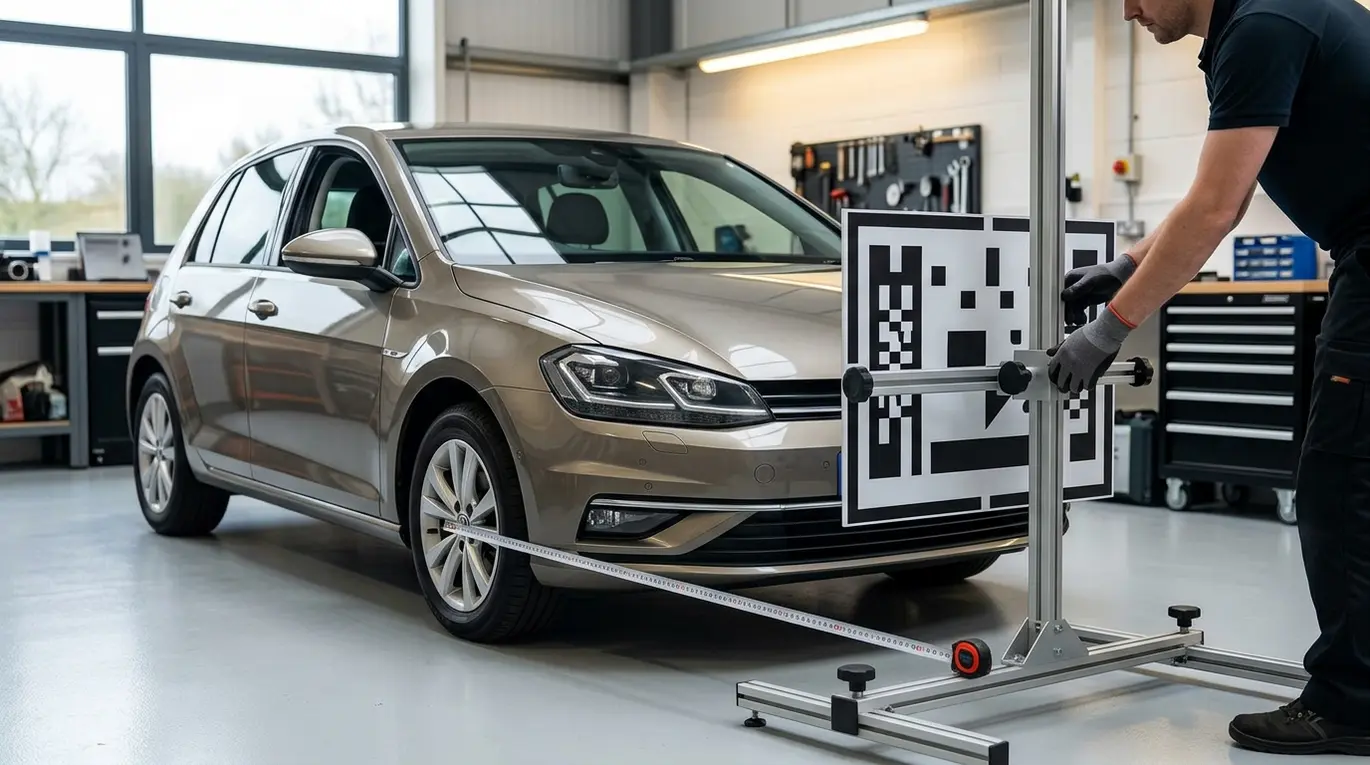
This image was generated with AI and may not always represent the product or service exactly.
Dual (Static + Dynamic) Calibration
Some manufacturers require both steps: a static setup to establish baseline geometry, then a dynamic drive to confirm on‑road references. This ensures the camera understands both fixed workshop targets and real‑world conditions.
Typical triggers include windscreen replacements on certain models, camera or bracket changes, and any geometry‑altering suspension or steering work. Dual sessions are routine for our ATA-accredited team, and we’ll book same or next day where possible.
Workshop Vs Mobile: Choosing The Right Setting
Workshop calibration is best when
- Static or dual procedures are required by the manufacturer.
- Strict target distances, level surfaces or controlled lighting are essential.
- We need to eliminate variables for maximum repeatability and accuracy.
Mobile calibration works well when
- A dynamic procedure is specified and suitable routes are available.
- A flat, well‑lit area with sufficient space for targets can be secured for certain static tasks.
- We have pre‑checked the site and conditions. Our vans carry precision equipment and diagnostics.
The Calibration Process And Timings
- Pre‑scan and safety checks: We read fault codes and inspect camera/radar mountings, trims and screen fit.
- Windscreen replacement (if required): Pilkington glass and Loctite adhesives fitted to OEM guidance; we confirm safe drive‑away times based on product and temperature.
- Calibration: Static, dynamic or dual, measured to the thrust line and completed to the manufacturer’s procedure.
- Verification: Post‑scan, on‑road test where required, and printed calibration report for your records.
Timings vary by vehicle, procedure and conditions; dynamic sessions can be affected by traffic, road markings and weather.
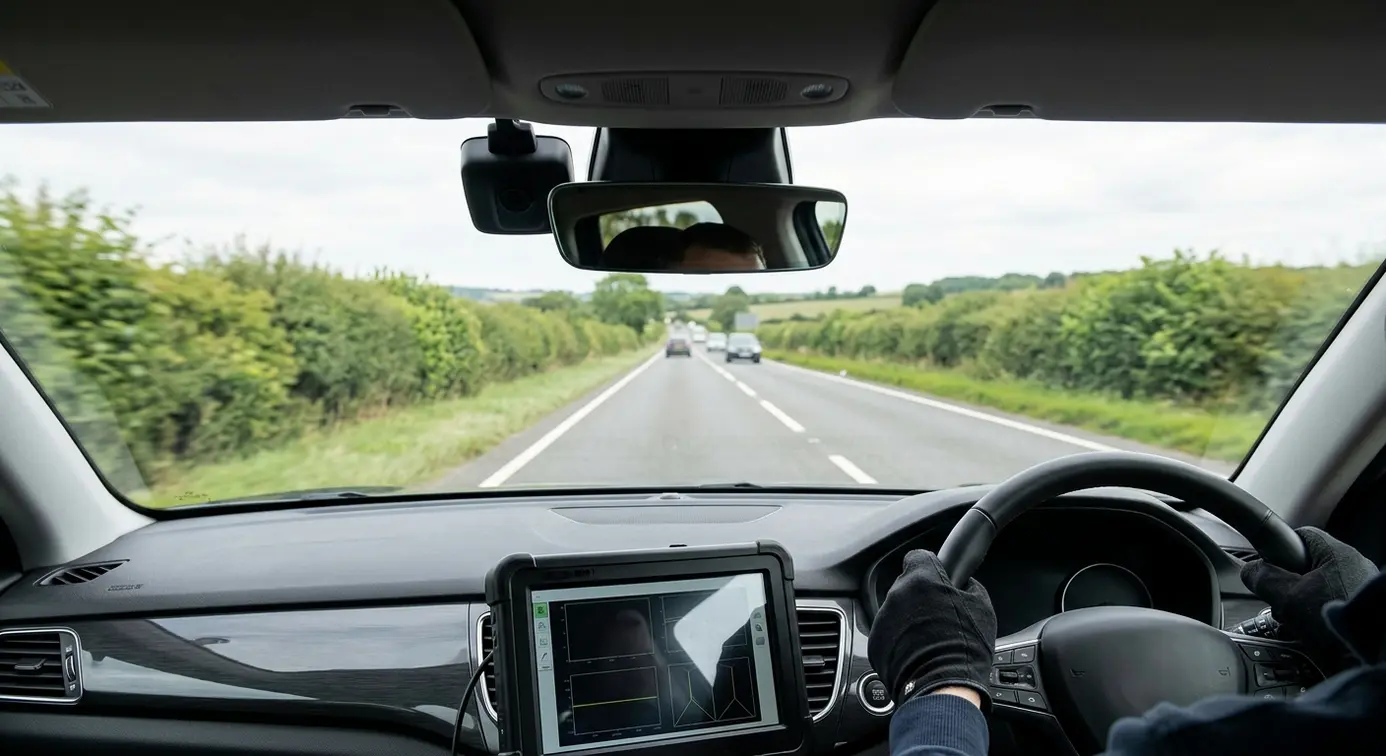
This image was generated with AI and may not always represent the product or service exactly.
Costs, Insurance And Honest Value
Many calibrations linked to windscreen replacement are covered by insurance. We can handle direct billing to simplify claims; see insurance billing for automotive glazing.
What affects cost?
- Make and model (camera/radar type and access).
- Method required: static, dynamic or dual.
- Any additional alignment or diagnostic checks.
With Advanced Autoglazing Ltd you get ATA‑accredited technicians, Pilkington glass, Loctite adhesives, OEM procedures and fast turnaround for strong value.
Safety Checks And Symptoms You Shouldn’t Ignore
- Dashboard warnings or “camera unavailable” messages after screen work or impacts.
- Lane assist nudging at the wrong time or drifting without correction.
- Poor traffic sign recognition or inconsistent ACC/AEB behaviour.
- After potholes: a steering pull or an off‑centre wheel.
If in doubt, book a check. Driving with misaligned sensors reduces safety and can affect MOT readiness. Read more on risks in what happens if ADAS is not calibrated.
Why Choose Advanced Auto Glazing
- 30+ years’ experience with ATA‑accredited technicians.
- Pilkington glass and Loctite adhesives for reliable fit and performance.
- OEM methods, calibrated workshop and full diagnostics.
- Clear communication, honest advice and same/next‑day availability where possible.
For tailored guidance and fast booking, contact our team today.
FAQs
Is calibration needed if a chip is repaired, not replaced?
Sometimes. If the chip is near the camera area or trims were removed, a calibration check may be required. We’ll advise after inspection.
Can you calibrate aftermarket windscreens?
Yes. We use quality glass such as Pilkington and follow OEM procedures. We verify camera views and provide a calibration report.
Do you calibrate radar and other sensors too?
Where applicable, yes. We follow the manufacturer’s process for front radar, lidar and surround cameras when the vehicle requires it.
What if dynamic calibration fails due to weather?
We’ll rebook for suitable conditions or complete a permitted workshop method. Your safety and accuracy come first.
Will a misaligned camera trigger a warning light?
Often, but not always. You might notice odd lane assist behaviour or poor sign recognition even without a warning.
What paperwork do I receive?
A calibration report and any pre/post scan results. We can also provide documentation for insurance and service records.


