Why ADAS Warnings Appear After A Windscreen Change
Most ADAS functions rely on a camera bonded to the windscreen. Even a perfect new fit can shift the camera’s angle by a few millimetres. A moved bracket, refitted trims, or adhesive still curing can alter alignment and trigger alerts for lane assist, AEB or traffic sign recognition.
Many vehicles clear messages after a correct calibration and a short learning drive; others need a static target set-up in controlled conditions. If AEB or lane assist shows a fault, slow down, leave extra space, and book a calibration. Advanced Autoglazing Ltd uses Pilkington glass and Loctite adhesives for consistent optics and safe curing, carried out by ATA-accredited technicians with 30+ years’ experience. Read more about our windscreen replacement and our ADAS camera calibration.
Quick Guide: The Common Symbols You May See
- Lane keep assist: steering wheel icon or lane lines. Amber = limited or standby; green/white = ready; red = fault or driver takeover required.
- AEB/forward collision: car with a star/exclamation. Amber = reduced performance; red = fault or urgent attention needed.
- Traffic sign recognition: speed limit in a circle. Dashes/no sign = the camera cannot read signs reliably.
These alerts can appear after a windscreen change until calibration is finished, the camera view is clear, and any learning drive is completed. Below we outline what’s normal during initialisation and what points to a calibration or component issue. For background, see what ADAS is and how it’s calibrated and what happens if ADAS is not calibrated.
When Calibration Is Needed: Static Vs On-Road (Dynamic)
Static calibration is completed in a controlled workshop. Certified targets are positioned on a level floor, aligned with lasers and measurement tools, and the camera is set to manufacturer tolerances. This suits vehicles that demand exact geometry or have multi-sensor packs.
Dynamic calibration uses a steady on-road drive so the camera “learns” lane lines and road edges. It requires clear markings, consistent speeds and good weather. Some models require both methods. We confirm the correct approach from your VIN and brand data, and advise on timing and conditions. For typical timeframes, see how long ADAS calibration takes.
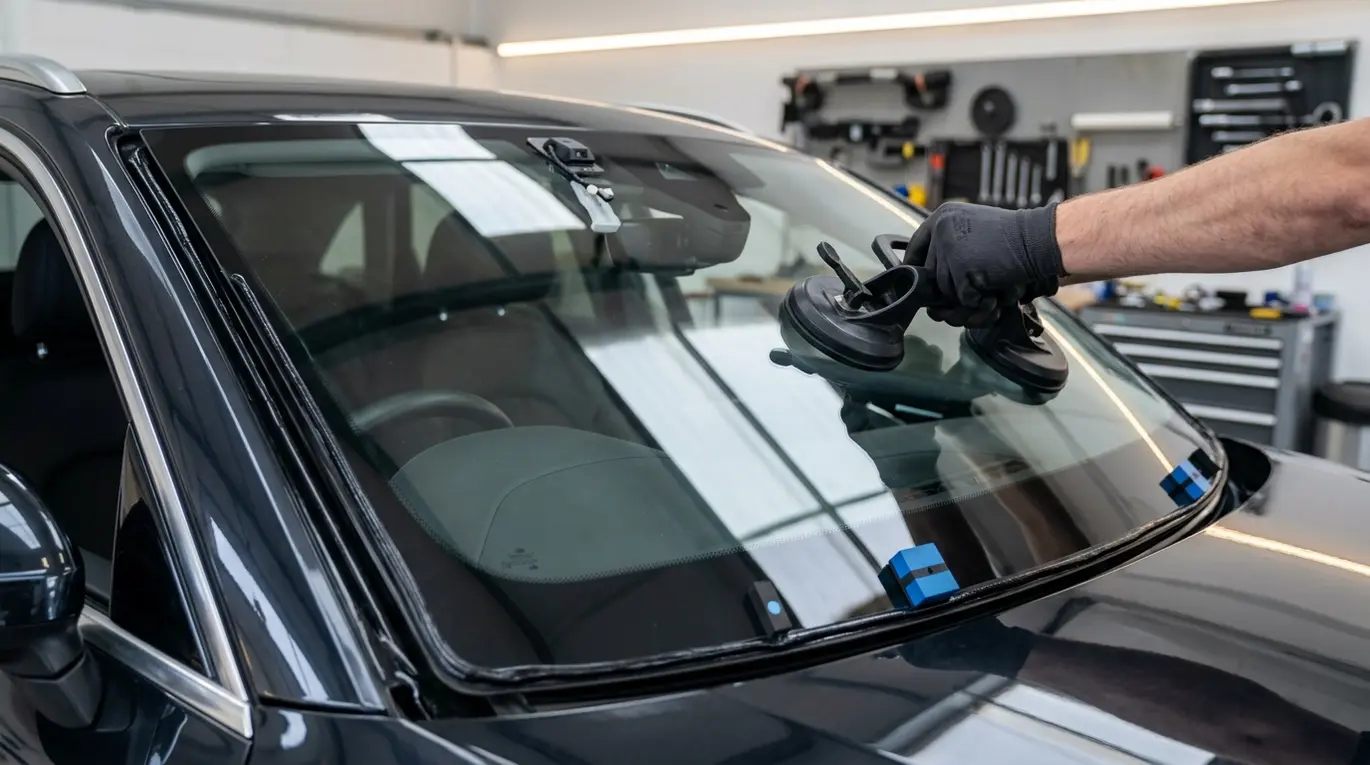
This image was generated with AI and may not always represent the product or service exactly.
How We Diagnose ADAS Faults After A New Windscreen
We start with an electronic pre-scan using OEM-level tools to record any stored faults. We then check the correct Pilkington glass specification, the camera bracket seating, trim fit and mirror mount, and confirm Loctite adhesive cure time for sensor stability.
Next, we carry out the required static and/or dynamic calibration to the manufacturer’s procedure, followed by a post-scan to confirm clear codes. A short road test verifies lane recognition, AEB readiness and sign reading. You receive a printed or emailed report. With ATA accreditation and a precise, repeatable process, Advanced Autoglazing Ltd keeps your ADAS operating as intended.
What To Do If Warnings Persist After Replacement
- Clean the glass in front of the camera; remove stickers, toll tags and dashcams from the swept area.
- Check the rear-view housing is fully clipped on and not obstructing the camera.
- Use screenwash to clear streaks, haze or residue in the camera’s path.
- Defog the interior and clear condensation or ice from the sensor area.
- Ensure vehicle settings haven’t disabled the assistance feature (e.g., lane assist toggled off).
If AEB or lane assist shows a persistent fault, avoid motorway speeds and book calibration. We can handle insurer approvals and direct billing to keep things simple. See insurance billing for automotive glazing or get a quote for a fast booking.
Brand And Model Differences That Matter
Procedures and tolerances vary by manufacturer. Some insist on strict static set-ups, others complete a dynamic drive, and many use a mix. Camera variants and brackets also differ, so the correct glass and exact mount position are critical to accuracy.
At Advanced Autoglazing Ltd we check the required steps by VIN, fit Pilkington glass for OEM-level clarity, and follow brand-specific processes. This keeps systems consistent across a mixed fleet, from family hatchbacks to premium SUVs.
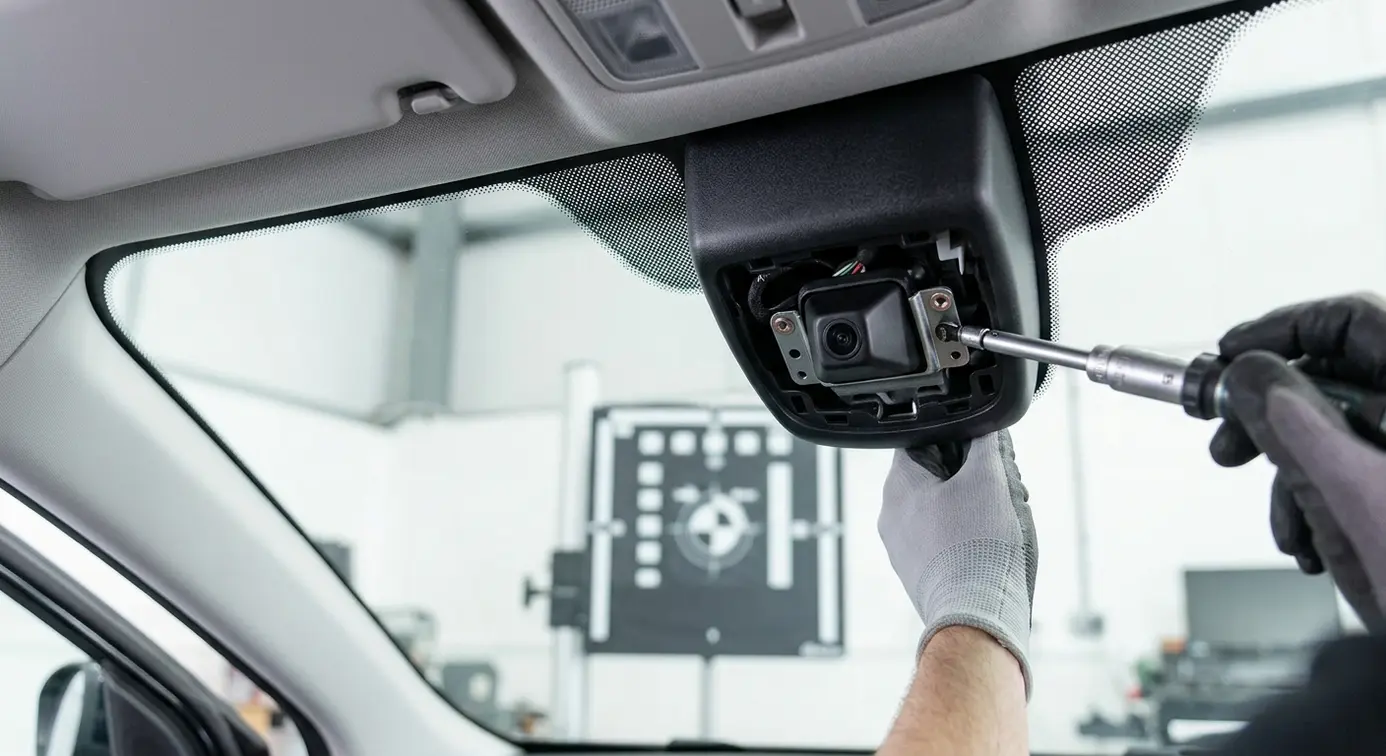
This image was generated with AI and may not always represent the product or service exactly.
Our ADAS-Safe Windscreen Replacement And Calibration Process
We remove and refit windscreens with care, protect your interior, and prepare bonding surfaces properly. Pilkington glass and Loctite adhesives ensure a precise fit and safe curing. We observe the correct cure time before calibration so the camera sits exactly where the manufacturer expects.
We then set up calibration correctly: targets measured to the millimetre, level floor, verified distances and suitable lighting. Many jobs finish the same day; some continue the next day if weather or lighting limit dynamic calibration. Mobile service is available where the method and conditions allow; otherwise we recommend our workshop for static calibration.
FAQs: Straight Answers On Post-Replacement ADAS Alerts
- Do I always need recalibration after a windscreen change? In most ADAS-equipped cars, yes. The camera’s position and view must be checked and set to spec after refit.
- Can a chip repair trigger warnings? Only if the damage is in the camera’s view or causes optical distortion. We’ll advise the safest option at assessment.
- Will warning lights fail my MOT? Safety-related warning lights can affect your MOT and your road safety. Book a check if you’re unsure.
Book With Confidence
Need help today? We offer same-day or next-day availability wherever possible. Our ATA-accredited technicians work efficiently with clear, honest advice and pricing.
We’ll guide you on when workshop calibration is best (static targets, level floor) and when mobile service is suitable. If you’ve seen new warnings after a windscreen change, we’ll diagnose, calibrate and confirm the fix. For fast support, simply get a quote.
FAQs
Why do ADAS warnings appear right after a new windscreen?
The camera’s view can shift during replacement and while adhesive cures. Until recalibrated, the system may limit function or show a fault.
How long does ADAS calibration take on the day?
Static procedures are efficient once the rig is set; dynamic drives depend on traffic and weather. Many vehicles are completed the same day.
Can I drive if the AEB light is on?
Drive cautiously, leave more distance and avoid high speeds. Book calibration as soon as possible to restore full AEB readiness.
Do all cars need static targets?
No. Some use dynamic drives, others require static targets, and some need both. We confirm the method by VIN and manufacturer data.
Will rain or dirt stop calibration?
Poor weather, dirty glass or blocked views can delay or limit results. Keep the screen clean and remove anything near the camera area.
What proof do I get after calibration?
You receive a post-scan report and road-test validation showing clear codes and system status at handover.
Is non-OEM glass a problem?
We use Pilkington glass for consistent optics and fit. Correct-specification glass helps the camera read the road as intended.


