ADAS in Today’s Cars: Why Calibration Matters After a New Windscreen
Advanced driver assistance systems (ADAS) help you drive more safely. Common features include lane keep assist, autonomous emergency braking (AEB), adaptive cruise control and traffic sign recognition. Many rely on a forward-facing camera mounted to the windscreen, often alongside rain and light sensors. If that camera’s position changes by even a few millimetres, the system can misread the road.
Most manufacturers require calibration after a windscreen replacement, camera removal/refit, suspension or ride-height changes, major wheel alignment, or accident damage. Correct calibration restores accuracy so the vehicle reads lanes, distances and signs as designed. For detail, see our guides to what ADAS is and how calibration works, whether you need recalibration after a new windscreen, and what happens if ADAS is not calibrated. With 30+ years’ experience, ATA-accredited technicians at Advanced Autoglazing Ltd follow OEM procedures on every job.
Static vs Dynamic Calibration: The Key Difference
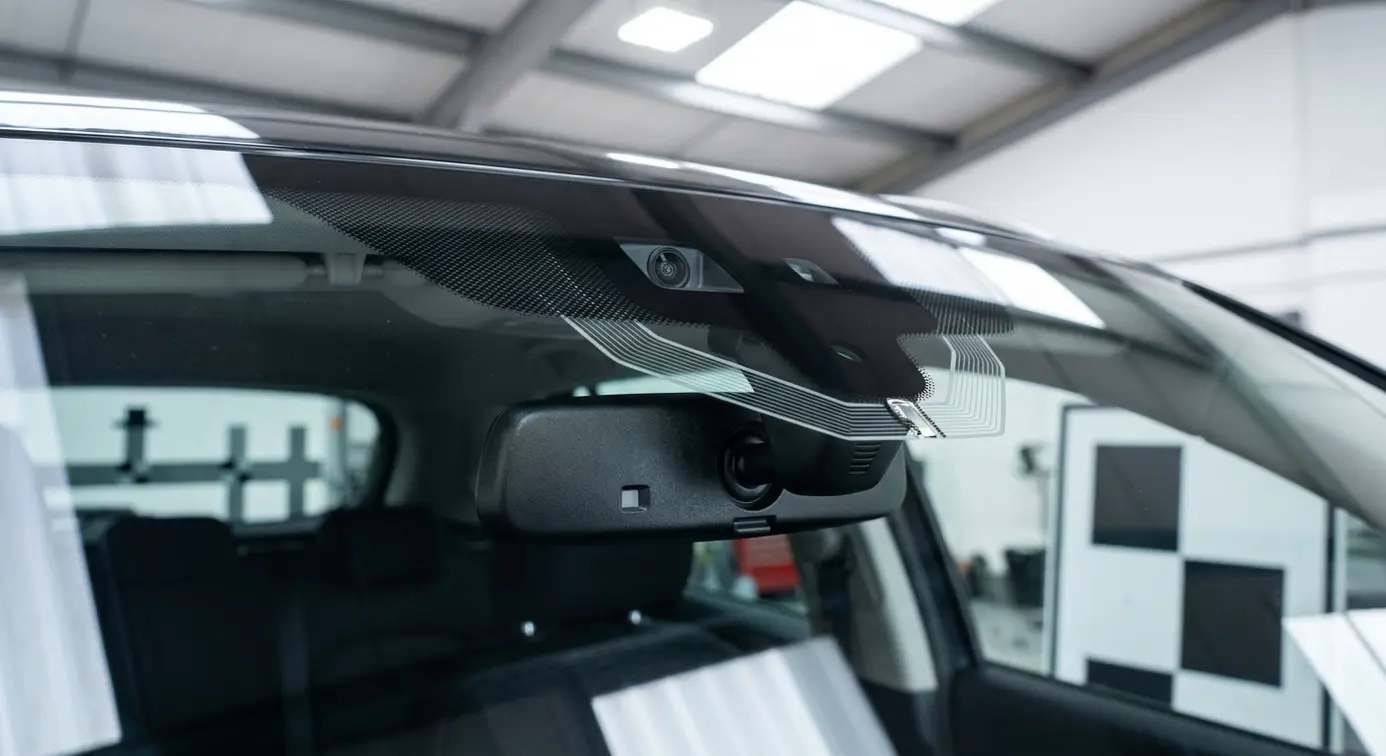
Static calibration is carried out in a controlled bay using precise targets and measurements. We set approved boards and tools at exact heights and distances on a level floor and align the camera via our diagnostic platform. No road driving is required.
Dynamic calibration is completed on the road. We connect a scan tool and drive at manufacturer-specified speeds on clear, well-marked routes so the system can learn. Your vehicle’s make and model dictates the method, and some require both. For our process, see our ADAS camera calibration service and typical timing in how long ADAS calibration takes.
Inside a Static Calibration: What We Set Up and Check
We prepare the vehicle and bay so the camera sees exactly what the OEM expects:
- Level floor and controlled lighting to avoid glare or shadow.
- Manufacturer-approved targets positioned with laser alignment to exact distances, heights and angles.
- Vehicle set to spec: correct tyre pressures, normal fuel load, no heavy items in the boot, standard ride height.
- Stable battery support to prevent voltage drops during the procedure.
- Secure camera bracket and a clean, correctly bonded windscreen.
After calibration you receive a print-out or digital report, plus a clear ADAS scan where applicable. This provides documented proof for your records or insurer.
This image was generated with AI and may not always represent the product or service exactly.
Inside a Dynamic Calibration: How the Road Test Works
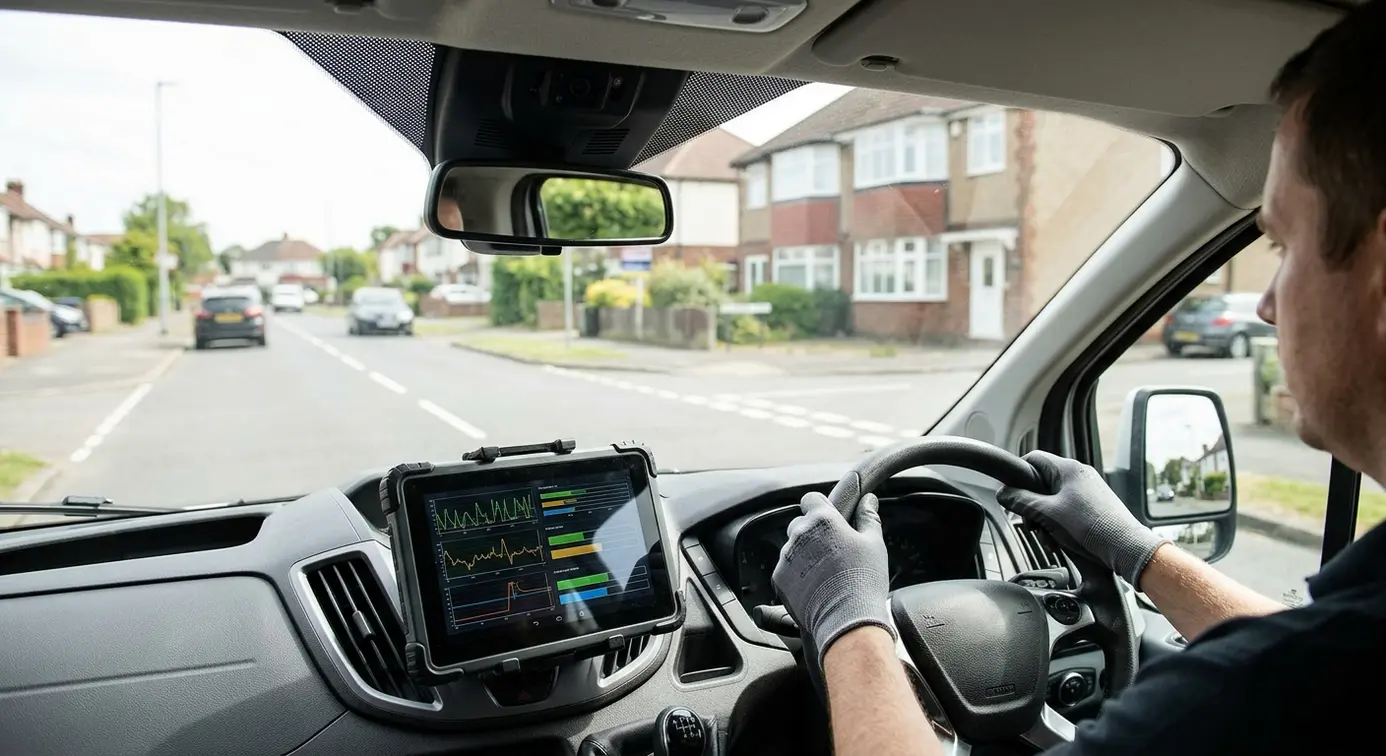
We connect a diagnostic tablet, clear existing faults and confirm a suitable route with consistent lane markings. The vehicle is then driven at the speeds and distances the manufacturer specifies while the scan tool shows live calibration status.
Weather, light and traffic can affect completion time. We may pause and resume if conditions change. Once successful, we save the result and provide confirmation or a certificate for your records.
How We Choose the Right Method After Your Windscreen Replacement
Before starting, we run a diagnostic pre-scan and identify your vehicle by VIN. We check OEM service information to confirm whether your car needs static, dynamic or both methods. Where trim levels differ, we verify the exact camera and sensor package fitted.
Advanced Autoglazing Ltd uses professional equipment, manufacturer-approved targets and calibrated tools. Our ATA-accredited technicians follow step-by-step OEM procedures. We fit Pilkington glass and use Loctite adhesives so brackets and bonding sit within tolerance, supporting a smooth, reliable calibration—often the same day or next day.
What to Expect on the Day: Step-by-Step
We confirm your booking, support insurance approvals where possible, and ensure the correct parts are ready. On arrival, we check the vehicle, VIN and options, then proceed with the windscreen replacement if required.
- Fitment with Pilkington glass and Loctite adhesives, followed by safe drive-away time (usually 30–60 minutes; we’ll confirm on the day).
- Static and/or dynamic ADAS calibration exactly as specified by the OEM.
- Final checks, a clear diagnostic scan, and your calibration report or certificate.
FAQs: Clear Answers to Common Concerns
How long will it take and can you wait? A typical replacement plus calibration is often completed the same day. Timing depends on your model and whether weather or traffic affects dynamic steps. You’re welcome to wait in our reception where practical.
Can you drive before calibration? You should not rely on ADAS until calibration is complete. Some cars limit assisted features and may show warnings until the procedure finishes.
Will insurance cover calibration? Many insurers include calibration with a glass claim. We’ll help with authorisations and update you if any extra OEM steps are required.
This image was generated with AI and may not always represent the product or service exactly.
Why Skipping Calibration Is Risky
Misalignment can cause lane-keeping errors, inaccurate AEB distance readings and incorrect sign recognition. That can increase stopping distances and reduce hazard detection.
Warning lights may appear, and unresolved safety faults may cause MOT issues. A documented calibration restores confidence and confirms your systems operate within specification.
Costs and Honest Value
Price varies by make and model, the number of sensors, and whether your car needs static, dynamic or both methods. Some OEMs also specify prerequisite work such as wheel alignment or set ride-height conditions.
We provide clear pricing with no hidden extras. For typical ranges, see our repair and replacement pricing guide. You benefit from Pilkington glass, Loctite adhesives, ATA-accredited technicians and a full calibration record for your files.
Vehicles and Areas We Cover
We work on family cars, vans and prestige models, including a wide range of camera and radar configurations. Our team handles newer platforms confidently and supports older or specialist vehicles where applicable.
We offer mobile and workshop options. Dynamic calibrations and some static procedures may require our controlled facilities. Same-day or next-day appointments are often available, subject to parts and OEM requirements.
Ready to Book?
Tell us your vehicle details for a fast quote and a convenient appointment. If claiming on insurance, have your policy information to hand. Bring both keys and let us know about any ADAS warnings you’ve seen.
Please avoid covering cameras or sensors and arrive with a clean screen if possible. We’ll handle the rest and provide aftercare support and documentation. Start here: get a quote.
FAQs
How do I know if my car needs static or dynamic calibration?
The manufacturer procedure decides. We check your VIN, options and OEM data, then follow the required method. Some models need both steps.
What if dynamic calibration fails due to weather or traffic?
We pause and resume when conditions improve or use an alternative route. Your vehicle only passes once it meets OEM criteria.
Will dashboard warnings clear after calibration?
In most cases, yes. If warnings were due to misalignment they typically clear on completion. If a fault remains, we’ll advise the next steps.
Can you calibrate aftermarket or repaired camera brackets?
We use quality parts and adhesives to keep the bracket within tolerance. If an aftermarket part is out of spec, we’ll explain options before proceeding.
Do you provide proof for my records or insurer?
Yes. You receive a calibration confirmation or certificate and a diagnostic scan report where applicable.


