
ADAS Calibration in Plain English
Advanced driver-assistance systems (ADAS) help you drive more safely. Features such as lane-keeping assist, autonomous emergency braking (AEB), adaptive cruise control and traffic sign recognition rely on precisely calibrated cameras and sensors—often mounted behind the windscreen—to see the road exactly as designed.
Calibration is required after a windscreen replacement, if a camera or bracket has been moved, or when warning lights appear following battery, bumper, wheel alignment or suspension work. At Advanced Autoglazing Ltd, every calibration is completed by ATA-accredited technicians using OEM data and verified before handover. You receive a clear, written calibration report. See our full process on our ADAS camera calibration page.
Static vs Dynamic ADAS Calibration: Key Differences
Static calibration is completed in our controlled workshop. We place calibrated targets in front of the vehicle using precision frames and lasers, then follow the manufacturer’s procedure to align the camera. No road drive is needed.
Dynamic calibration takes place on the road at manufacturer-stated speeds and distances. The system confirms alignment using live lane markings, signs and traffic. Both methods are safe when carried out to OEM specifications. Some vehicles require a static procedure followed by a dynamic drive. For a simple overview, see what ADAS is and how it’s calibrated.
How We Decide the Correct Calibration Method
We use the latest OEM data and a structured process to choose the safest option for your vehicle:
- Check the manufacturer’s instructions: static, dynamic or both.
- Pre-check the vehicle: clean windscreen, correct tyre pressures and ride height, battery support, and remove any excess load.
- Confirm the environment: level floor and controlled lighting for static; clear road markings and safe weather for dynamic.
- Run a diagnostic pre-scan, calibrate to OEM data, then verify alignment and document the results.
For typical timeframes, read how long ADAS calibration takes.
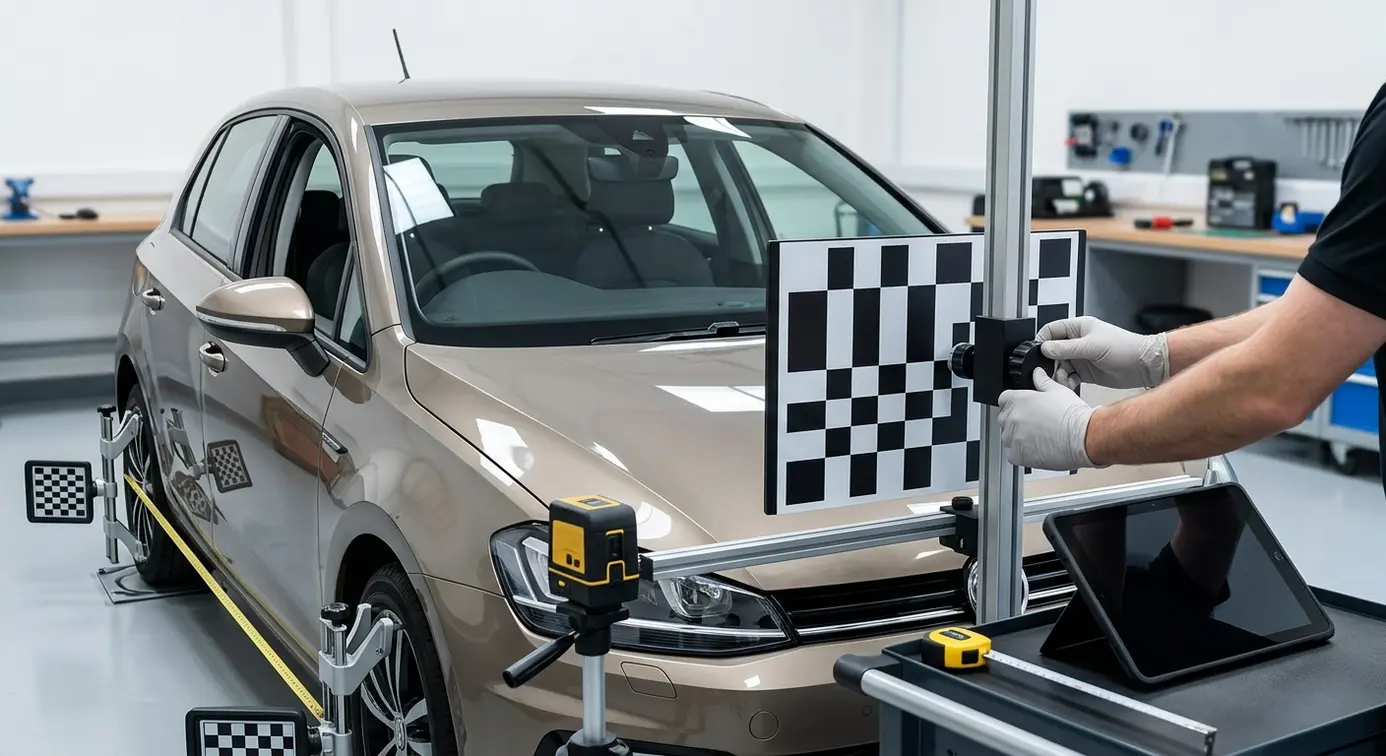
This image was generated with AI and may not always represent the product or service exactly.
Calibration Equipment We Use (and Why It Matters)
Accuracy starts with the right rig. We use precision frames, target boards, lasers and level measurement to position equipment to the millimetre, reducing the risk of human error.
Our OEM-grade diagnostics run approved software with up-to-date vehicle data. We read live camera and radar values, confirm successful calibration on-screen and save reports. For dynamic work, we choose well-marked routes and maintain the speeds specified by the manufacturer.
ADAS Tolerances: Why Millimetres and Degrees Matter
Small errors make a big difference. A camera that’s a few millimetres out, or a fraction of a degree off, can shift what the system “thinks” is the lane centre—delaying AEB or causing late lane assist corrections.
Example: a 0.5° misalignment can translate to a lateral error of over 40 cm at 50 metres. That’s enough to affect steering and braking assistance. We work to the maker’s tolerances and confirm alignment on-screen before handover. You receive proof of accuracy to protect your safety, warranty and insurance. If you’re unsure about the risks, read what happens if ADAS is not calibrated.
When Static ADAS Calibration Is Safest
Static calibration in a controlled bay is usually best when:
- The windscreen has been replaced and the camera must be realigned on new glass.
- The camera, bracket or mirror housing has been removed or disturbed.
- The vehicle uses multiple sensors (camera, radar or lidar) that need fixed targets at set distances.
- Weather or poor road markings could prevent reliable dynamic learning.
For common scenarios, see do I need to recalibrate my ADAS after a windscreen replacement?
When Dynamic ADAS Calibration Is Safest
Dynamic-only calibration is specified by some manufacturers. These systems confirm alignment from real lane lines, signs and surrounding traffic at defined speeds and distances.
It’s ideal where live road context is essential. We choose routes with clear markings and stable speeds, verify results on return, and if conditions aren’t suitable, we reschedule the road section rather than compromise accuracy.
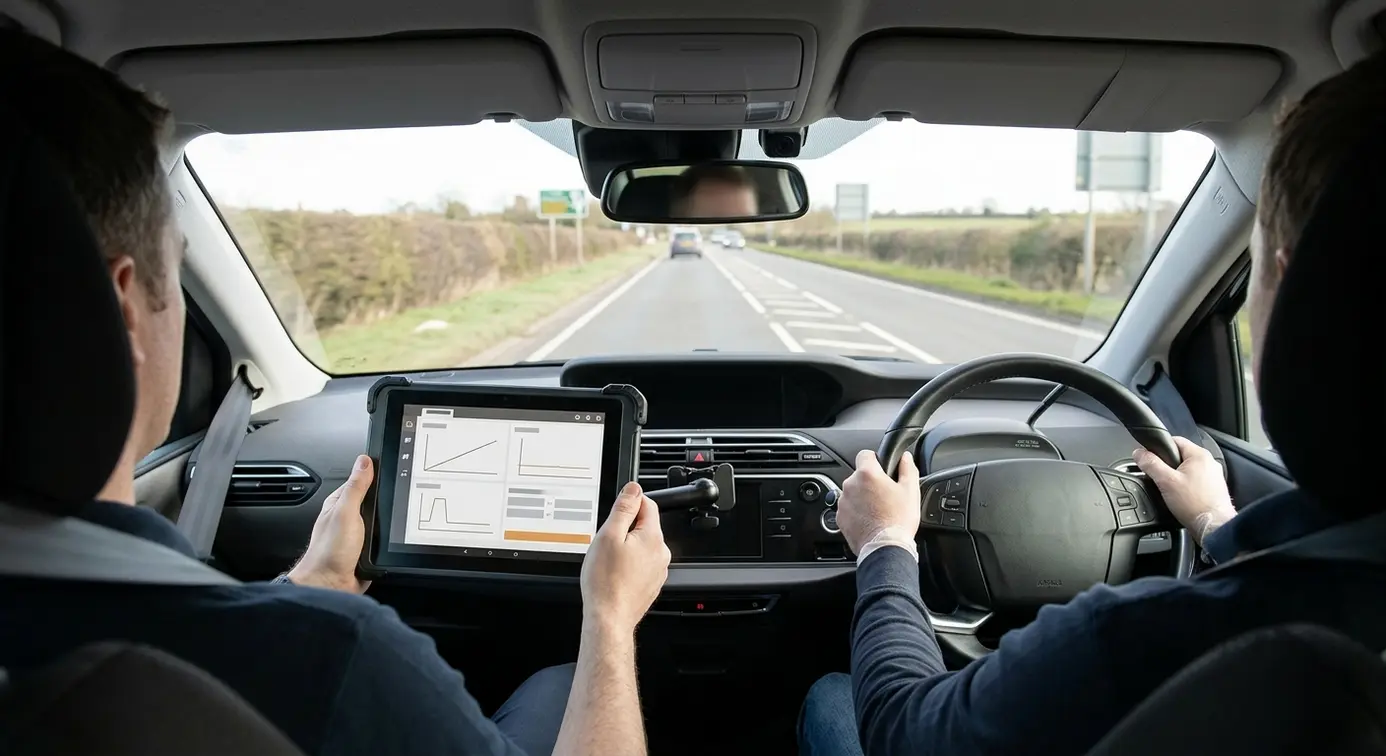
This image was generated with AI and may not always represent the product or service exactly.
Why ATA-Accredited Technicians Matter
ATA accreditation proves tested competence in ADAS, diagnostics and safe repair methods. It means your vehicle is handled by technicians who follow the correct procedure and record it properly.
At Advanced Autoglazing Ltd, you also benefit from 30+ years’ experience, Pilkington glass and Loctite adhesives. Precise work, quality materials and full documentation support your warranty and insurance.
What to Expect on the Day of Calibration
- Pre-checks: clean windscreen, correct tyre pressures and ride height, battery support and a diagnostic pre-scan. Any unnecessary load is removed.
- Calibration: we follow the OEM method—static in-bay, dynamic on-road, or both.
- Verification: we confirm success on-screen, explain the results, provide your report and give safe drive-away advice.
Most appointments are completed the same day or next day.
Costs, Insurance and What’s Included
Our pricing is transparent and typically includes:
- Diagnostics (pre- and post-scan)
- Rig setup and target alignment
- Static and/or dynamic calibration
- Verification and a written calibration report
- Any required road test
We can bill many insurers directly and help with authorisations. For insurer processes, see our insurance billing for automotive glazing page. We offer fast availability across our local areas.
Glass and Bodywork Jobs That Trigger Recalibration
A small chip near the camera may be repairable, but larger damage or cracks often need a replacement followed by calibration. We’ll advise the safest option for your car.
Loose mirror or camera brackets, trim changes or collision repairs can disturb sensor alignment. Suspension geometry or wheel alignment work can also affect ADAS. If in doubt, book a quick check.
Quick FAQs
- Can you calibrate mobile? Yes—if the site meets OEM requirements (level floor, space, lighting and power). If not, we use our workshop for accuracy.
- How long does it take? Most cars take 45–120 minutes depending on method and model.
- Is it safe to drive with an ADAS warning? No. Book a check to restore full safety features.
Book Your ADAS Calibration Today
Restore full ADAS accuracy with Advanced Autoglazing Ltd. We offer same-day or next-day appointments where possible, ATA-accredited technicians and OEM data on every job.
Request a fast quote and check availability now: get a quote.
FAQs
Do all windscreens need calibration after replacement?
Yes—if your car has ADAS sensors linked to the windscreen. The camera’s position changes with the new glass, so it must be realigned to OEM specification.
What happens if calibration fails first time?
We pause, diagnose and correct the cause—this may include tyre pressure or ride height adjustments, software updates or repeating the procedure when conditions are right.
Can you calibrate in bad weather?
Static calibration is unaffected by rain or glare because it’s done indoors. For dynamic work, we wait for safe, OEM-compliant conditions or reschedule the road section.
Will wheel alignment or suspension work affect ADAS?
It can. Changes to ride height or geometry may alter the camera’s reference point. We recommend a calibration check after major suspension or alignment work.
Do you provide proof for my insurer or warranty?
Yes. You receive a calibration report and confirmation of success. We store results for traceability and can share them with your insurer if needed.
Which method is safer—static or dynamic?
The safest method is the one your manufacturer specifies and that current conditions allow us to verify accurately.
Do you reset dash cams or accessories during calibration?
We focus on OEM systems. If an aftermarket device blocks the camera view, we’ll advise and, with your approval, reposition it if required.


